Yuan Xiaodong, Li Wen, Yan Qi, Ou Ya, Long Qingxi, Zhang Pingshu
Department of Neurology, Kailuan General Hospital Affiliated to North China University of Science & Technology, Tangshan, Hebei Province, 063000, China.
Hebei Provincial Key Laboratory of Neurobiological Function, Department of Neurology, Tangshan, Hebei Province, 063000, China.
Future Sci OA. 2024 Dec 31;10(1):2410146. doi: 10.1080/20565623.2024.2410146. Epub 2024 Oct 21.
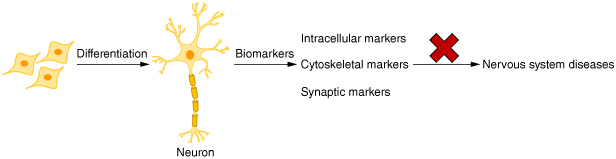
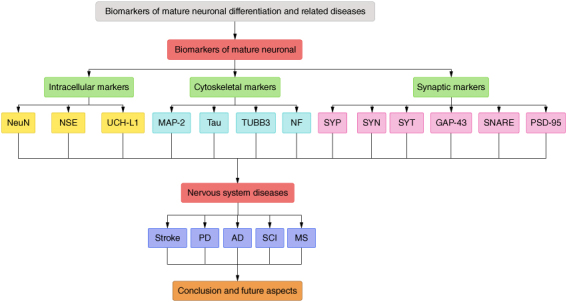
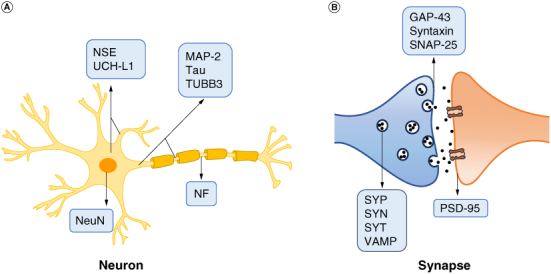
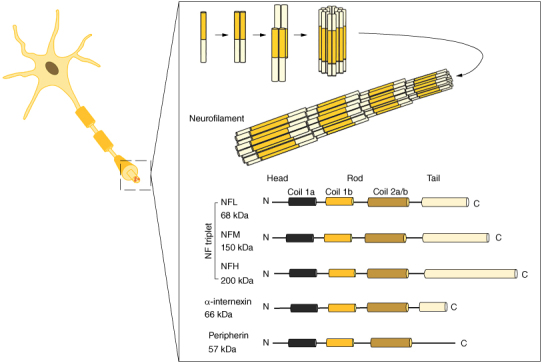
The nervous system regulates perception, cognition and behavioral responses by serving as the body's primary communication system for receiving, regulating and transmitting information. Neurons are the fundamental structures and units of the nervous system. Their differentiation and maturation processes rely on the expression of specific biomarkers. Neuron-specific intracellular markers can be used to determine the degree of neuronal maturation. Neuronal cytoskeletal proteins dictate the shape and structure of neurons, while synaptic plasticity and signaling processes are intricately associated with neuronal synaptic markers. Furthermore, abnormal expression levels of biomarkers can serve as diagnostic indicators for nervous system diseases. This article reviews the markers of mature neuronal differentiation and their relationship with nervous system diseases.
神经系统作为身体接收、调节和传递信息的主要通信系统,调节感知、认知和行为反应。神经元是神经系统的基本结构和单位。它们的分化和成熟过程依赖于特定生物标志物的表达。神经元特异性细胞内标志物可用于确定神经元成熟程度。神经元细胞骨架蛋白决定神经元的形状和结构,而突触可塑性和信号传导过程与神经元突触标志物密切相关。此外,生物标志物的异常表达水平可作为神经系统疾病的诊断指标。本文综述了成熟神经元分化的标志物及其与神经系统疾病的关系。