Moayedi Javad, Hashempour Ava, Musavi Zahra, Ghasabi Farzaneh, Khodadad Nastaran, Davarpanah Mohamad Ali, Hasanshahi Ali
HIV/AIDS Research Center, Institute of Health, Shiraz University of Medical Sciences, Shiraz, Iran.
New Microbes New Infect. 2024 Oct 2;62:101496. doi: 10.1016/j.nmni.2024.101496. eCollection 2024 Dec.
() is involved in autoimmunity. However, its association with advanced liver disease has not been fully explained. Herein, the prevalence of viremia was assessed in Iranian liver transplant candidates with a confirmed diagnosis of cirrhosis.
This cross-sectional study was conducted on 230 patients with cryptogenic cirrhosis, virus-related cirrhosis, and autoimmune hepatitis, as well as 140 healthy blood donors from April 2022 to September 2023. The IgG antibody concentration and viral load were evaluated ELISA and RT‒PCR, respectively.
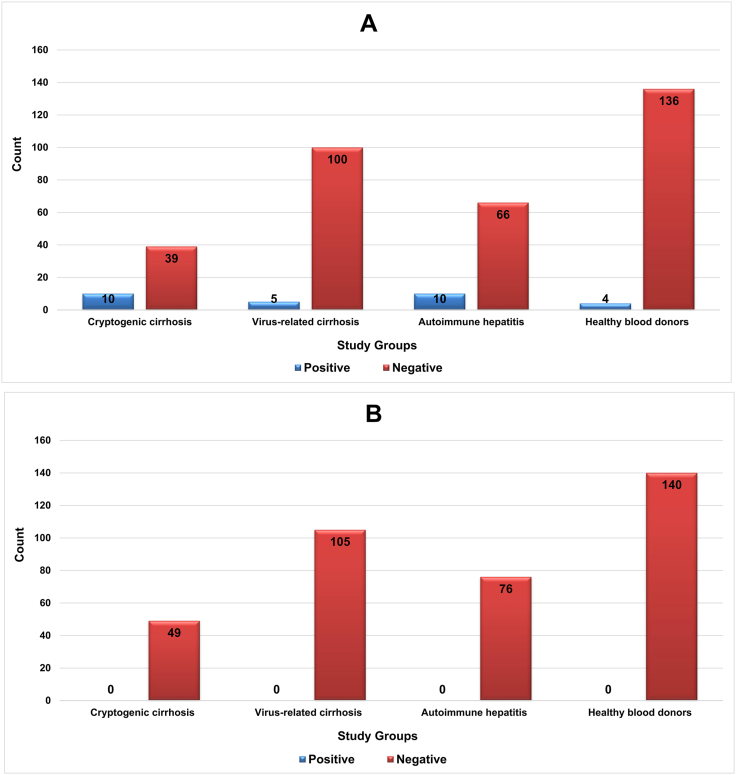
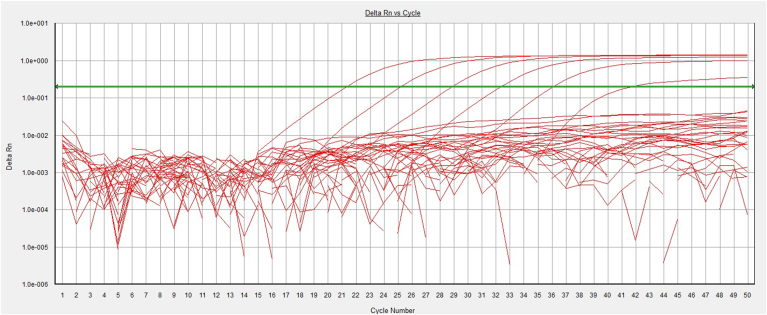
Anti- IgG antibodies were detected in 25 cirrhotic patients (10.8 %) and four healthy individuals (2.6 %) (p = 0.022). The majority of the seropositive patients had cryptogenic cirrhosis (20.4 %), followed by autoimmune hepatitis (13.1 %) and virus-related cirrhosis (4.7 %). The seropositivity of IgG antibody was significantly different among the etiologies of liver cirrhosis (p = 0.011). However, genomic DNA was not detected in the sera of the patients or healthy blood donors.
The role of infection in the development of posttransplant diseases, together with the higher seroprevalence of antibodies in cirrhotic patients than in healthy individuals, highlights the importance of both primary and latent infections in liver transplantation. Therefore, serological and molecular screening of is highly suggested for liver transplant candidates and organ donors. The possibility of antibody-mediated epitope mimicry in cryptogenic and autoimmune groups with moderate antibody positivity and negative viral loads may account for the development of advanced liver diseases.
(某病原体)与自身免疫有关。然而,其与晚期肝病的关联尚未完全阐明。在此,对确诊为肝硬化的伊朗肝移植候选者中的(该病原体)病毒血症患病率进行了评估。
本横断面研究于2022年4月至2023年9月对230例隐源性肝硬化、病毒相关性肝硬化和自身免疫性肝炎患者以及140名健康献血者进行。分别采用酶联免疫吸附测定(ELISA)和逆转录聚合酶链反应(RT‒PCR)评估(该病原体)IgG抗体浓度和病毒载量。
在25例肝硬化患者(10.8%)和4名健康个体(2.6%)中检测到抗(该病原体)IgG抗体(p = 0.022)。大多数血清阳性患者患有隐源性肝硬化(20.4%),其次是自身免疫性肝炎(13.1%)和病毒相关性肝硬化(4.7%)。肝硬化病因之间(该病原体)IgG抗体的血清阳性率有显著差异(p = 0.011)。然而,在患者或健康献血者的血清中未检测到(该病原体)基因组DNA。
(该病原体)感染在移植后疾病发生中的作用,以及肝硬化患者中(该病原体)抗体的血清阳性率高于健康个体,凸显了原发性和潜伏性感染在肝移植中的重要性。因此,强烈建议对肝移植候选者和器官捐献者进行(该病原体)的血清学和分子筛查。在隐源性和自身免疫性组中,抗体呈中度阳性且病毒载量为阴性的情况下,抗体介导的表位模拟可能是晚期肝病发生的原因。