Wang Yan, Zhuang Xiaosheng, Qi Yanxiang, Yiu Lung, Li Zhenping, Chan Yuk Wah, Liu Xianji, Tsang Suk Ying
School of Life Sciences, The Chinese University of Hong Kong, Hong Kong SAR, China.
State Key Laboratory of Agrobiotechnology, The Chinese University of Hong Kong, Hong Kong SAR, China.
Pflugers Arch. 2025 Feb;477(2):253-272. doi: 10.1007/s00424-024-03030-y. Epub 2024 Oct 22.
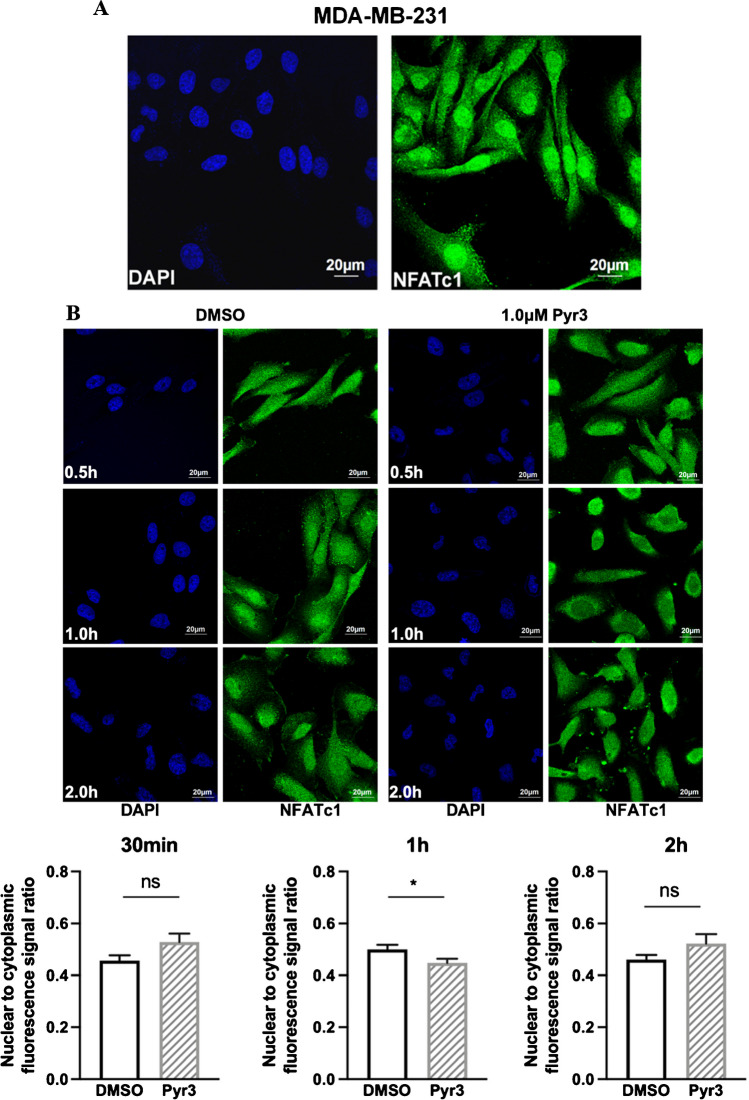
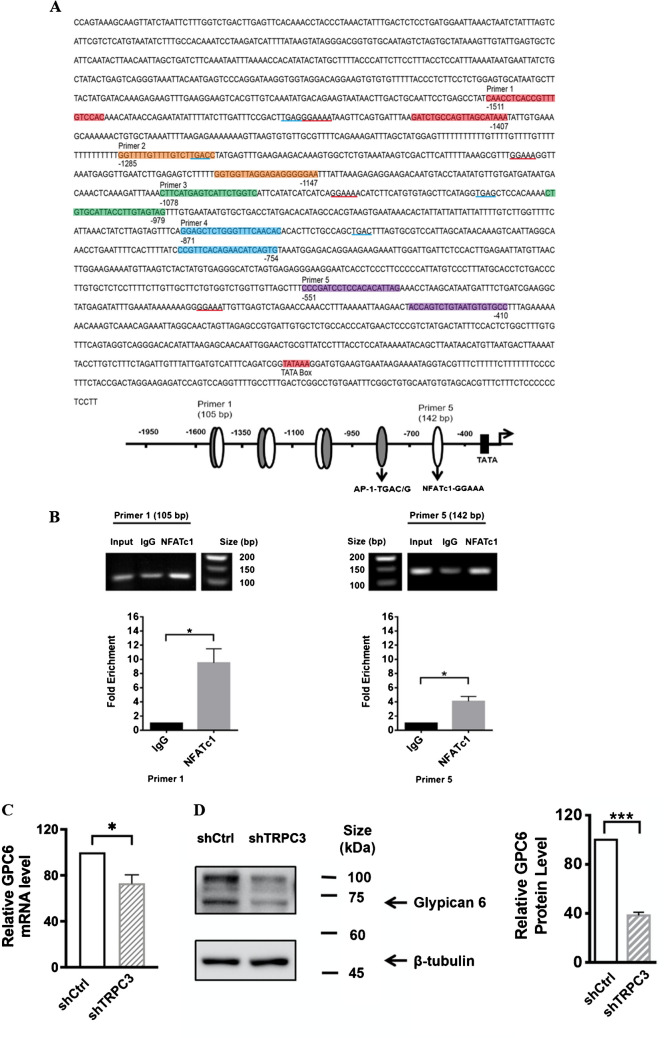
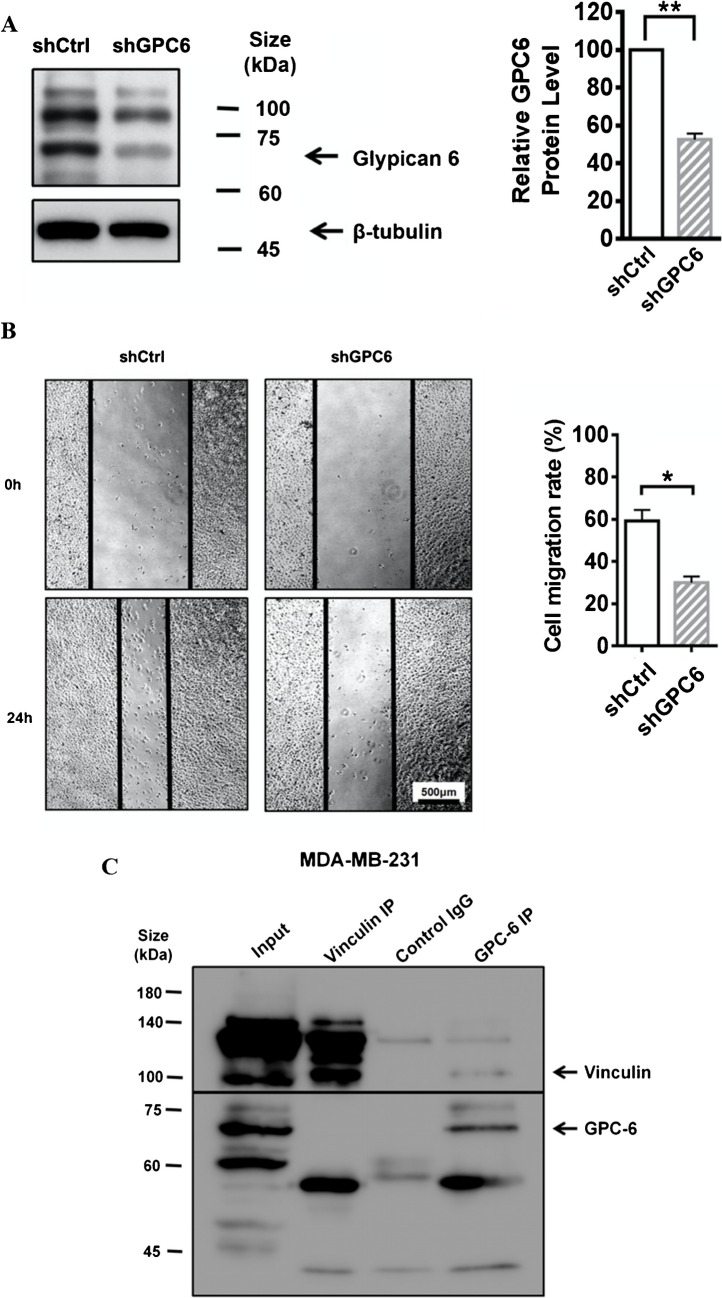
Canonical transient receptor potential isoform 3 (TRPC3), a calcium-permeable non-selective cation channel, has been reported to be upregulated in breast cancers and a modulator of cell migration. Calcium-sensitive transcription factor NFATc1, which is important for cell migration, was shown to be frequently activated in triple negative breast cancer (TNBC) biopsy tissues. However, whether TRPC3-mediated calcium influx would activate NFATc1 and affect the migration of TNBC cells, and, if yes, the underlying mechanisms involved, remain to be investigated. By immunostaining followed by confocal microscopy, TNBC lines MDA-MB-231 and BT-549 were both found to express TRPC3 on their plasma membrane while ER line MCF-7 and HER2 line SK-BR3 do not. Blockade of TRPC3 by pharmacological inhibitor Pyr3 or stable knockdown of TRPC3 by lentiviral vector both inhibited cell migration as measured by wound healing assay. Importantly, blocking TRPC3 by Pyr3 or knockdown of TRPC3 both caused the translocation of NFATc1 from the nucleus to the cytosol as revealed by confocal microscopy. Interestingly, NFATc1 was found to bind to the promoter of glypican 6 (GPC6) as determined by chromatin immunoprecipitation assay. Consistently, knockdown of TRPC3 decreased the expression of GPC6 as revealed by western blotting. Moreover, long-term knockdown of GPC6 by lentiviral vector also consistently decreased the migration of TNBC cells. Intriguingly, GPC6 proteins physically interact with vinculin in MDA-MB-231 as determined by co-immunoprecipitation. Blockade of TRPC3, knockdown of TRPC3 or knockdown of GPC6 all induced larger, stabilized actin-bound peripheral focal adhesion (FA) formations in TNBC cells as determined by co-staining of actin and vinculin followed by confocal microscopy. These large, stabilized actin-bound peripheral FAs indicated a defective FA turnover, and were reported to be responsible for impairing directed cell migration. Our results suggest that, in TNBC cells, calcium influx through TRPC3 channel positively regulates NFATc1 nuclear translocation and GPC6 expression, which maintains the dynamics of FA turnover and optimal cell migration. Our study reveals a novel TRPC3-NFATc1-GPC6-vinculin signaling cascade in maintaining the migration of TNBC cells.
典型瞬时受体电位3型(TRPC3)是一种钙通透性非选择性阳离子通道,据报道在乳腺癌中上调,是细胞迁移的调节因子。对细胞迁移很重要的钙敏感转录因子NFATc1在三阴性乳腺癌(TNBC)活检组织中经常被激活。然而,TRPC3介导的钙内流是否会激活NFATc1并影响TNBC细胞的迁移,如果是,其潜在机制仍有待研究。通过免疫染色和共聚焦显微镜观察,发现TNBC细胞系MDA-MB-231和BT-549在其质膜上均表达TRPC3,而雌激素受体(ER)细胞系MCF-7和人表皮生长因子受体2(HER2)细胞系SK-BR3则不表达。用药物抑制剂Pyr3阻断TRPC3或用慢病毒载体稳定敲低TRPC3,通过伤口愈合试验测定均抑制了细胞迁移。重要的是,共聚焦显微镜显示,用Pyr3阻断TRPC3或敲低TRPC3均导致NFATc1从细胞核转位到细胞质。有趣的是,通过染色质免疫沉淀试验确定,NFATc1与磷脂酰肌醇蛋白聚糖6(GPC6)的启动子结合。同样,western印迹显示敲低TRPC3会降低GPC6的表达。此外,用慢病毒载体长期敲低GPC6也一致地降低了TNBC细胞的迁移。有趣的是,通过免疫共沉淀确定,GPC6蛋白在MDA-MB-231中与纽蛋白发生物理相互作用。通过肌动蛋白和纽蛋白共染色及共聚焦显微镜观察,阻断TRPC3、敲低TRPC3或敲低GPC6均在TNBC细胞中诱导形成更大、更稳定的肌动蛋白结合外周黏着斑(FA)。这些大的、稳定的肌动蛋白结合外周FA表明FA周转存在缺陷,据报道这会损害细胞的定向迁移。我们的结果表明,在TNBC细胞中,通过TRPC3通道的钙内流正向调节NFATc1的核转位和GPC6的表达,从而维持FA周转的动态平衡和最佳的细胞迁移。我们的研究揭示了一种在维持TNBC细胞迁移中起作用的新型TRPC3-NFATc1-GPC6-纽蛋白信号级联反应。