Institute for Infectious Diseases and Infection Control, Jena University Hospital, 07747 Jena, Germany;
Diagnostic and Research Institute of Hygiene, Microbiology and Environmental Medicine, Medical University of Graz, 8010 Graz, Austria.
Genome Res. 2024 Nov 20;34(11):2039-2047. doi: 10.1101/gr.278848.123.
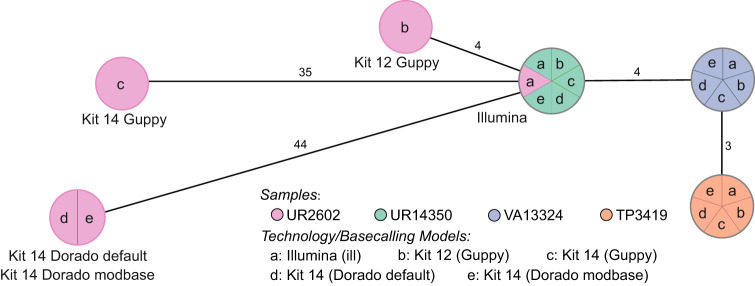
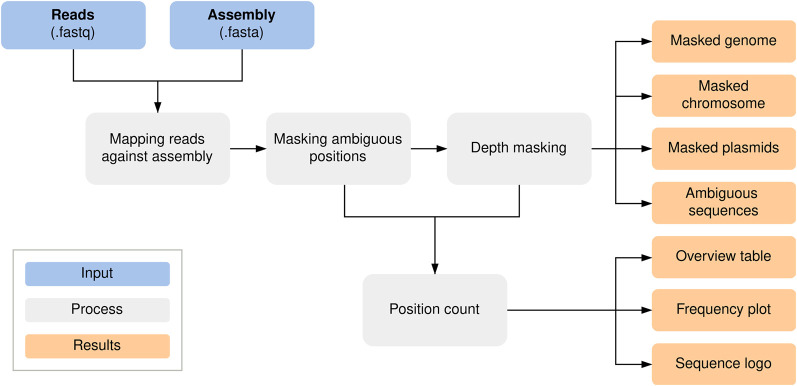
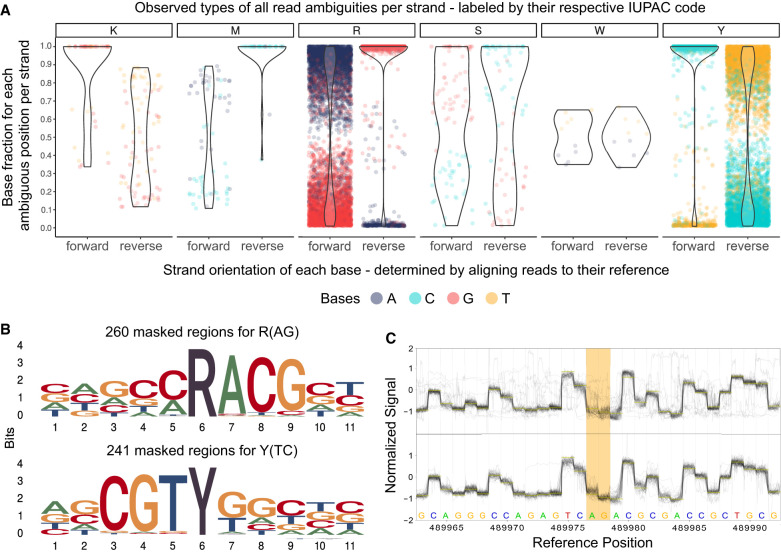
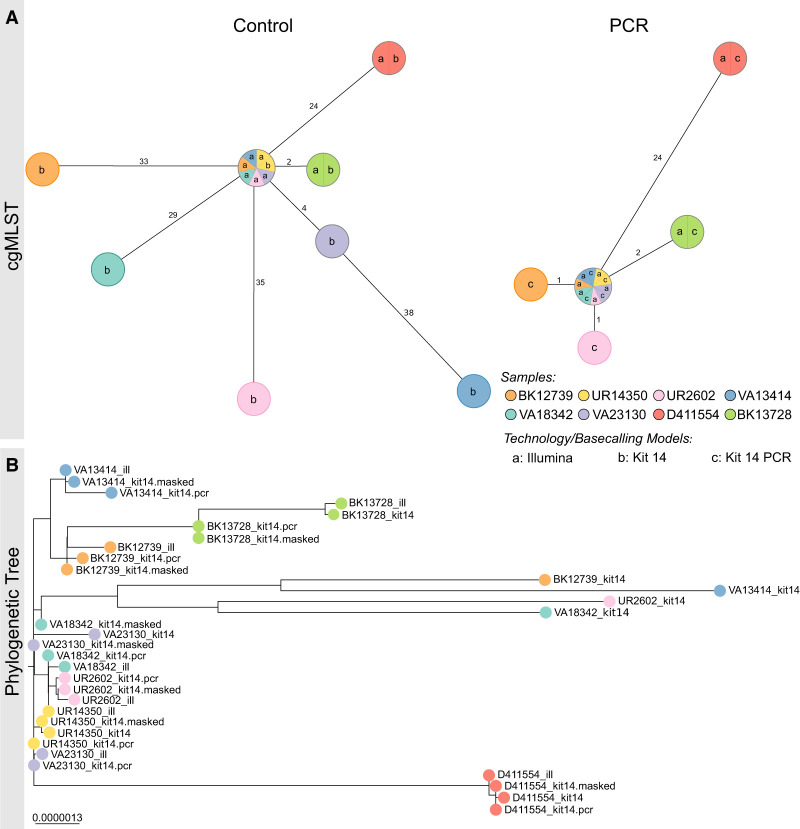
Our study investigates the effectiveness of Oxford Nanopore Technologies for accurate outbreak tracing by resequencing 33 isolates of a 3-year-long outbreak with Illumina short-read sequencing data as the point of reference. We detect considerable base errors through cgMLST and phylogenetic analysis of genomes sequenced with Oxford Nanopore Technologies, leading to the false exclusion of some outbreak-related strains from the outbreak cluster. Nearby methylation sites cause these errors and can also be found in other species besides Based on these data, we explore PCR-based sequencing and a masking strategy, which both successfully address these inaccuracies and ensure accurate outbreak tracing. We offer our masking strategy as a bioinformatic workflow (MPOA) to identify and mask problematic genome positions in a reference-free manner. Our research highlights limitations in using Oxford Nanopore Technologies for sequencing prokaryotic organisms, especially for investigating outbreaks. For time-critical projects that cannot wait for further technological developments by Oxford Nanopore Technologies, our study recommends either using PCR-based sequencing or using our provided bioinformatic workflow. We advise that read mapping-based quality control of genomes should be provided when publishing results.
我们的研究通过对 33 个经过 3 年的爆发的分离株进行重测序,以 Illumina 短读测序数据作为参考,调查了 Oxford Nanopore 技术在准确追溯爆发源方面的有效性。通过 cgMLST 和基于 Oxford Nanopore 技术测序的基因组的系统发育分析,我们发现了相当数量的碱基错误,导致一些与爆发相关的菌株被错误地排除在爆发集群之外。这些错误是由附近的甲基化位点引起的,并且除了 之外,还可以在其他物种中发现。基于这些数据,我们探索了基于 PCR 的测序和掩蔽策略,这两种方法都成功地解决了这些不准确问题,并确保了准确的爆发源追溯。我们提供了我们的掩蔽策略作为一个无参考的生物信息学工作流程 (MPOA),以识别和掩蔽有问题的基因组位置。我们的研究强调了在测序原核生物时使用 Oxford Nanopore 技术的局限性,特别是在调查爆发时。对于不能等待 Oxford Nanopore 技术进一步发展的时间关键项目,我们的研究建议要么使用基于 PCR 的测序,要么使用我们提供的生物信息学工作流程。我们建议在发表结果时提供基于读映射的基因组质量控制。