Department of Gastroenterology, Graduate School of Medicine, The University of Tokyo, 7-3-1 Hongo, Bunkyo-ku, Tokyo, 113-8655, Japan.
Division for Health Service Promotion, The University of Tokyo, 7-3-1 Hongo, Bunkyo-ku, Tokyo, 113-8655, Japan.
Sci Rep. 2024 Oct 23;14(1):25091. doi: 10.1038/s41598-024-76084-8.
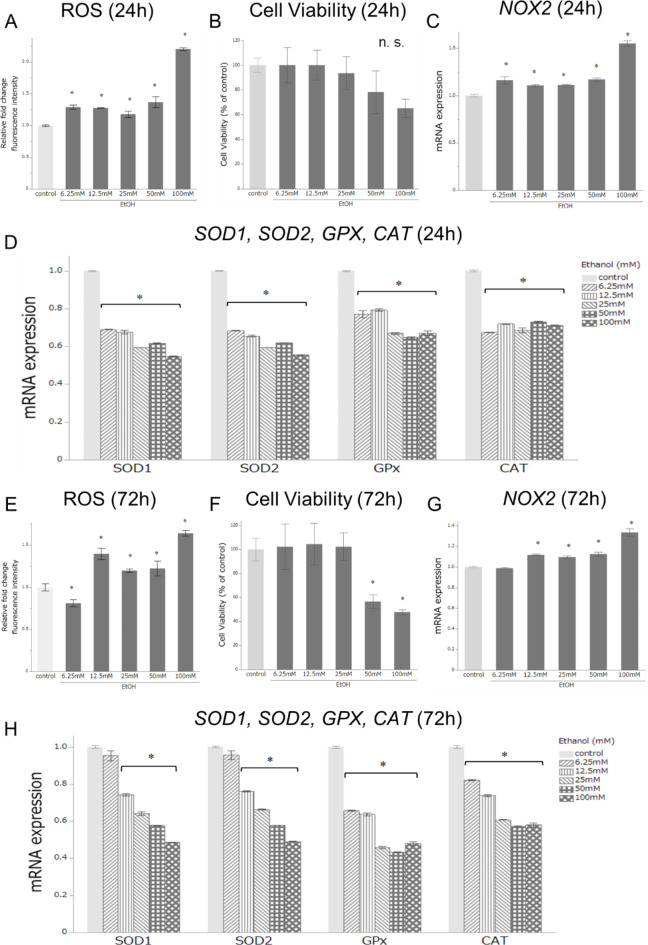
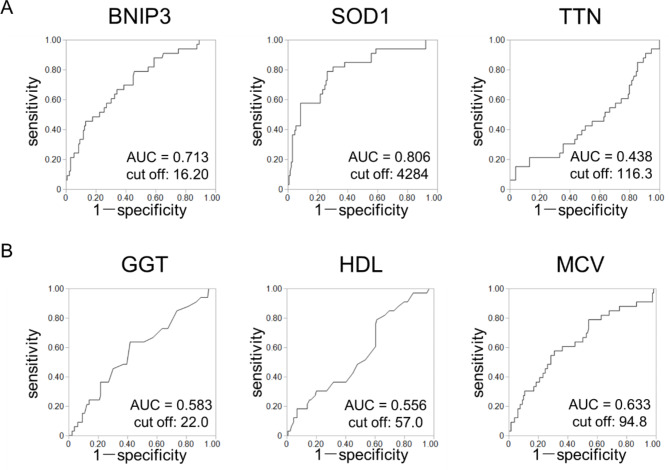
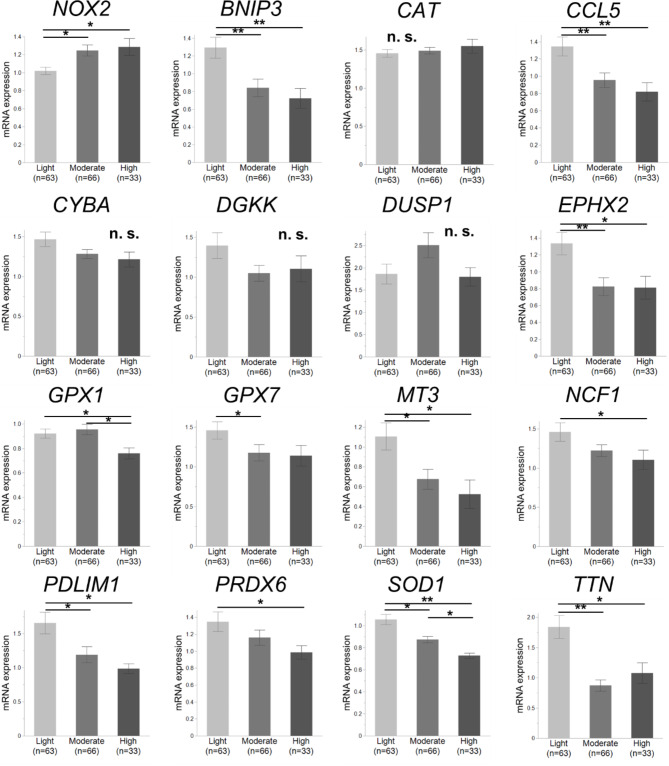
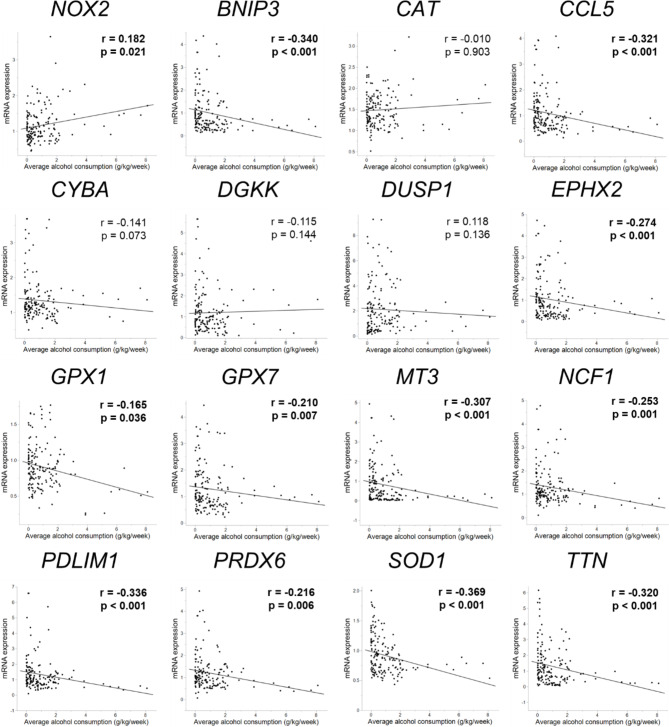
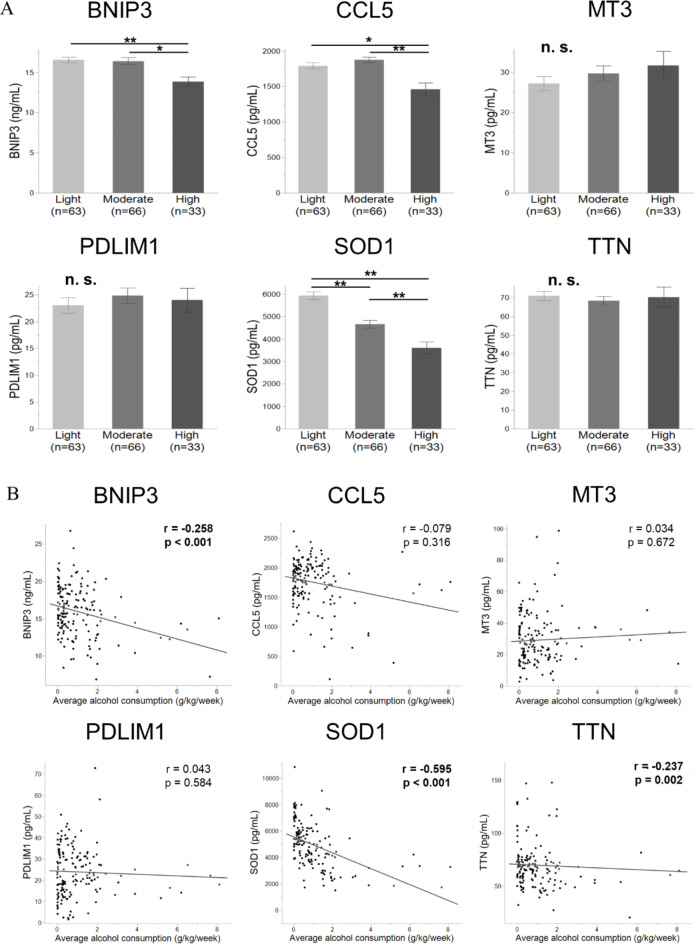
Alcohol consumption increases oxidative stress and imbalances in the antioxidant system, even with ethanol (EtOH) exposure at a young age. This study assessed changes in the antioxidant system following young EtOH exposure in peripheral immunity and measured sensitive indicators of heavy alcohol consumption. We used peripheral blood mononuclear cells (PBMCs) from 197 male university students without smoking habits to examine changes in antioxidant-related gene expression in vitro and in PBMCs. In vitro, the antioxidant system was impaired by EtOH. Next, we examined the expression of 84 antioxidant-related genes in the PBMCs of 162 young adults, among which the superoxide dismutase (SOD) 1 expression was most negatively correlated with alcohol consumption degree. The plasma SOD1 level had the highest area under the curve value (0.806) for heavy alcohol consumption. Our data demonstrated that a decreased SOD1 level is a sensitive indicator of an impaired antioxidant system and heavy alcohol consumption with early EtOH exposure.
饮酒会增加氧化应激和抗氧化系统的失衡,即使是在年轻时接触乙醇(EtOH)也是如此。本研究评估了年轻时期接触乙醇对周围免疫中抗氧化系统的影响,并测量了重度饮酒的敏感指标。我们使用 197 名没有吸烟习惯的男性大学生的外周血单核细胞(PBMC),体外检测抗氧化相关基因表达的变化,并检测 PBMC 中的抗氧化相关基因表达。在体外,乙醇会损害抗氧化系统。接下来,我们检测了 162 名年轻成年人的 84 种抗氧化相关基因的表达,其中超氧化物歧化酶(SOD)1 的表达与饮酒量呈最显著负相关。血浆 SOD1 水平对重度饮酒的曲线下面积值最高(0.806)。我们的数据表明,SOD1 水平降低是抗氧化系统受损和早期接触乙醇后重度饮酒的敏感指标。