Stelander Line Tegner, Lorem Geir Fagerjord, Høye Anne, Bramness Jørgen G, Wynn Rolf, Grønli Ole Kristian
Division of Mental Health and Substance Abuse, University Hospital of North Norway, P.O. Box 6124, 9291, Tromsø, Norway.
Department of Clinical Medicine, Faculty of Health Sciences, UiT The Arctic University of Norway, Tromsø, Norway.
Arch Public Health. 2023 Feb 16;81(1):25. doi: 10.1186/s13690-023-01035-0.
Based on findings of increasing alcohol consumption in older adults, it is important to clarify the health consequences. Using data from the Tromsø study, we aimed to investigate the relationship between different levels of alcohol consumption in old adulthood and self-rated health trajectories and all-cause mortality.
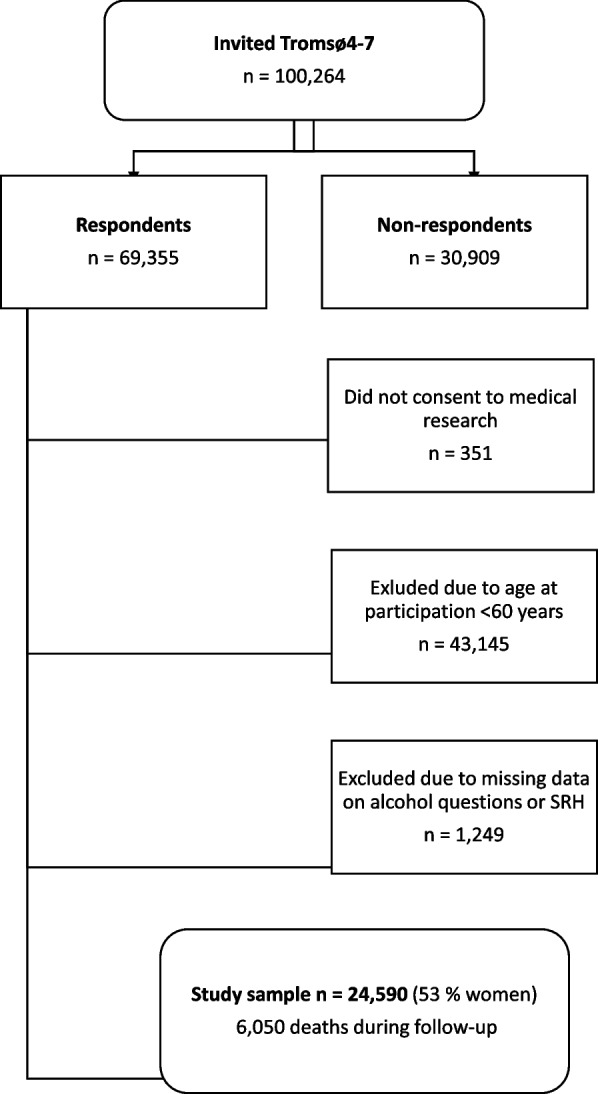
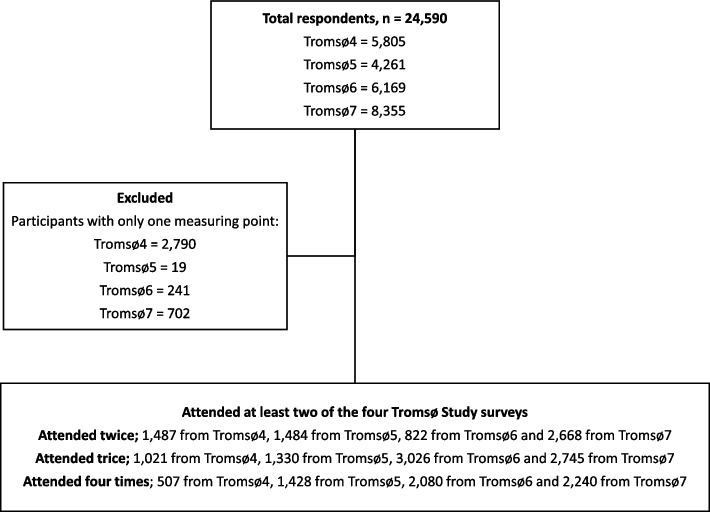
This is an epidemiological study utilizing repeated measures from the Tromsø study cohort. It allows follow-up of participants from 1994 to 2020. A total of 24,590 observations of alcohol consumption were made in older adults aged 60-99 (53% women).
Self-rated health (SRH) and all-cause mortality. SRH was reported when attending the Tromsø study. Time of death was retrieved from the Norwegian Cause of Death Registry. The follow-up time extended from the age of study entry to the age of death or end of follow-up on November 25, 2020.
Average weekly alcohol consumption (non-drinker, < 100 g/week, ≥100 g/week). We fitted two-level logistic random effects models to examine how alcohol consumption was related to SRH, and Cox proportional hazards models to examine its relation to all-cause mortality. Both models were stratified by sex and adjusted for sociodemographic factors, pathology, biometrics, smoking and physical activity. In addition, all the confounders were examined for whether they moderate the relationship between alcohol and the health-related outcomes through interaction analyses.
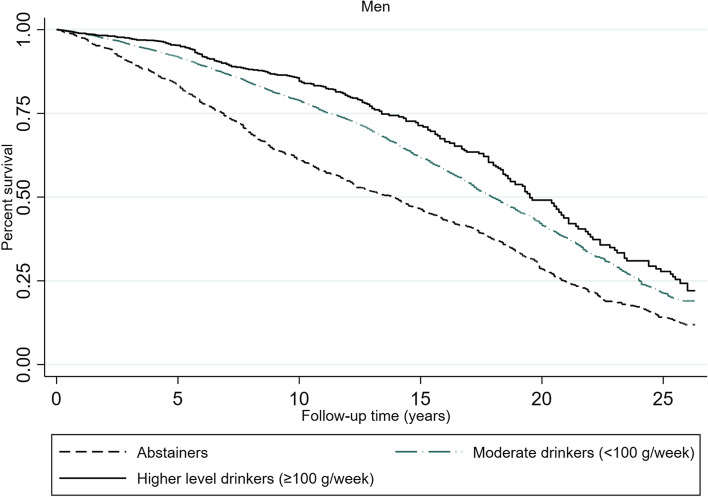
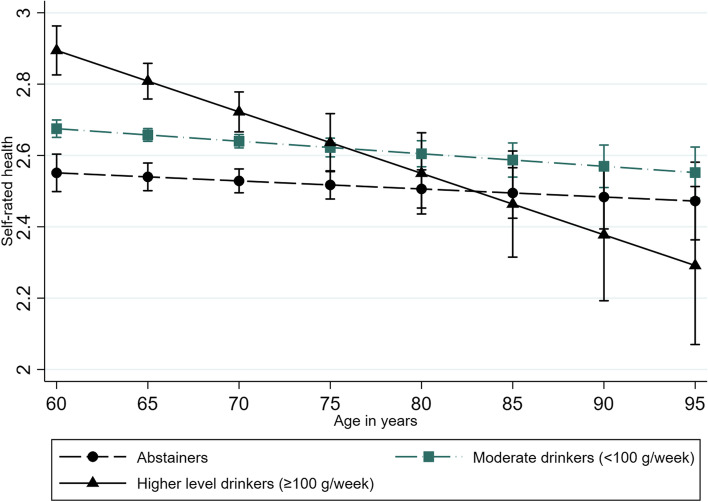
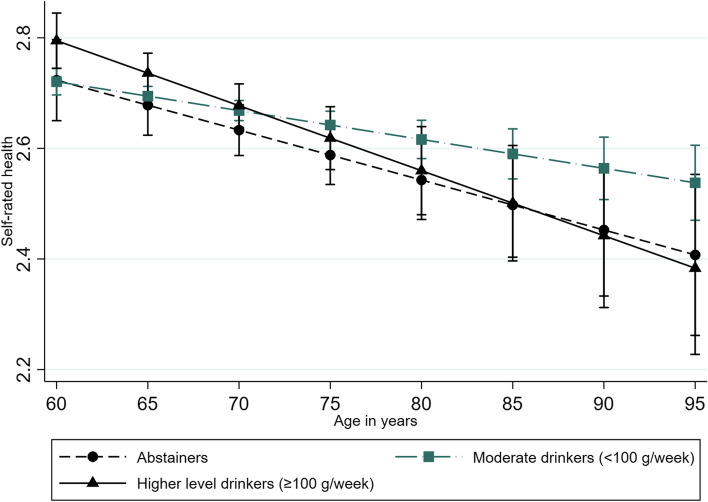
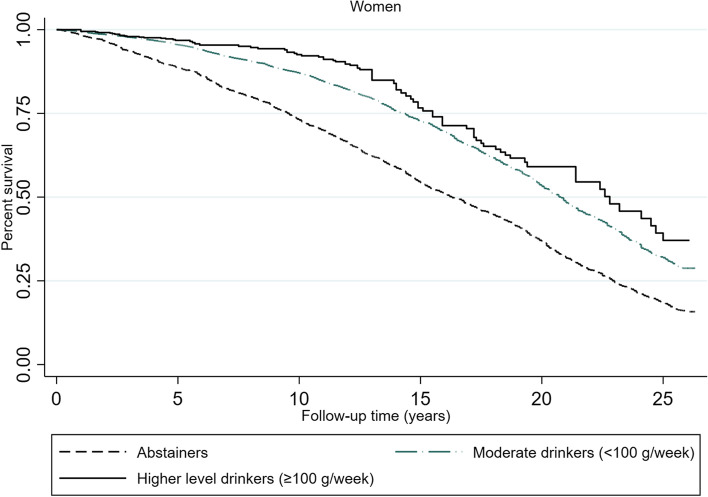
We found that women who consumed ≥100 g/week had better SRH than those who consumed < 100 g/week; OR 1.85 (1.46-2.34). This pattern was not found in men OR 1.18 (0.99-1.42). We identified an equal mortality risk in both women and men who exceeded 100 g/week compared with those who consumed less than 100 g/week; HR 0.95 (0.73-1.22) and HR 0.89 (0.77-1.03), respectively.
There was no clear evidence of an independent negative effect on either self-rated health trajectories or all-cause mortality for exceeding an average of 100 g/week compared to lower drinking levels in this study with up to 25 years follow-up. However, some sex-specific risk factors in combination with the highest level of alcohol consumption led to adverse effects on self-rated health. In men it was the use of sleeping pills or tranquilisers and ≥ 20 years of smoking, in women it was physical illness and older age.
基于老年人酒精消费量增加的研究结果,阐明其对健康的影响至关重要。利用特罗姆瑟研究的数据,我们旨在调查老年期不同酒精消费水平与自评健康轨迹及全因死亡率之间的关系。
这是一项利用特罗姆瑟研究队列重复测量数据的流行病学研究。该研究对1994年至2020年的参与者进行了随访。对60 - 99岁的老年人(53%为女性)进行了总共24590次酒精消费观察。
自评健康(SRH)和全因死亡率。在参加特罗姆瑟研究时报告了自评健康情况。死亡时间从挪威死亡原因登记处获取。随访时间从研究入组年龄延伸至死亡年龄或2020年11月25日随访结束。
平均每周酒精消费量(不饮酒者、每周<100克、每周≥100克)。我们拟合了两级逻辑随机效应模型以研究酒精消费与自评健康的关系,以及Cox比例风险模型以研究其与全因死亡率的关系。两个模型均按性别分层,并对社会人口学因素、病理学、生物统计学、吸烟和身体活动进行了调整。此外,通过交互分析检查了所有混杂因素是否调节了酒精与健康相关结局之间的关系。
我们发现,每周饮酒≥100克的女性自评健康状况优于每周饮酒<100克的女性;比值比为1.85(1.46 - 2.34)。男性未发现这种模式,比值比为1.18(0.99 - 1.42)。我们发现,与每周饮酒量低于100克的男性和女性相比,每周饮酒超过100克的男性和女性全因死亡风险相同;风险比分别为0.95(0.73 - 1.22)和0.89(0.77 - 1.03)。
在这项长达25年随访的研究中,与较低饮酒水平相比,没有明确证据表明平均每周饮酒超过100克会对自评健康轨迹或全因死亡率产生独立的负面影响。然而,一些特定性别的风险因素与最高酒精消费水平相结合会对自评健康产生不利影响。对男性而言,是使用安眠药或镇静剂以及吸烟≥20年,对女性而言,是身体疾病和年龄较大。