Harris Melissa L, Loxton Deborah, Hassen Tahir Ahmed, Shifti Desalegn M, Chojenta Catherine
Centre for Women's Health Research, College of Health, Medicine and Wellbeing, The University of Newcastle, Newcastle, NSW, Australia.
Hunter Medical Research Institute, Newcastle, NSW, Australia.
Arch Public Health. 2024 Oct 24;82(1):190. doi: 10.1186/s13690-024-01419-w.
Despite the progress made in improving maternal and child health in Ethiopia, it still has one of the highest maternal and neonatal mortality rates in the world. This is largely due to inadequate healthcare infrastructure and a lack of comprehensive evidence-based maternal and reproductive health services. To achieve the Sustainable Development Goal targets related to maternal and child health, it is essential to conduct culturally sensitive and policy-relevant research to identify areas for improvement.
To address these issues, through The University of Newcastle's increased global focus and investment into funding international research higher degrees, we developed a program on the Worldwide Wellness of Mothers and Babies (WWOMB) and trained Doctor of Philosophy students who conducted cross-cutting research across the reproductive life course. Importantly, the program aimed to bridge the inequality gaps in maternal and child health whilst cultivating a new generation of research leaders in low- and middle-income countries such as Ethiopia.
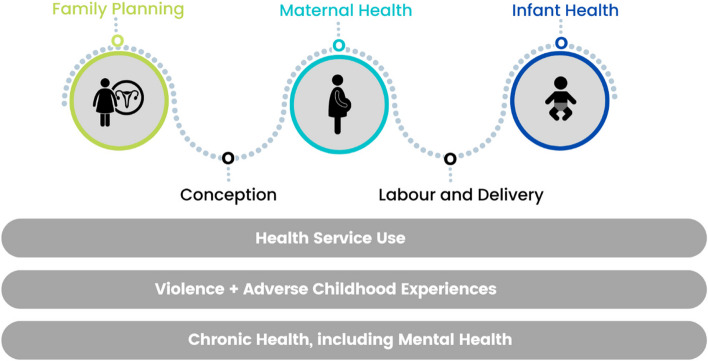
The WWOMB program has successfully generated a substantial body of epidemiological research in Ethiopia, covering five major themes: family planning and contraception, maternal and child health service utilisation, maternal and child health outcomes, maternal and child nutrition, and health economics. The key findings of the studies conducted in Ethiopia have demonstrated geographical disparities in the use of modern contraception and maternal health service utilisation, high incidence of severe maternal outcomes and neonatal near misses, high prevalence of intimate partner violence during pregnancy and its significant impact on adverse pregnancy outcomes, and the presence of economic disparities in maternal and child health, particularly around service delivery and availability.
Investment in healthcare infrastructure and services, coupled with efforts to reduce economic inequalities, can contribute to improved maternal and child health in Ethiopia. The WWOMB project has focused on delivering evidence-based recommendations for policy and practice that could accelerate the country's progress towards achieving Sustainable Development Goal targets related to maternal and child health.
尽管埃塞俄比亚在改善母婴健康方面取得了进展,但该国仍是世界上孕产妇和新生儿死亡率最高的国家之一。这主要是由于医疗保健基础设施不足以及缺乏全面的循证孕产妇和生殖健康服务。为实现与母婴健康相关的可持续发展目标,开展具有文化敏感性且与政策相关的研究以确定改进领域至关重要。
为解决这些问题,通过纽卡斯尔大学对资助国际研究更高学位的全球关注度和投资增加,我们制定了一项关于全球母婴健康(WWOMB)的计划,并培训了进行跨生殖生命历程交叉研究的哲学博士学生。重要的是,该计划旨在弥合母婴健康方面的不平等差距,同时在埃塞俄比亚等低收入和中等收入国家培养新一代研究领导者。
WWOMB计划已成功在埃塞俄比亚开展了大量流行病学研究,涵盖五个主要主题:计划生育与避孕、母婴健康服务利用、母婴健康结果、母婴营养以及卫生经济学。在埃塞俄比亚进行的研究的主要发现表明,现代避孕方法的使用和孕产妇健康服务利用存在地理差异,严重孕产妇结局和新生儿接近死亡的发生率很高,孕期亲密伴侣暴力的患病率很高及其对不良妊娠结局有重大影响,以及母婴健康方面存在经济差异,特别是在服务提供和可及性方面。
对医疗保健基础设施和服务的投资,再加上减少经济不平等的努力,可有助于改善埃塞俄比亚的母婴健康。WWOMB项目专注于为政策和实践提供循证建议,这可能加速该国在实现与母婴健康相关的可持续发展目标方面的进展。