Sim Ye Eun, Kim Cho-Long, Kim Dong Hyun, Hong Ji-Ae, Lee In-Jeong, Kwak Jong-Young, Kang Li-Jung, Mo Jung-Soon
Department of Biomedical Sciences, Graduate School, Ajou University School of Medicine, Suwon, 16499, South Korea.
Jeonnam Bioindustry Foundation, Jeonnam Institute of Natural Resources Research, Jeollanamdo, 59338, South Korea.
Heliyon. 2024 Oct 4;10(19):e38936. doi: 10.1016/j.heliyon.2024.e38936. eCollection 2024 Oct 15.
The natural polyphenolic compound known as Rosmarinic acid (RosA) can be found in various plants. Although its potential health benefits have been extensively studied, its effect on osteoarthritis (OA) progression and cartilage regeneration function still needs to be fully elucidated in OA animal models. This study elucidated the effect of RosA on OA progression and cartilage regeneration.
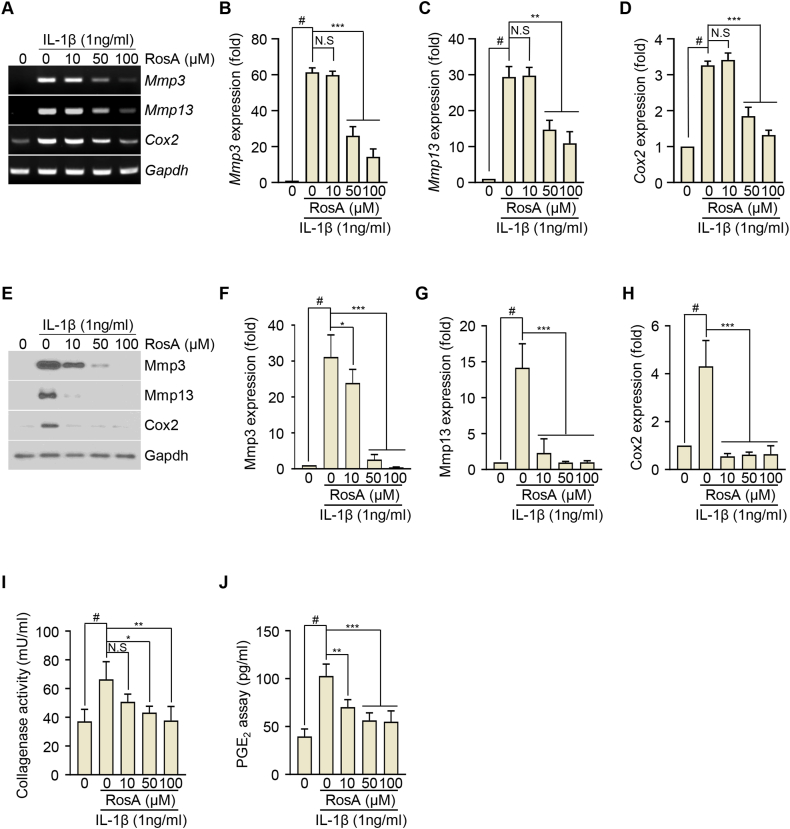
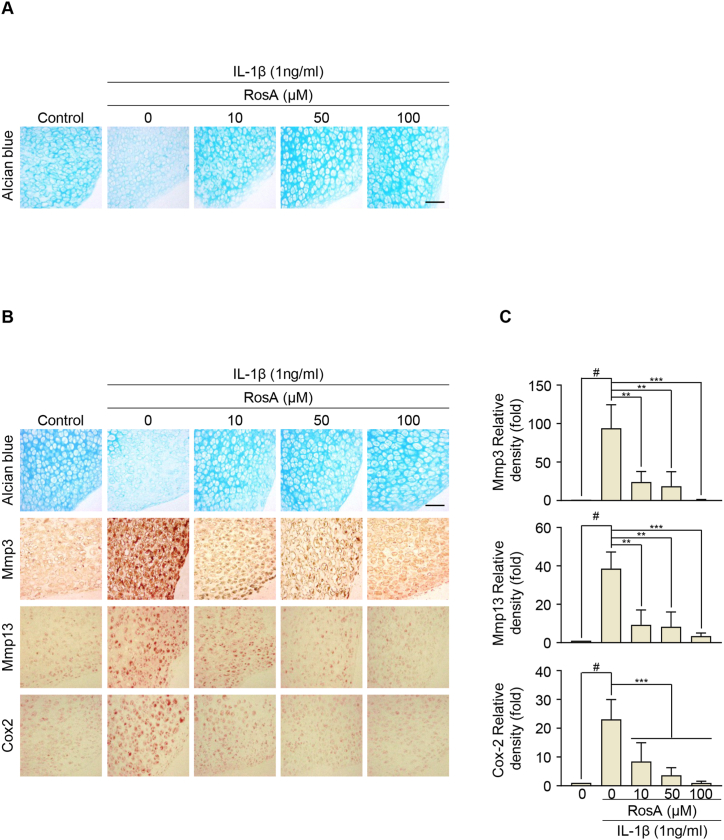
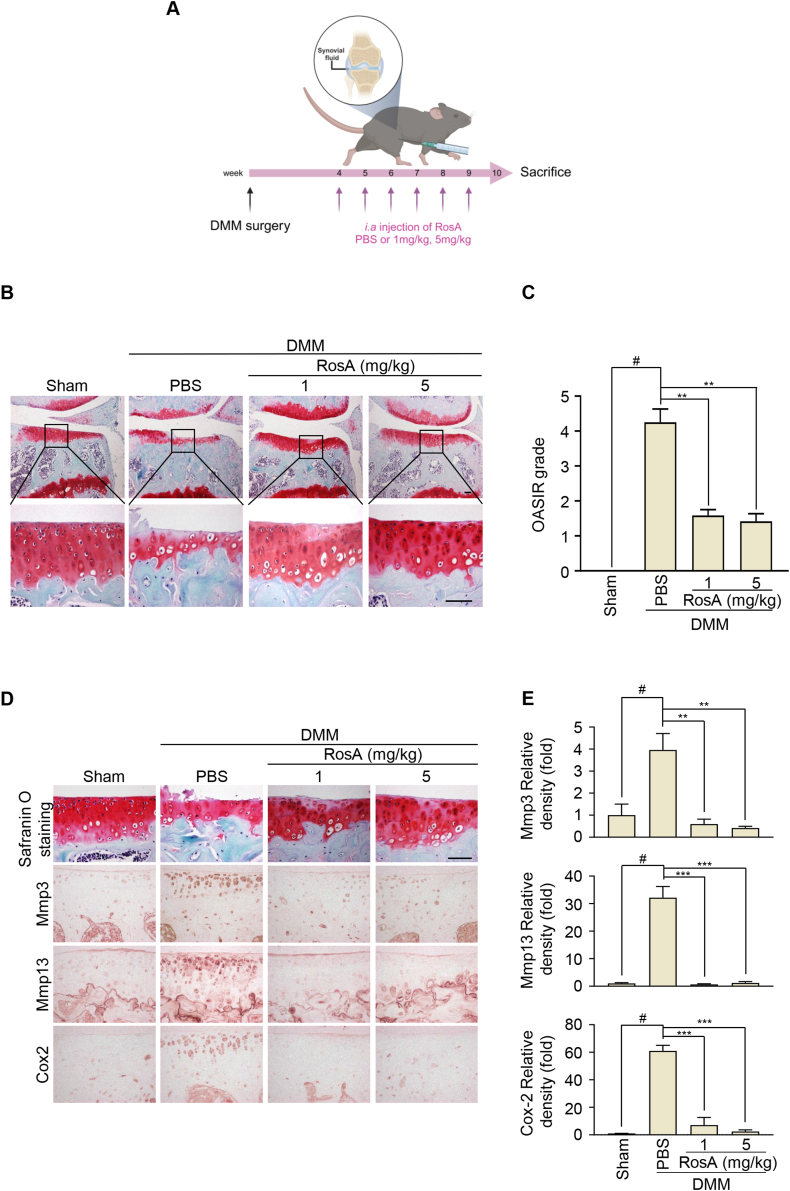
assessments were conducted using RT-PCR, qRT-PCR, Western blotting, and ELISA to measure the effects of RosA. The molecular mechanisms of RosA were determined by analyzing the translocation of p65 into the nucleus using immunocytochemistry (ICC). Histological analysis of cartilage explant was performed using alcian blue staining and immunohistochemistry (IHC). For analysis, the destabilization of the medial meniscus (DMM)-induced OA mouse model was utilized to evaluate cartilage destruction through Safranin-O staining. The expression of catabolic and anabolic factors in mice knee joints was quantified by immunohistochemistry.
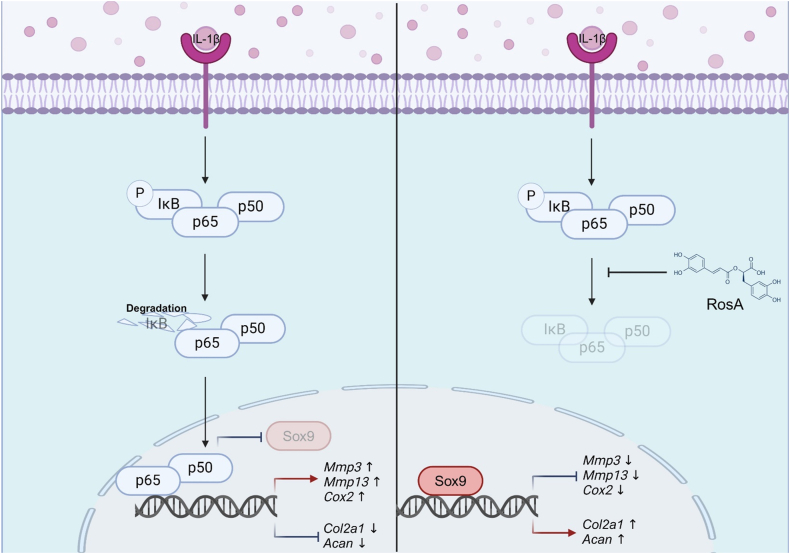
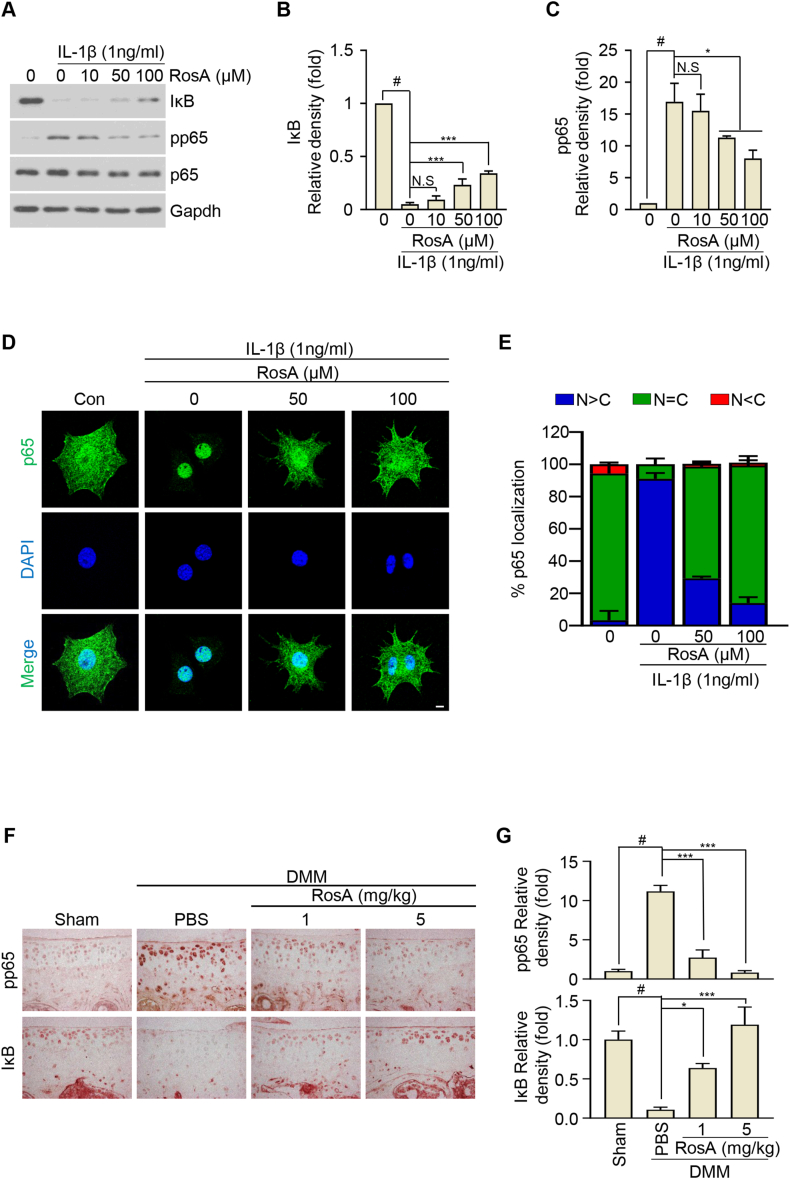
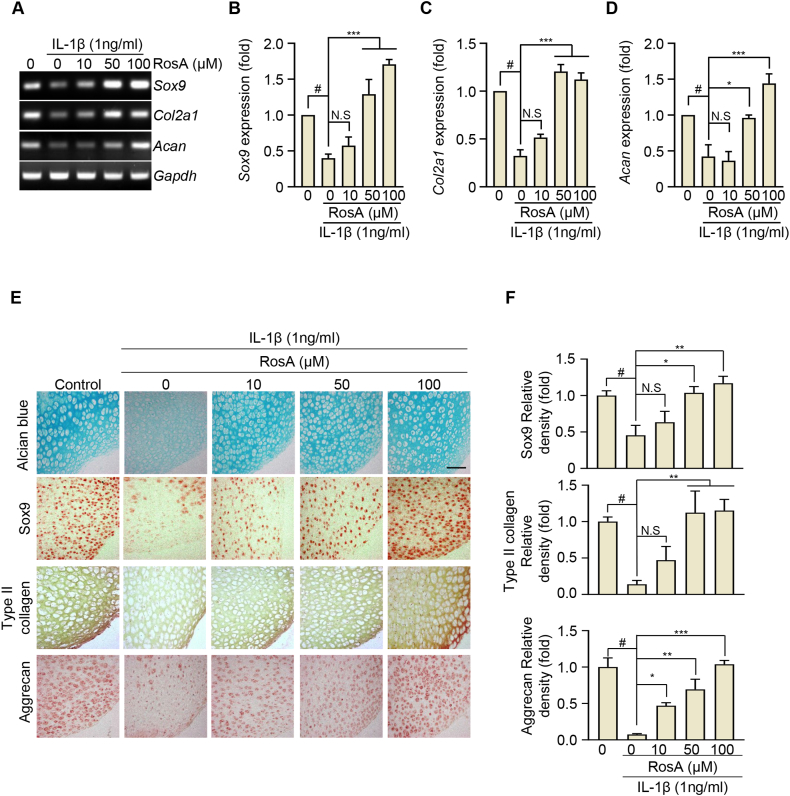
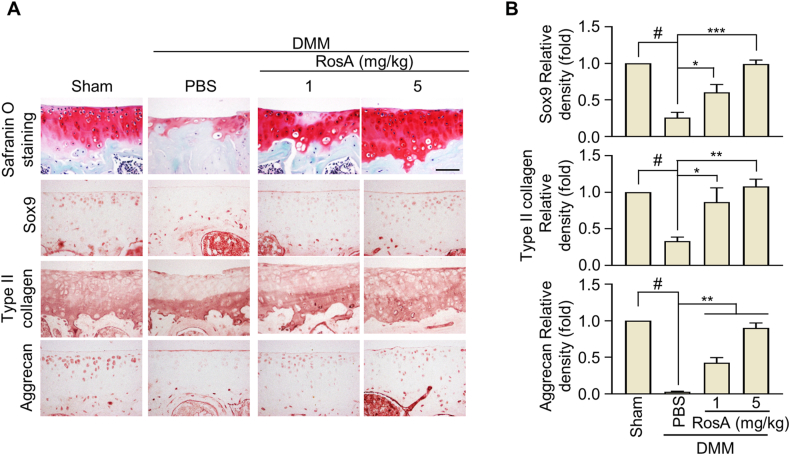
The expression of catabolic factors in chondrocytes was significantly impeded by RosA. It also suppressed the NF-κB signaling pathway by decreasing phosphorylation of p65 and reducing degradation of IκB protein. In experiments, RosA protected sulfated proteoglycan erosion triggered by IL-1β and suppressed the catabolic factors in cartilage explant. RosA treatment in animal models resulted in preventing cartilage destruction and reducing catabolic factors in the cartilage. RosA was also found to promote the expression of Sox9, Col2a1, and Acan , , and analyses.
RosA attenuated the OA progression by suppressing the catabolic factors expression. These effects were facilitated through the suppression of the NF-κB signaling pathway. Additionally, it promotes cartilage regeneration by inducing anabolic factors. Therefore, RosA shows potential as an effective therapeutic agent for treating OA.
天然多酚化合物迷迭香酸(RosA)存在于多种植物中。尽管其潜在的健康益处已得到广泛研究,但在骨关节炎(OA)动物模型中,其对OA进展和软骨再生功能的影响仍需充分阐明。本研究阐明了RosA对OA进展和软骨再生的影响。
采用逆转录聚合酶链反应(RT-PCR)、实时定量聚合酶链反应(qRT-PCR)、蛋白质免疫印迹法(Western blotting)和酶联免疫吸附测定(ELISA)进行评估,以测量RosA的作用。通过免疫细胞化学(ICC)分析p65向细胞核的转位来确定RosA的分子机制。使用阿尔新蓝染色和免疫组织化学(IHC)对软骨外植体进行组织学分析。为了进行分析,利用内侧半月板不稳定(DMM)诱导的OA小鼠模型,通过番红O染色评估软骨破坏情况。通过免疫组织化学对小鼠膝关节中分解代谢和合成代谢因子的表达进行定量。
RosA显著抑制了软骨细胞中分解代谢因子的表达。它还通过降低p65的磷酸化和减少IκB蛋白的降解来抑制核因子κB(NF-κB)信号通路。在实验中,RosA保护了由白细胞介素-1β(IL-1β)引发的硫酸化蛋白聚糖侵蚀,并抑制了软骨外植体中的分解代谢因子。在动物模型中进行RosA治疗可防止软骨破坏并减少软骨中的分解代谢因子。还发现RosA可促进性别决定区Y框蛋白9(Sox9)、Ⅱ型胶原α1链(Col2a1)和聚集蛋白聚糖(Acan)的表达,(此处原文不完整,缺少具体分析内容)。
RosA通过抑制分解代谢因子的表达减轻了OA的进展。这些作用是通过抑制NF-κB信号通路实现的。此外,它通过诱导合成代谢因子促进软骨再生。因此,RosA显示出作为治疗OA的有效治疗剂的潜力。