Dong Zhaogang, Chen Bin, Pan Hongwei, Wang Ding, Liu Min, Yang Yongmei, Zou Mingjin, Yang Junjie, Xiao Ke, Zhao Rui, Zheng Xin, Zhang Lei, Zhang Yi
Department of Clinical Laboratory, Qilu Hospital of Shandong University, Jinan, China.
Shandong Province Key Laboratories of Medicine and Health (Tumor Marker Translational Medicine Laboratory), Qilu Hospital of Shandong University, Jinan, China.
Front Oncol. 2019 Jul 9;9:608. doi: 10.3389/fonc.2019.00608. eCollection 2019.
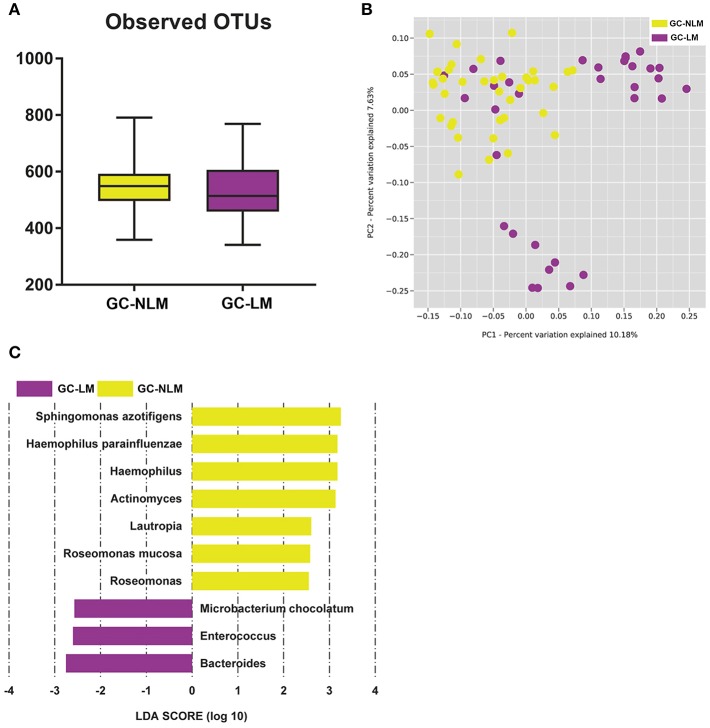
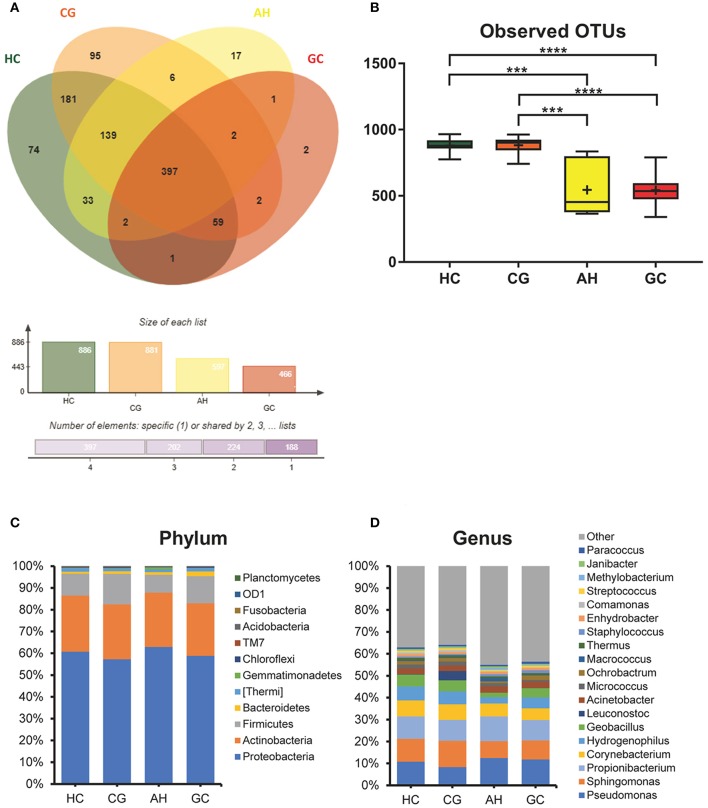
Aberrance in the blood bacterial microbiome has been identified and validated in several non-infectious diseases, including cancer. The occurrence and progression of gastric cancer has been found to be associated with alterations in the microbiome composition. However, the composition of the blood microbiome in patients with gastric cancer is not well-characterized. To test this hypothesis, we conducted a case-control study to investigate the microbiota compositions in the serum of patients with gastric cancer. The serum microbiome was investigated in patients with gastric cancer, atypical hyperplasia, chronic gastritis, and in healthy controls using 16S rRNA gene sequencing targeting the V1-V2 region. Our results revealed that the structure of the serum microbiome in gastric cancer was significantly different from all other groups, and alpha diversity decreased from the healthy control to patients with gastric cancer. The serum microbiome correlated significantly with tumor-node-metastasis (TNM) stage, lymphatic metastasis, tumor diameter, and invasion depth in gastric cancer. Three genera or species, namely, , were enriched in patients with gastric cancer, whereas , and were enriched in the healthy control. Furthermore, the structure of serum microbiota differed between gastric cancer lymphatic metastasis and non-lymphatic metastasis. As a pilot investigation to characterizing the serum microbiome in gastric cancer, our study provided a foundation for improving our understanding of the role of microbiota in the pathogenesis of gastric cancer.
血液细菌微生物群的异常已在包括癌症在内的多种非传染性疾病中得到确认和验证。胃癌的发生和发展已被发现与微生物群组成的改变有关。然而,胃癌患者血液微生物群的组成尚未得到充分表征。为了验证这一假设,我们进行了一项病例对照研究,以调查胃癌患者血清中的微生物群组成。使用针对V1-V2区域的16S rRNA基因测序,对胃癌、非典型增生、慢性胃炎患者以及健康对照者的血清微生物群进行了研究。我们的结果显示,胃癌患者血清微生物群的结构与所有其他组有显著差异,并且从健康对照到胃癌患者,α多样性降低。血清微生物群与胃癌的肿瘤-淋巴结-转移(TNM)分期、淋巴转移、肿瘤直径和浸润深度显著相关。三个属或种,即,在胃癌患者中富集,而,和在健康对照中富集。此外,胃癌淋巴转移和非淋巴转移患者的血清微生物群结构不同。作为表征胃癌血清微生物群的初步研究,我们的研究为增进我们对微生物群在胃癌发病机制中作用的理解提供了基础。