Chen Fang, Zhu Mengying, Li Wenjuan
Department of Gynecology, People's Hospital of Liaoning Province, Shenyang, China.
Liaoning University of Traditional Chinese Medicine, Shenyang, China.
Front Oncol. 2024 Oct 9;14:1475231. doi: 10.3389/fonc.2024.1475231. eCollection 2024.
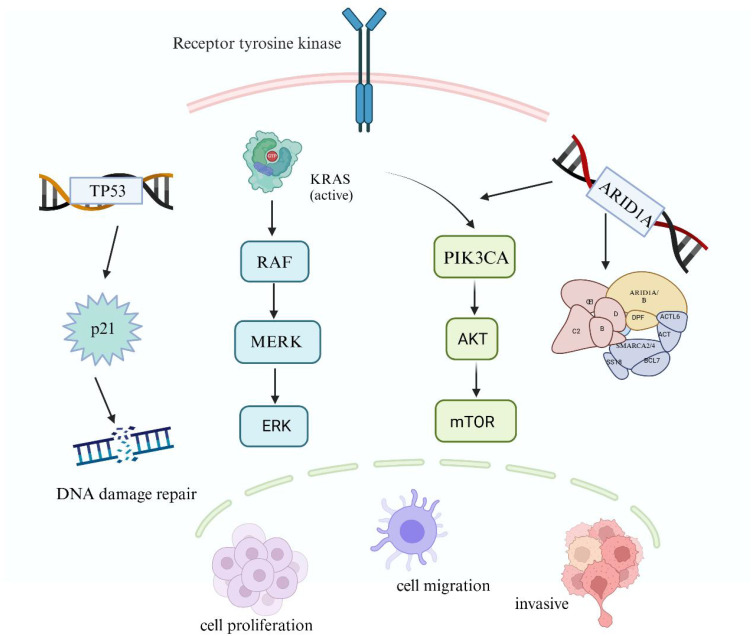
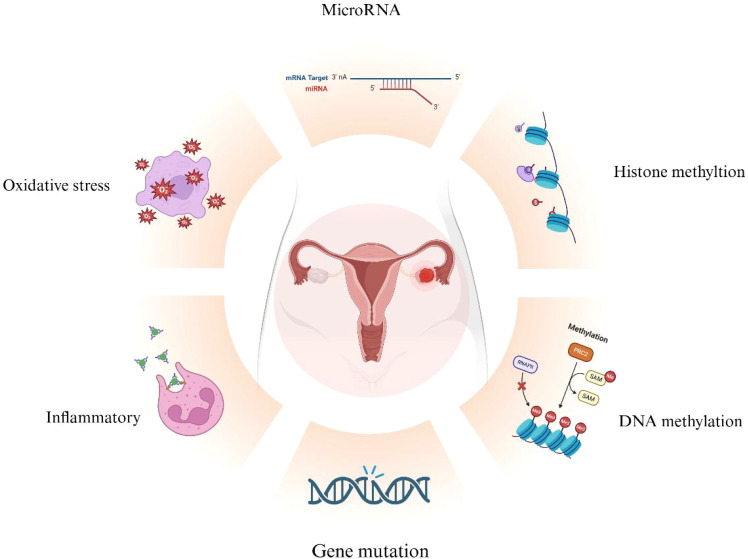
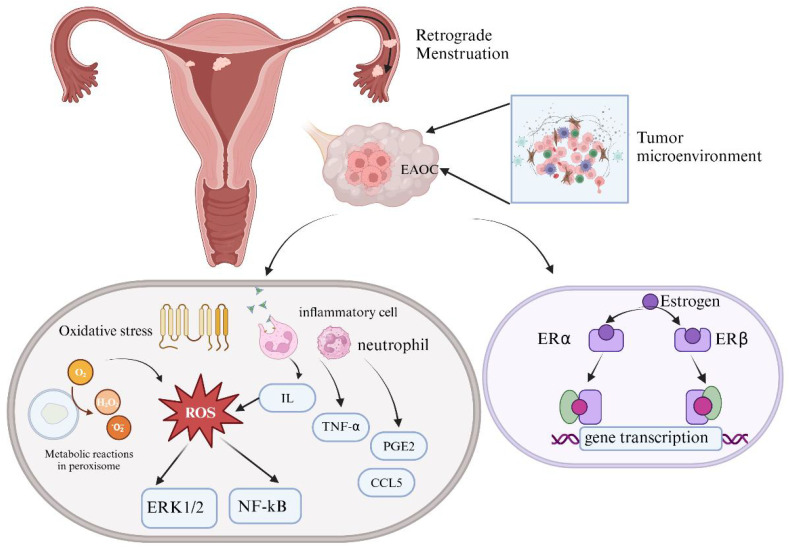
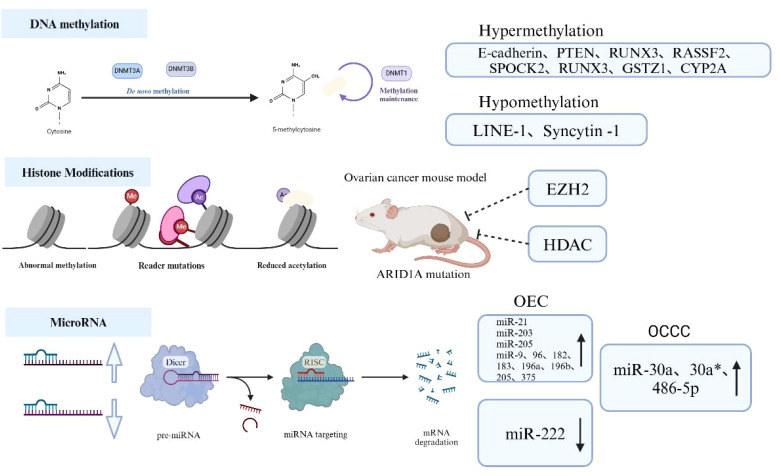
Endometriosis (EMs) is a prevalent chronic gynecological condition that depends on estrogen, marked by the presence of active endometrial tissue (glands and stroma) outside the uterus. Although pathologically benign, it exhibits biological behaviors such as invasion and metastasis akin to malignant tumors. Endometriosis-associated ovarian carcinoma (EAOC), arising from malignant transformation of EMs, poses significant clinical challenges. However, the mechanisms underlying EAOC pathogenesis remain incompletely understood, with a lack of reliable biomarkers for early diagnosis and personalized treatment strategies. Considering the significant number of EMs patients and the extended period during which malignant transformation can occur, EAOC deserves significant attention. Current research both domestically and internationally indicates that the pathogenesis of EAOC is complex, involving genetic mutations, immune microenvironment, oxidative stress, epigenetic changes, and related areas. This review summarizes the mechanisms underlying the development of EAOC.
子宫内膜异位症(EMs)是一种常见的慢性妇科疾病,依赖雌激素,其特征是子宫外存在活跃的子宫内膜组织(腺体和间质)。虽然在病理上是良性的,但它表现出类似于恶性肿瘤的侵袭和转移等生物学行为。子宫内膜异位症相关卵巢癌(EAOC)由EMs恶变而来,带来了重大的临床挑战。然而,EAOC发病机制的根本原因仍未完全明确,缺乏用于早期诊断的可靠生物标志物和个性化治疗策略。鉴于EMs患者数量众多且恶变可能发生在较长时期内,EAOC值得高度关注。国内外目前的研究表明,EAOC的发病机制很复杂,涉及基因突变、免疫微环境、氧化应激、表观遗传变化及相关领域。本综述总结了EAOC发生发展的机制。