Division of Pharmaceutical Biosciences, Drug Research Program, Faculty of Pharmacy, University of Helsinki, Helsinki, Finland.
Institut für Biostatistik und Informatik in Medizin und Alternsforschung, University of Rostock, Rostock, Germany.
Sci Rep. 2024 Oct 24;14(1):25189. doi: 10.1038/s41598-024-73453-1.
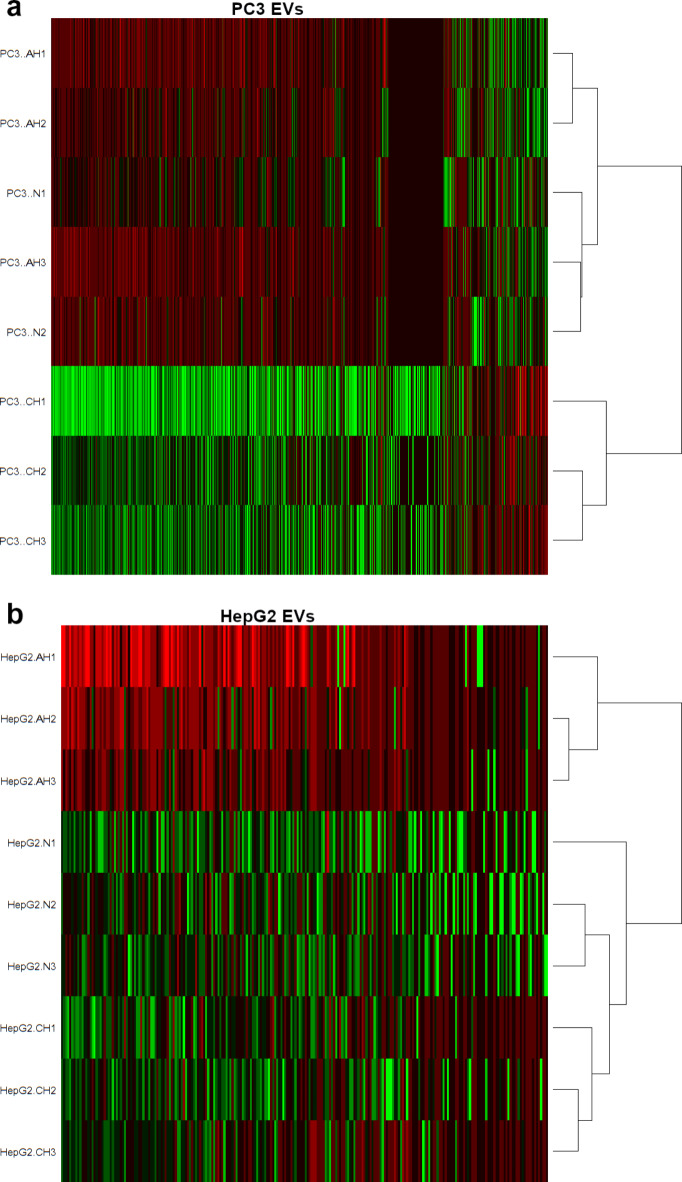
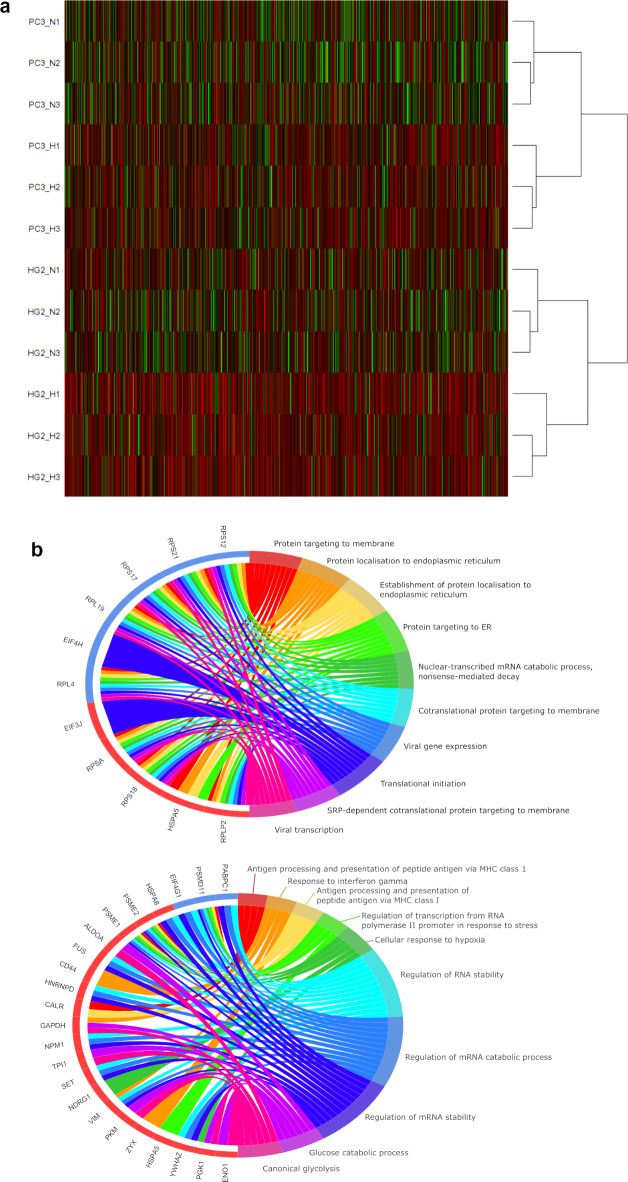
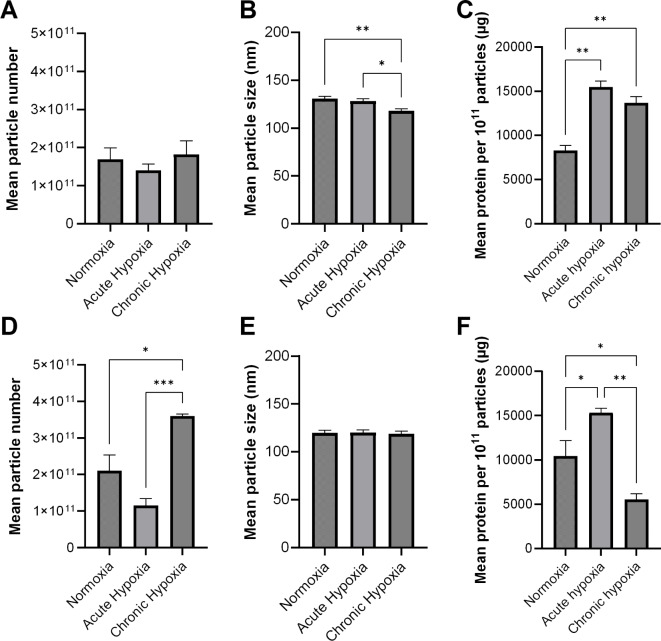
Variations in oxygen level affect the phenotype of cells and extracellular vesicles (EVs). Depending on the metabolic oxygen demand of cells, hypoxic cell culture can produce conditions more like those found in vivo, and with appropriate oxygen levels, mimic hypoxic tumours. However, most previous experiments studying both EVs and the effects of hypoxia on cells use periods of 72 h or less of hypoxia. We hypothesised that this was insufficient time for adaptation to hypoxic conditions both for EVs and cells which may skew the results of such studies. In this study, the effects of acute (72 h) and chronic hypoxia (> 2 weeks) on the phenotype of HepG2 and PC3 cells and their EVs were examined. Cells could be cultured normally under chronic hypoxic conditions and cryopreserved and recovered. The effects of hypoxia on EV phenotype are slow to establish and dependent on cell line. In PC3 cells, the greatest change in phenotype and increase in EV production occurred only with chronic hypoxic culture. In HepG2 cells, the number of EVs produced was insensitive to hypoxic culture and the greatest changes in protein expression were observed after acute hypoxic culture. Nonetheless, biphasic changes in EV phenotype were detected in both cell types in response to either acute or chronic hypoxia. These results indicate that for cells which do not induce consumptive oxygen depletion, prolonged hypoxic culture is required for complete adaptation.
氧水平的变化会影响细胞和细胞外囊泡 (EVs) 的表型。根据细胞的代谢氧需求,低氧细胞培养可以产生更类似于体内的条件,并且在适当的氧水平下,可以模拟缺氧肿瘤。然而,大多数以前研究 EVs 和缺氧对细胞影响的实验使用的低氧时间都不超过 72 小时。我们假设,对于 EVs 和细胞来说,适应低氧条件的时间不足,这可能会扭曲这些研究的结果。在这项研究中,研究了急性(72 小时)和慢性缺氧(>2 周)对 HepG2 和 PC3 细胞及其 EVs 表型的影响。细胞可以在慢性低氧条件下正常培养,并进行冷冻保存和恢复。缺氧对 EV 表型的影响建立缓慢,且取决于细胞系。在 PC3 细胞中,只有在慢性低氧培养下,表型才会发生最大变化,EV 产量才会增加。在 HepG2 细胞中,EV 的产生数量对低氧培养不敏感,而在急性低氧培养后观察到最大的蛋白表达变化。尽管如此,在两种细胞类型中,无论是急性还是慢性缺氧,都检测到了 EV 表型的双相变化。这些结果表明,对于不会引起耗氧消耗的细胞,需要进行长期低氧培养才能完全适应。