Genetics and Genome Biology, SickKids Research Institute, Toronto, ON, Canada.
Department of Molecular Genetics, University of Toronto, Toronto, ON, Canada.
Biol Sex Differ. 2024 Oct 24;15(1):83. doi: 10.1186/s13293-024-00661-9.
The hypothalamus plays a central role in regulating puberty. However, our knowledge of the postnatal gene regulatory networks that control the pubertal transition in males and females is incomplete. Here, we investigate the age-, sex- and cell-type-specific gene regulation in the hypothalamus across the pubertal transition.
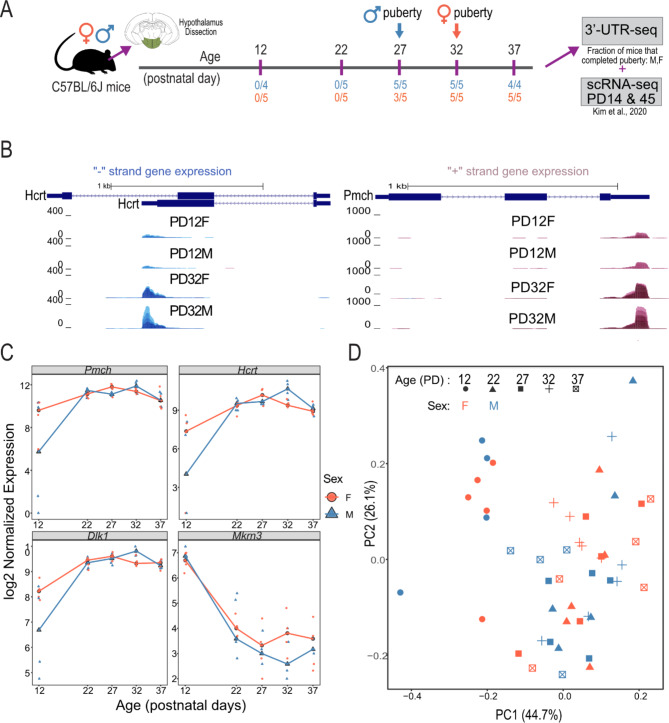
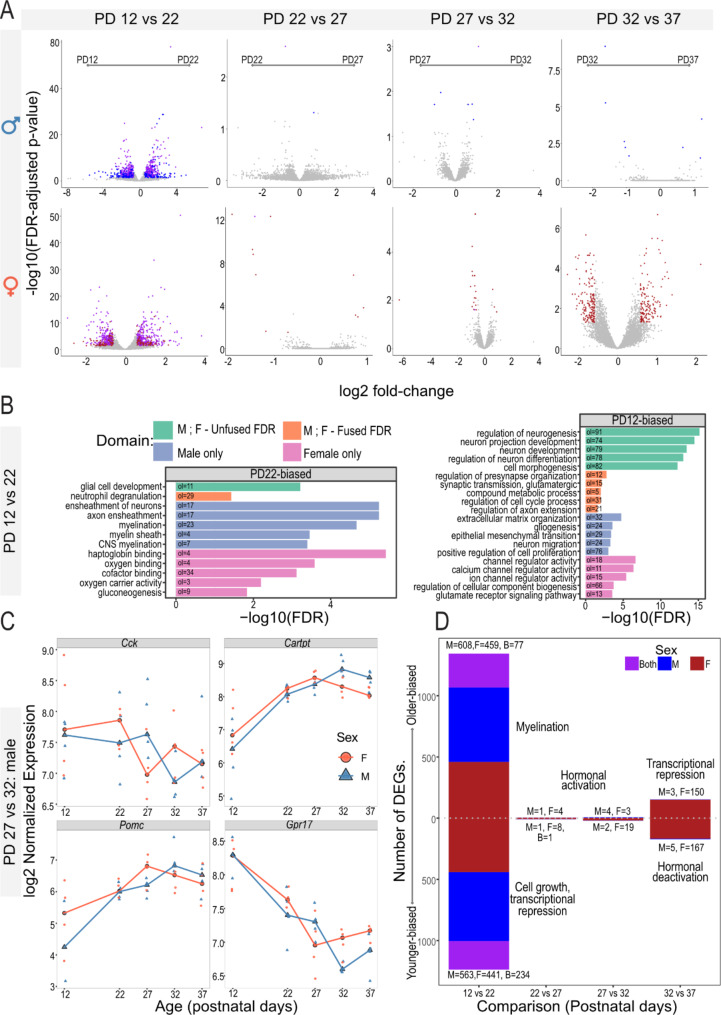
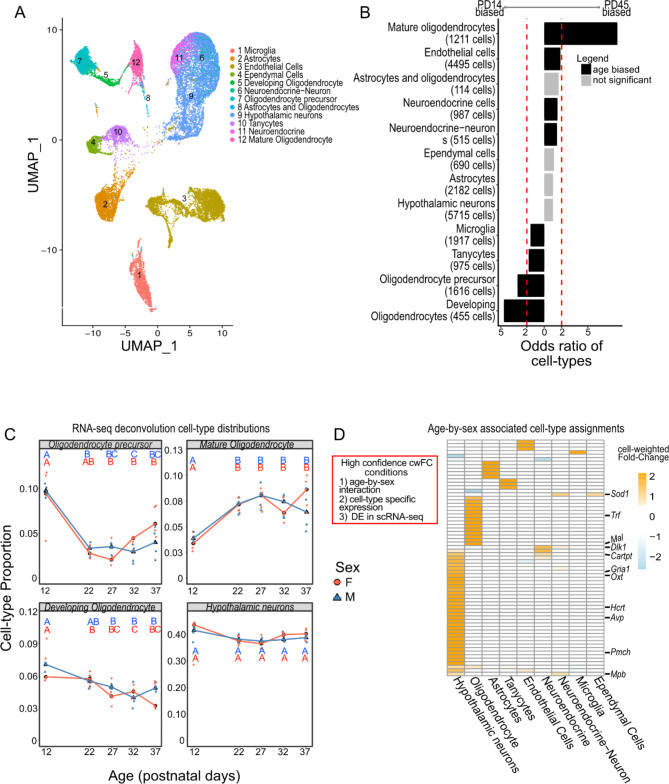
We used RNA-seq to profile hypothalamic gene expression in male and female mice at five time points spanning the onset of puberty (postnatal days (PD) 12, 22, 27, 32, and 37). By combining this data with hypothalamic single nuclei RNA-seq data from pre- and postpubertal mice, we assigned gene expression changes to their most likely cell types of origin. In our colony, pubertal onset occurs earlier in male mice, allowing us to focus on genes whose expression is dynamic across ages and offset between sexes, and to explore the bases of sex effects.
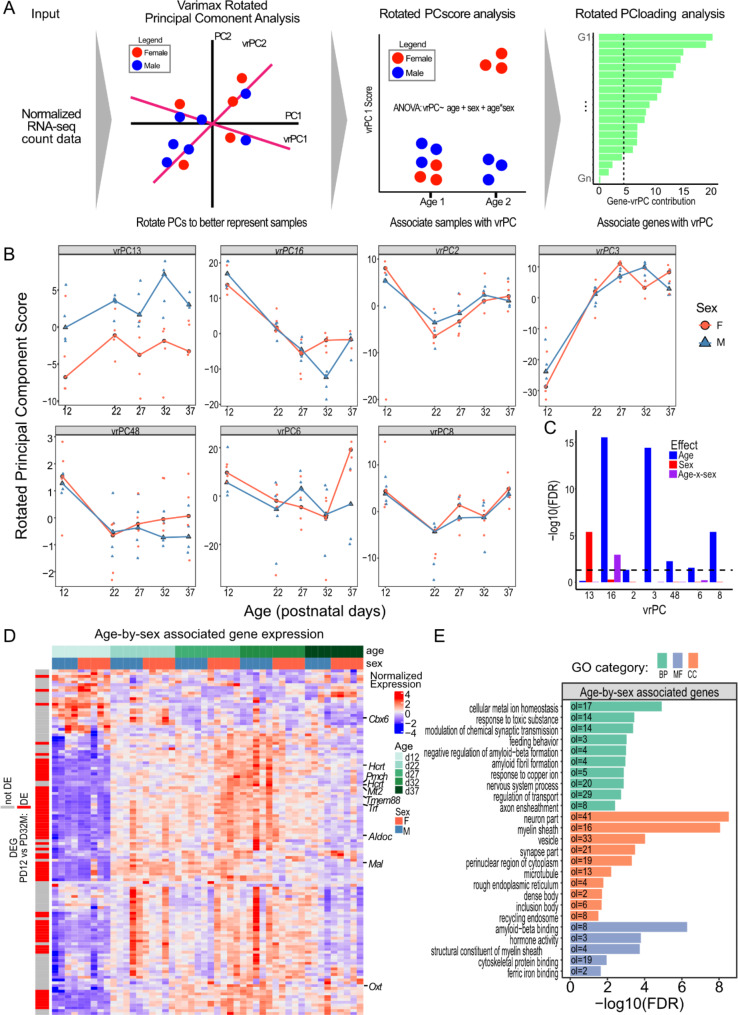
Our age-by-sex pattern of expression enriched for biological pathways involved hormone production, neuronal activation, and glial maturation. Additionally, we inferred a robust expansion of oligodendrocytes precursor cells into mature oligodendrocytes spanning the prepubertal (PD12) to peri-pubertal (PD27) timepoints. Using spatial transcriptomic data from postpubertal mice, we observed the lateral hypothalamic area and zona incerta were the most oligodendrocyte-rich regions and that these cells expressed genes known to be involved in pubertal regulation.
Together, by incorporating multiple biological timepoints and using sex as a variable, we identified gene and cell-type changes that may participate in orchestrating the pubertal transition and provided a resource for future studies of postnatal hypothalamic gene regulation.
下丘脑在调节青春期方面起着核心作用。然而,我们对于控制男性和女性青春期过渡的出生后基因调控网络的了解并不完整。在这里,我们研究了下丘脑在青春期过渡过程中性别和细胞类型特异性的基因调控。
我们使用 RNA-seq 技术在跨越青春期(出生后第 12、22、27、32 和 37 天)的五个时间点对雄性和雌性小鼠的下丘脑基因表达进行了分析。通过将这些数据与来自青春期前和青春期后小鼠的下丘脑单细胞 RNA-seq 数据相结合,我们将基因表达的变化归因于它们最可能的细胞起源类型。在我们的实验群体中,雄性小鼠的青春期开始较早,这使我们能够专注于那些在年龄和性别之间表现出动态表达的基因,并探索性别效应的基础。
我们的年龄-性别表达模式富集了与激素产生、神经元激活和神经胶质成熟相关的生物学途径。此外,我们推断出少突胶质细胞前体细胞在青春期前(PD12)到青春期(PD27)期间向成熟少突胶质细胞的强烈扩张。使用来自青春期后小鼠的空间转录组数据,我们观察到下丘脑外侧区和神经内髓质是最富含少突胶质细胞的区域,这些细胞表达已知参与青春期调节的基因。
通过结合多个生物学时间点,并将性别作为一个变量,我们确定了可能参与协调青春期过渡的基因和细胞类型变化,并为进一步研究出生后下丘脑基因调控提供了资源。