Ma Xiao-Lin, Cai Lai-Yan, Liu Yan-Ying, Xing Shang-Ping, Kang Liang, Wei Xia, Zhu Dan
Pharmaceutical College, Guangxi Medical University, Nanning 530021, China.
Department of Pharmacy, the Second Affiliated Hospital, Guangxi Medical University, Nanning 530007, China.
Se Pu. 2024 Nov;42(11):1015-1023. doi: 10.3724/SP.J.1123.2024.08002.
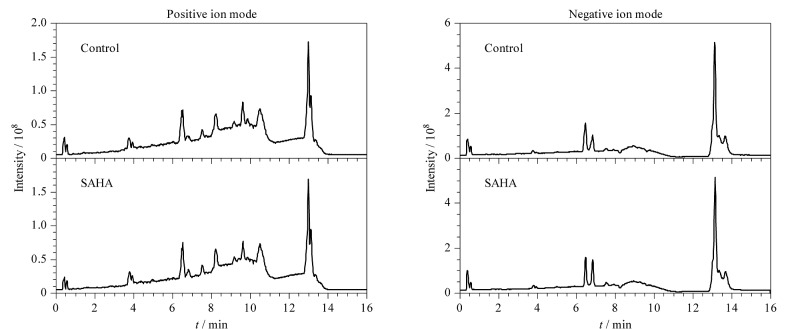
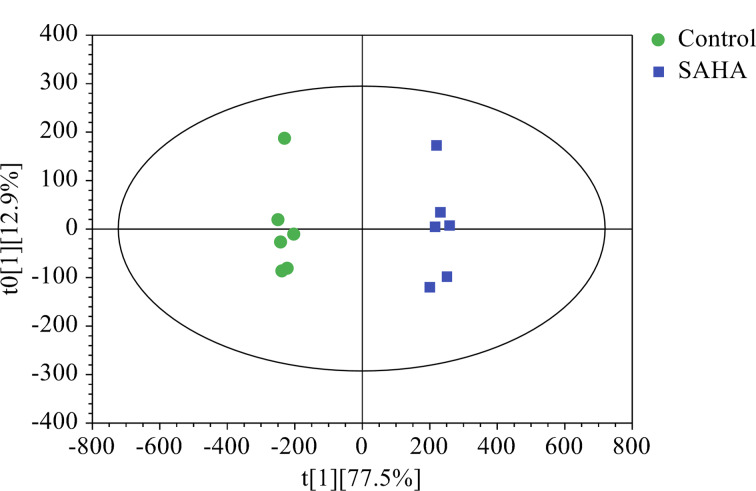
Ovarian cancer is a serious threat to women's health and safety. So far, people have discovered more than 130 small molecule compounds of natural origin for anti-tumor, of which approximately 50% are of microbial origin. The L. species is primarily distributed in the Guangdong, Hainan, and Guangxi regions of China and grows in tidally accessible coastal areas. Recent studies have revealed that L. extracts are endowed with a range of pharmacological properties, including anti-inflammatory, hepatoprotective, antioxidant, and antitumor activities. Endophytic fungi are commonly found in the healthy tissue and organs of medicinal plants. These fungi and the plants they inhabit form mutually beneficial symbiotic relationships. Endophytic fungi produce a series of secondary metabolites, with active substances having shown great economic value and applications prospects in drug research and development as well as for the biological control of plant diseases. Secondary metabolites production by endophytic fungi is regulated by specific gene clusters, and several techniques have been used to stimulate the secondary metabolic processes of fungi, including epigenetic-modification and OSMAC (one strain many compounds) strategies, co-culturing, and gene modification. Among these, epigenetic modification has been shown to be effective; this strategy involves the addition of small-molecule epigenetic modifiers to the culture medium, thereby activating silenced biosynthetic gene clusters without altering the DNA sequences of the fungi. This approach facilitates the expression of silenced genes in endophytic fungi, thereby increasing the number and diversity of secondary metabolites. Furthermore, it assists in overcoming the inhibition of microbial secondary-metabolite synthesis under laboratory conditions, and enhances silenced-gene expressions. The advent of novel analytical techniques and bioinformatics has provided a comprehensive, multifaceted, and holistic understanding of fungal metabolism through the development of metabolomics as a research platform. However, few studies have combined anti-ovarian cancer-activity screening with metabolomic approaches in the search for activity-differentiating metabolites from endophytic fungi under the intervention of epigenetic modifiers. Herein, we investigated the impact of epigenetic modifiers on the secondary metabolites of the endophytic fungus from L. to determine their potential anti-ovarian cancer activities. Crude extracts were obtained by controlling three variables: the number of fermentation days, the type of epigenetic modifier, and its concentration, with activities screened using the CCK-8 (cell counting kit-8) method. Ultra performance liquid chromatography-tandem mass spectrometry (UPLC-MS/MS) was subsequently employed for non-targeted metabolomic analysis. A multivariate statistical analysis model was constructed using principal component analysis and orthogonal partial least squares-discriminant analysis, which combines model and variable importance projection, with qualitative screening performed and significant changes (variable importance in the projection (VIP)≥1; <0. 05) determined. Fifteen differential metabolites were identified in the fungal and epigenetic modification group, primarily comprising polyketides, amino acids, derivatives, alkaloids, and organic acids, including prenderol, glycine, valine, 2-ethylcaproic acid, rubratoxin B, finasteride, 6-silaspiro[5.5]undecane, 1-(2-nitrophenoxy)octane, heptadecene, 1-pentadecene, 11-ketoetiocholanolone, 3-(1-ethyl-1,3,3-trimethyl-2,3-dihydro-1-inden-5-yl)butanal, -benzoylarginine, tabutrex, (3a,6,6a)-6-(4-hydroxy-2-methoxy-2-butanyl)-4,4-dimethylhexahydro-1(2)-pentalenone, and 8-aminoquinoline. The expressions of prenderol, 1-(2-nitrophenoxy)octane, 3-(1-ethyl-1,3,3-trimethyl-2,3-dihydro-1-inden-5-yl)butanal, -benzoylarginine, and 8-aminoquinoline were downregulated, whereas the expressions of the remaining 10 substances were upregulated. Polyketides were the main components that exhibited higher expressions. This study showed that latent active differential metabolites can be searched by combining anti-ovarian cancer-activity screening with metabolomics analysis, thereby providing a reference for the further development of L. resources and the subsequent targeted isolation of active compounds.
卵巢癌对女性的健康与安全构成严重威胁。迄今为止,人们已发现130多种具有抗肿瘤作用的天然来源小分子化合物,其中约50%来源于微生物。该种植物主要分布于中国广东、海南和广西地区,生长在潮汐可达的沿海区域。最近的研究表明,该种植物提取物具有一系列药理特性,包括抗炎、保肝、抗氧化和抗肿瘤活性。内生真菌常见于药用植物的健康组织和器官中。这些真菌与其所寄生的植物形成互利共生关系。内生真菌产生一系列次生代谢产物,其活性物质在药物研发以及植物病害生物防治方面显示出巨大的经济价值和应用前景。内生真菌次生代谢产物的产生受特定基因簇调控,人们已采用多种技术刺激真菌的次生代谢过程,包括表观遗传修饰和OSMAC(一种菌株多种化合物)策略、共培养及基因修饰。其中,表观遗传修饰已被证明是有效的;该策略是向培养基中添加小分子表观遗传修饰剂,从而在不改变真菌DNA序列的情况下激活沉默的生物合成基因簇。这种方法有助于内生真菌中沉默基因的表达,从而增加次生代谢产物的数量和多样性。此外,它有助于克服实验室条件下微生物次生代谢产物合成的抑制作用,并增强沉默基因的表达。新型分析技术和生物信息学的出现,通过发展代谢组学作为研究平台,为真菌代谢提供了全面、多方面和整体的理解。然而,很少有研究将抗卵巢癌活性筛选与代谢组学方法相结合,以在表观遗传修饰剂干预下从内生真菌中寻找具有活性差异的代谢产物。在此,我们研究了表观遗传修饰剂对该种植物内生真菌次生代谢产物的影响,以确定其潜在的抗卵巢癌活性。通过控制发酵天数、表观遗传修饰剂类型及其浓度这三个变量获得粗提物,并使用CCK - 8(细胞计数试剂盒 - 8)法筛选活性。随后采用超高效液相色谱 - 串联质谱(UPLC - MS/MS)进行非靶向代谢组学分析。使用主成分分析和正交偏最小二乘判别分析构建多元统计分析模型,该模型结合了模型和变量重要性投影,进行定性筛选并确定显著变化(投影变量重要性(VIP)≥1;<0.05)。在真菌和表观遗传修饰组中鉴定出15种差异代谢产物,主要包括聚酮类、氨基酸、衍生物、生物碱和有机酸,包括普伦德醇、甘氨酸、缬氨酸、2 - 乙基己酸、红天精、非那雄胺、6 - 硅螺[5.5]十一烷、1 - (2 - 硝基苯氧基)辛烷、十七碳烯、1 - 十五碳烯、11 - 酮 - 本胆烷醇酮、3 - (1 - 乙基 - 1,3,3 - 三甲基 - 2,3 - 二氢 - 1 - 茚 - 5 - 基)丁醛、 - 苯甲酰精氨酸、他布瑞克斯、(3a,6,6a) - 6 - (4 - 羟基 - 2 - 甲氧基 - 2 - 丁基) - 4,4 - 二甲基六氢 - 1(2) - 戊烯酮和8 - 氨基喹啉。普伦德醇、1 - (2 - 硝基苯氧基)辛烷、3 - (1 - 乙基 - 1,3,3 - 三甲基 - 2,3 - 二氢 - 1 - 茚 - 5 - 基)丁醛、 - 苯甲酰精氨酸和8 - 氨基喹啉的表达下调,而其余10种物质的表达上调。聚酮类是表达较高的主要成分。本研究表明,通过将抗卵巢癌活性筛选与代谢组学分析相结合,可以寻找潜在的活性差异代谢产物,从而为该种植物资源的进一步开发以及后续活性化合物的靶向分离提供参考。