Fu Jiamin, Zhang Yuchi, Chen Xiaoyu, Yu Xing, Yan Maoxin, Jing Biying, Yu Hongjuan, Li Wenzhen, Guo Qi
Department of Rehabilitation Medicine, Shanghai University of Medicine and Health Sciences Affiliated Zhoupu Hospital, Shanghai, China.
School of Sports and Health, Tianjin University of Sport, Tianjin, China.
Front Med (Lausanne). 2024 Oct 10;11:1467234. doi: 10.3389/fmed.2024.1467234. eCollection 2024.
The relationship between vitamin D and depression has garnered significant attention in recent years. However, the efficacy of vitamin D in ameliorating depression among specific subgroups of older patients remains controversial. This study aimed to assess the impact of vitamin D supplementation on depressive symptoms and the prevalence of depression in older adults. Additionally, the study sought to examine potential moderating factors, including differences among population subgroups and various supplementation strategies.
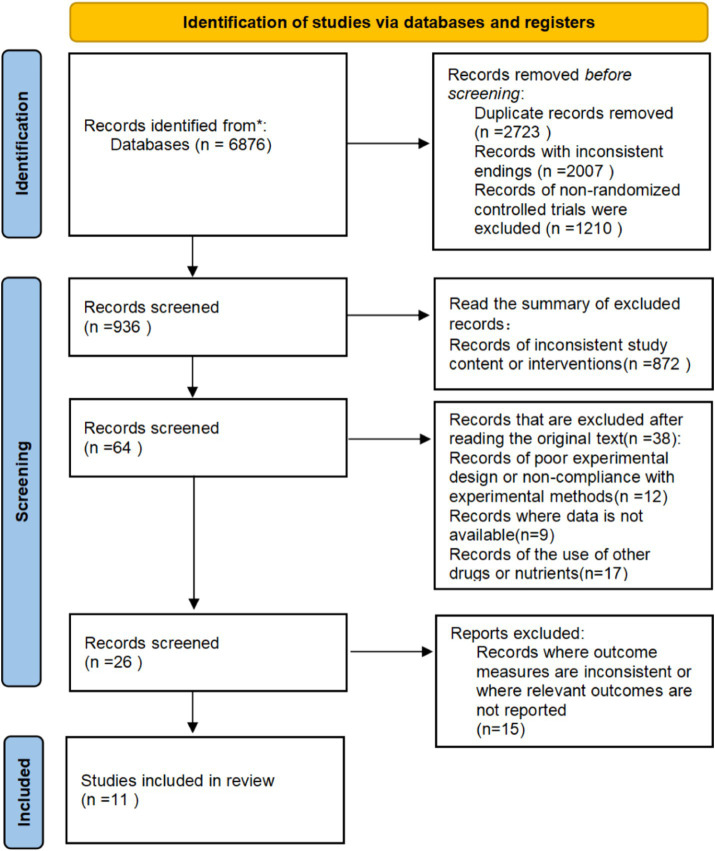
A systematic literature search was conducted in the databases PubMed, EMBASE, Web of Science, and the Cochrane Library up to March 2024. The RevMan 5.3 software was utilized to calculate the standardized mean difference (SMD) and to evaluate the quality of evidence using the Grading of Recommendations Assessment, Development and Evaluation (GRADE) approach. The objective was to determine the efficacy of vitamin D supplementation in alleviating depressive symptoms or treating depression in older adults.
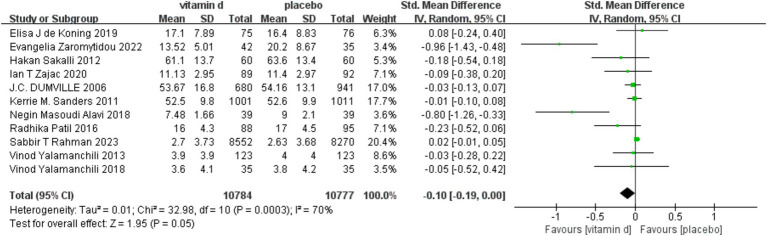
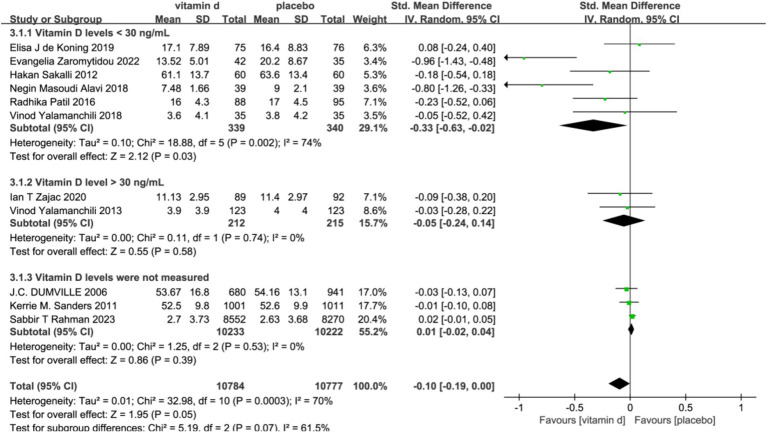
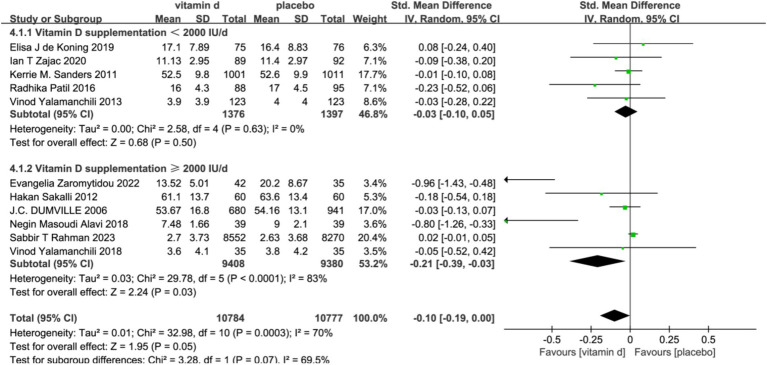
This meta-analysis encompassed eleven studies, comprising a total of 21,561 participants. The findings did not indicate a statistically significant therapeutic benefit of vitamin D supplementation for depression in older patients [SMD: -0.10; 95% CI: (-1.19, 0.00); = 0.05]. Subgroup analyses revealed that the efficacy of vitamin D intervention in geriatric depression correlated with several factors, including baseline serum 25(OH)D levels, the dosage of the intervention, gender, and the initial presence of depressive symptoms or a diagnosis of depression.
The current evidence is insufficient to conclusively establish the significant efficacy of vitamin D supplementation in alleviating depressive symptoms among older patients. Consequently, additional randomized controlled trials are warranted to further validate the relationship between vitamin D supplementation and depression in the older adults.
近年来,维生素D与抑郁症之间的关系备受关注。然而,维生素D对改善特定老年患者亚组抑郁症的疗效仍存在争议。本研究旨在评估补充维生素D对老年人抑郁症状及抑郁症患病率的影响。此外,该研究还试图考察潜在的调节因素,包括人群亚组差异和各种补充策略。
截至2024年3月,在PubMed、EMBASE、Web of Science和Cochrane图书馆数据库中进行了系统的文献检索。使用RevMan 5.3软件计算标准化均数差(SMD),并采用推荐分级评估、制定与评价(GRADE)方法评估证据质量。目的是确定补充维生素D在缓解老年人抑郁症状或治疗抑郁症方面的疗效。
该荟萃分析纳入了11项研究,共21561名参与者。研究结果表明,补充维生素D对老年患者抑郁症的治疗益处无统计学意义[SMD:-0.10;95%CI:(-1.19,0.00);P = 0.05]。亚组分析显示,维生素D干预对老年抑郁症的疗效与几个因素相关,包括基线血清25(OH)D水平、干预剂量、性别以及抑郁症状的初始存在或抑郁症诊断。
目前的证据不足以确凿地证实补充维生素D在缓解老年患者抑郁症状方面具有显著疗效。因此,有必要进行更多的随机对照试验,以进一步验证补充维生素D与老年人抑郁症之间的关系。