Molecular Biology and Viral Oncology Unit, Istituto Nazionale Tumori IRCCS Fondazione G. Pascale, I-80131 Napoli, Italy.
Int J Mol Med. 2025 Jan;55(1). doi: 10.3892/ijmm.2024.5448. Epub 2024 Oct 25.
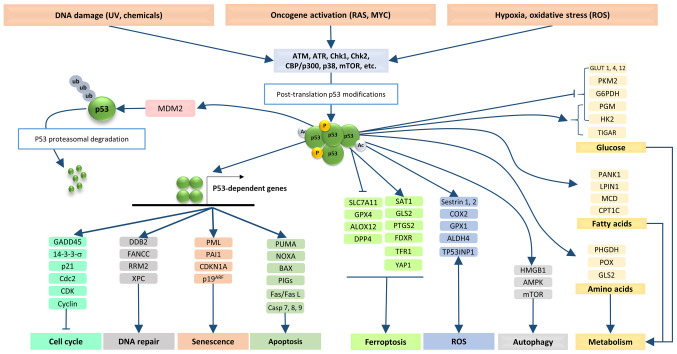
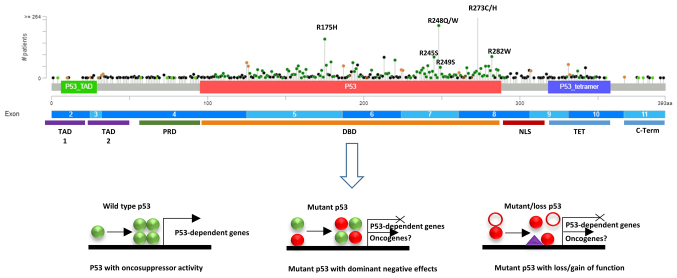
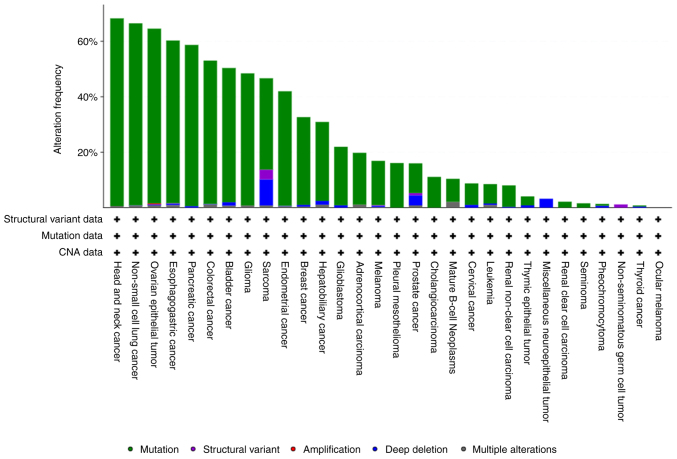
The tumour suppressor factor p53 plays an essential role in regulating numerous cellular processes, including the cell cycle, DNA repair, apoptosis, autophagy, cell metabolism and immune response. TP53 is the most commonly mutated gene in human cancers. These mutations are primarily non‑synonymous changes that produce mutant p53 proteins characterized by loss of function, a dominant negative effect on p53 tetramerisation and gain of function (GOF). GOF mutations not only disrupt the tumour‑suppressive activities of p53 but also endow the mutant proteins with new oncogenic properties. Recent studies analysing different pathogenic features of mutant p53 in cancer‑derived cell lines have demonstrated that restoring wild‑type p53, rather than removing GOF mutations, reduces cancer cell growth. These findings suggest that therapeutic strategies for reactivating wild‑type p53 function in cancer cells may bring a greater benefit than approaches halting mutant p53. This approach could involve the use of small molecules, gene therapy and other methods to re‑establish wild‑type p53 activity. This review describes the complexity of the biological activities of different p53 mutants and summarizes the current therapeutic approaches to restore p53 function.
抑癌因子 p53 在调节多种细胞过程中起着至关重要的作用,包括细胞周期、DNA 修复、细胞凋亡、自噬、细胞代谢和免疫反应。TP53 是人类癌症中最常见的突变基因。这些突变主要是非同义突变,产生具有功能丧失、对 p53 四聚体化的显性负效应和获得功能(GOF)的突变 p53 蛋白。GOF 突变不仅破坏了 p53 的肿瘤抑制活性,而且赋予突变蛋白新的致癌特性。最近分析癌症衍生细胞系中突变 p53 不同致病特征的研究表明,恢复野生型 p53(而不是去除 GOF 突变)可降低癌细胞生长。这些发现表明,在癌细胞中重新激活野生型 p53 功能的治疗策略可能比阻止突变型 p53 的方法带来更大的益处。这种方法可能涉及使用小分子、基因治疗和其他方法来重新建立野生型 p53 活性。本综述描述了不同 p53 突变体的生物学活性的复杂性,并总结了目前恢复 p53 功能的治疗方法。