Liu Xiaoxin, Xia Ninglin, Yu Qinwei, Jin Ming, Wang Zifan, Fan Xue, Zhao Wen, Li Anqin, Jiang Zhenzhou, Zhang Luyong
New Drug Screening and Pharmacodynamics Evaluation Center, State Key Laboratory of Natural Medicines, China Pharmaceutical University, Nanjing 210009, China.
Center for Drug Research and Development, Guangdong Pharmaceutical University, Guangzhou 510006, China.
Metabolites. 2024 Oct 17;14(10):556. doi: 10.3390/metabo14100556.
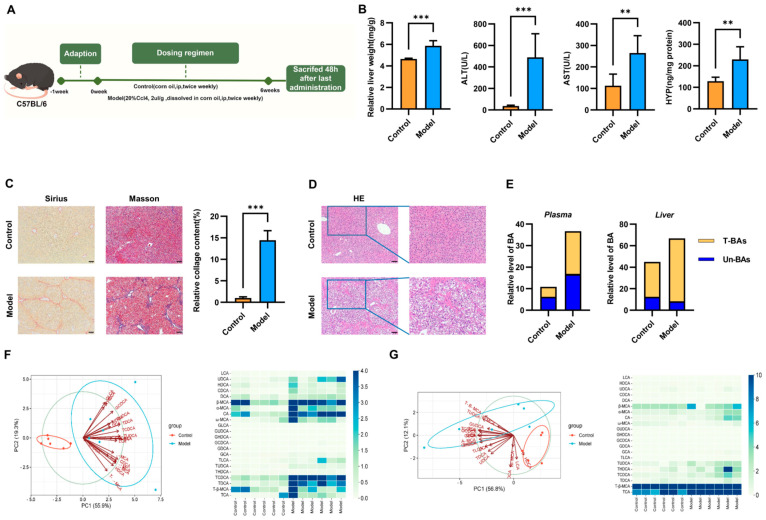
Altered patterns of bile acids (BAs) are frequently present in liver fibrosis, and BAs function as signaling molecules to initiate inflammatory responses. Silybin meglumine (SLB-M) is widely used in treating various liver diseases including liver fibrosis. However, research on its effects on bile acid (BA) metabolism is limited. This study investigated the therapeutic effects of SLB-M on liver fibrosis and BA metabolism in a CCl-induced murine model.
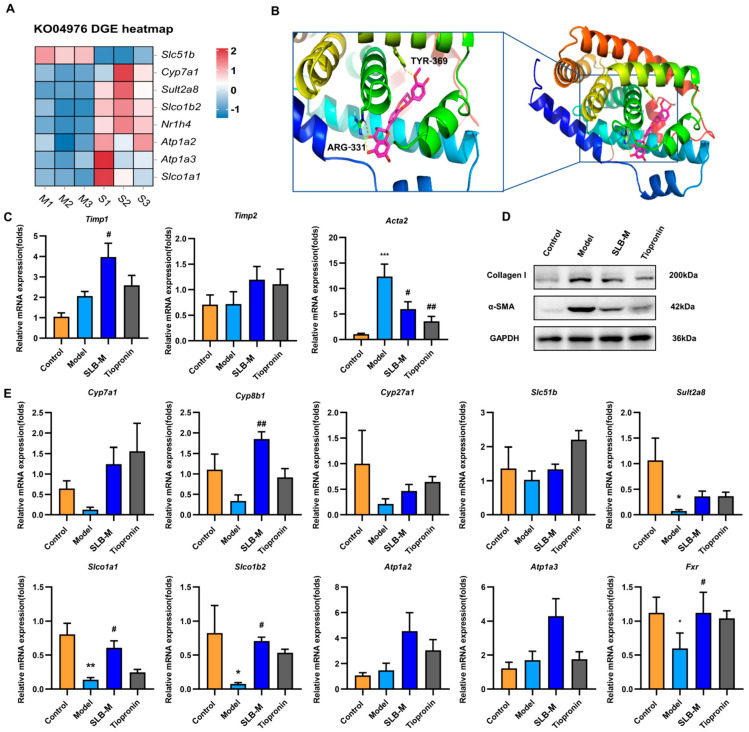
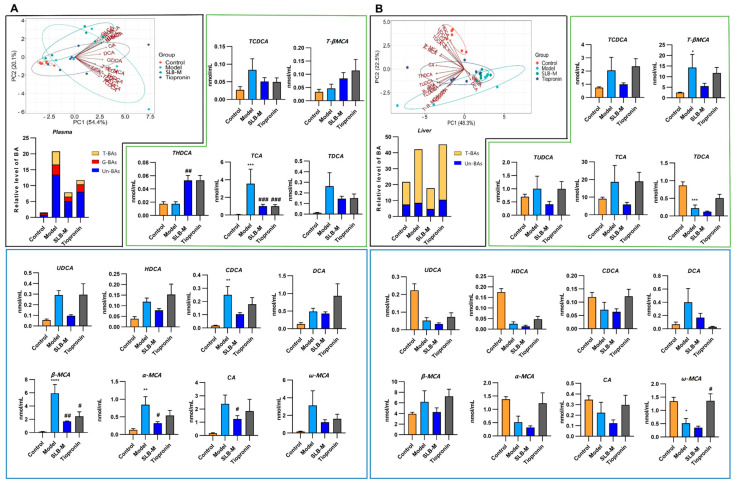
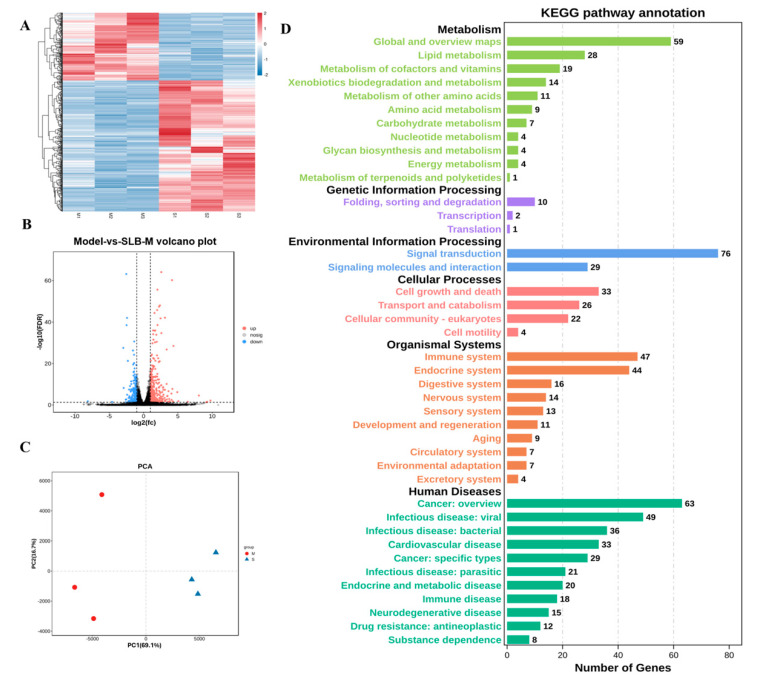
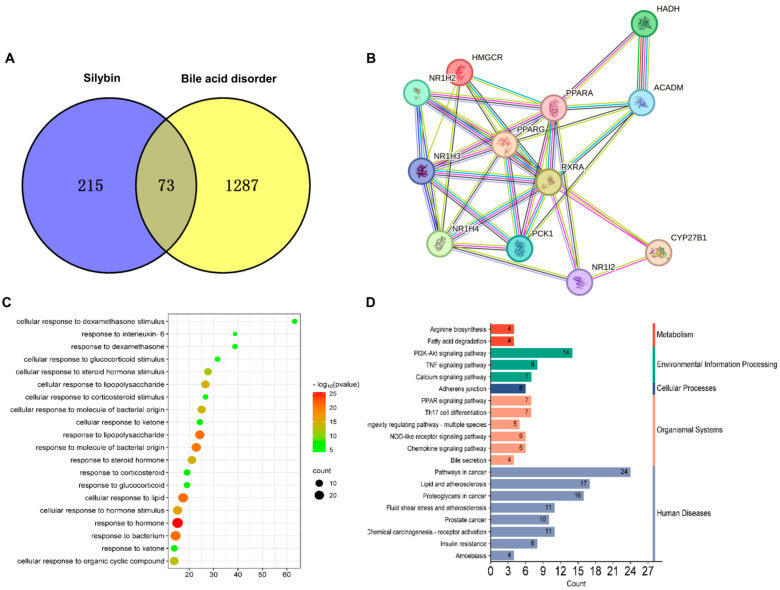
A murine liver fibrosis model was induced by CCl4. Fibrosis was evaluated using HE, picrosirius red, and Masson's trichrome staining. Liver function was assessed by serum and hepatic biochemical markers. Bile acid (BA) metabolism was analyzed using LC-MS/MS. Bioinformatics analyses, including PPI network, GO, and KEGG pathway analyses, were employed to explore molecular mechanisms. Gene expression alterations in liver tissue were examined via qRT-PCR.
SLB-M treatment resulted in significant histological improvements in liver tissue, reducing collagen deposition and restoring liver architecture. Biochemically, SLB-M not only normalized serum liver enzyme levels (ALT, AST, TBA, and GGT) but also mitigated disruptions in both systemic and hepatic BA metabolism by increased unconjugated BAs like cholic acid and chenodeoxycholic acid but decreased conjugated BAs including taurocholic acid and taurodeoxycholic acid, compared to that in CCl-induced murine model. Notably, SLB-M efficiently improved the imbalance of BA homeostasis in liver caused by CCl via activating Farnesoid X receptor.
These findings underscore SLB-M decreased inflammatory response, reconstructed BA homeostasis possibly by regulating key pathways, and gene expressions in BA metabolism.
胆汁酸(BA)模式改变在肝纤维化中经常出现,且胆汁酸作为信号分子引发炎症反应。水飞蓟宾葡甲胺(SLB-M)被广泛用于治疗包括肝纤维化在内的各种肝脏疾病。然而,关于其对胆汁酸(BA)代谢影响的研究有限。本研究在四氯化碳诱导的小鼠模型中探究了SLB-M对肝纤维化和BA代谢的治疗作用。
用四氯化碳诱导小鼠肝纤维化模型。使用苏木精-伊红(HE)、苦味酸天狼星红和Masson三色染色评估纤维化情况。通过血清和肝脏生化标志物评估肝功能。使用液相色谱-串联质谱(LC-MS/MS)分析胆汁酸(BA)代谢。采用生物信息学分析,包括蛋白质-蛋白质相互作用(PPI)网络、基因本体(GO)和京都基因与基因组百科全书(KEGG)通路分析,以探索分子机制。通过定量逆转录聚合酶链反应(qRT-PCR)检测肝组织中的基因表达变化。
SLB-M治疗使肝组织的组织学有显著改善,减少了胶原沉积并恢复了肝脏结构。生化方面,与四氯化碳诱导的小鼠模型相比,SLB-M不仅使血清肝酶水平(谷丙转氨酶、谷草转氨酶、总胆汁酸和γ-谷氨酰转肽酶)正常化,还通过增加未结合胆汁酸如胆酸和鹅去氧胆酸,但减少结合胆汁酸包括牛磺胆酸和牛磺鹅去氧胆酸,减轻了全身和肝脏BA代谢的紊乱。值得注意的是,SLB-M通过激活法尼酯X受体有效改善了四氯化碳引起的肝脏BA稳态失衡。
这些发现强调了SLB-M减少炎症反应,可能通过调节关键通路重建BA稳态以及BA代谢中的基因表达。