Hsu Chieh-Cheng, Wu Kay L H, Peng Jei-Ming, Wu Yi-No, Chen Hou-Tsung, Lee Meng-Shiou, Cheng Jai-Hong
Center for Shockwave Medicine and Tissue Engineering, Kaohsiung Chang Gung Memorial Hospital and Chang Gung University College of Medicine.
Department of Orthopedic Surgery, Sports Medicine, Kaohsiung Chang Gung Memorial Hospital and Chang Gung University College of Medicine.
Int J Surg. 2024 Dec 1;110(12):7563-7572. doi: 10.1097/JS9.0000000000002128.
Spinal cord injury (SCI) is a debilitating condition that results in severe motor function impairments. Current therapeutic options remain limited, underscoring the need for novel treatments. Extracorporeal shockwave therapy (ESWT) has emerged as a promising noninvasive approach for treating musculoskeletal disorders and nerve regeneration.
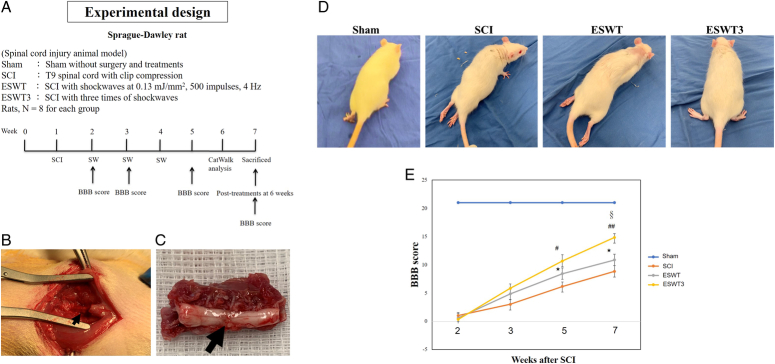
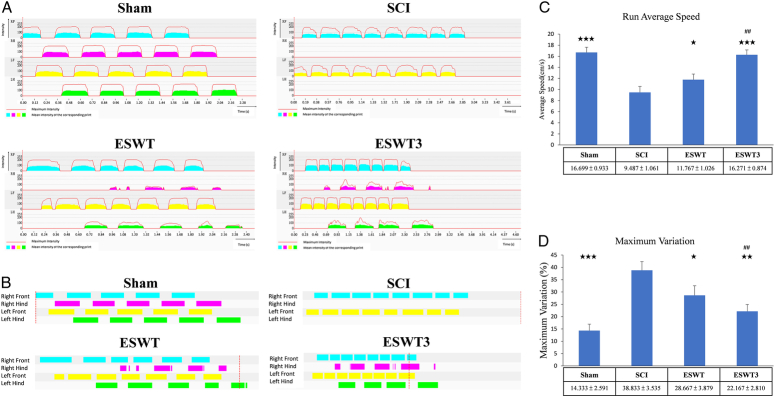
This study explored the effects of low-energy ESWT on locomotor function, tissue regeneration, inflammation, and mitochondrial function in a rat SCI model. Experiments were performed using locomotor function assays, CatWalk gait analysis, histopathological examination, immunohistochemical, and immunofluorescence staining.
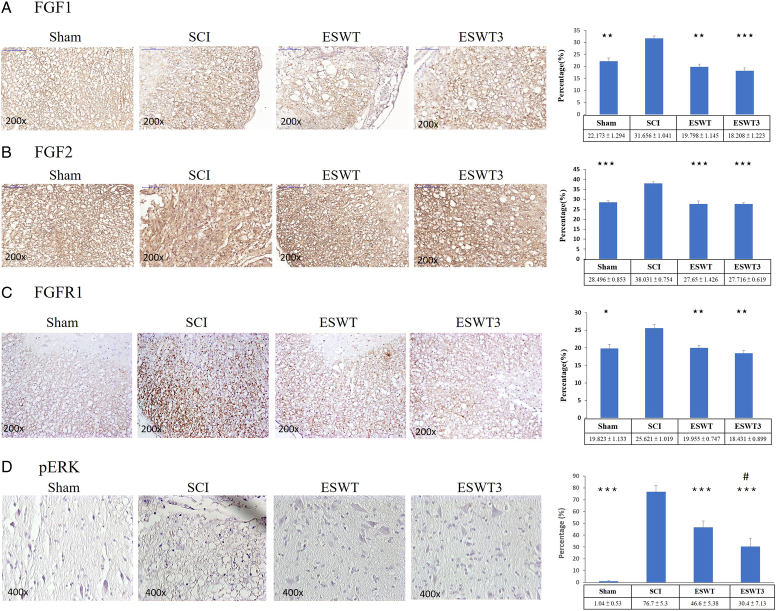
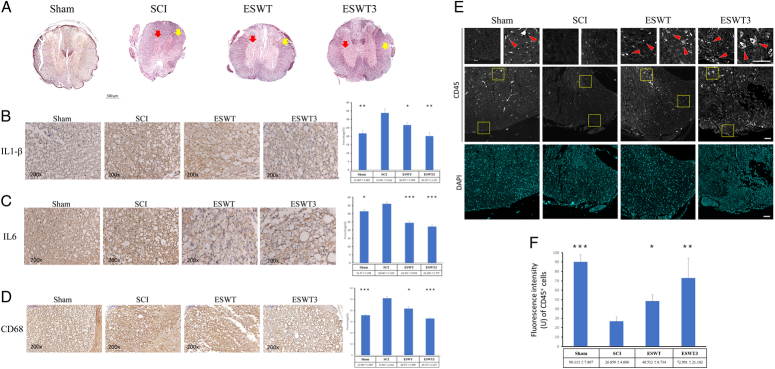
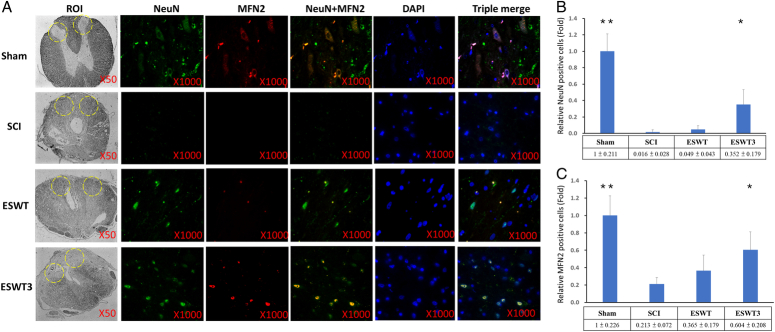
The findings demonstrated that low-energy ESWT had a dose-dependent effect, with three treatment sessions (ESWT3) showing superior outcomes compared to a single session. ESWT3 significantly improved motor functions [run patterns, run average speed, and maximum variation, as well as the Basso, Beattie, and Bresnahan score] and promoted tissue regeneration while reducing inflammation. ESWT3 significantly decreased levels of IL-1β, IL6, and macrophages (CD68) while increasing leukocyte (CD45) infiltration. Additionally, ESWT3 upregulated NueN and mitofusin 2 (MFN2), suggesting enhanced neuronal health and mitochondrial function. Moreover, ESWT3 modulated the expression of fibroblast growth factor 1 (FGF1), FGF2, their receptor FGFR1 and phosphorylation of ERK, aiding tissue repair, and regeneration in SCI.
This study highlights the potential of low-energy ESWT as an effective noninvasive treatment for SCI, demonstrating significant improvements in motor recovery, tissue regeneration, anti-inflammatory effects, and mitochondrial protection. These findings provide valuable insights into the mechanisms of ESWT and its therapeutic application for SCI recovery.
脊髓损伤(SCI)是一种使人衰弱的疾病,会导致严重的运动功能障碍。目前的治疗选择仍然有限,这凸显了对新治疗方法的需求。体外冲击波疗法(ESWT)已成为一种有前景的非侵入性方法,用于治疗肌肉骨骼疾病和神经再生。
本研究探讨了低能量ESWT对大鼠SCI模型中运动功能、组织再生、炎症和线粒体功能的影响。使用运动功能测定、CatWalk步态分析、组织病理学检查、免疫组织化学和免疫荧光染色进行实验。
研究结果表明,低能量ESWT具有剂量依赖性效应,与单次治疗相比,三次治疗疗程(ESWT3)显示出更好的效果。ESWT3显著改善了运动功能[跑步模式、跑步平均速度和最大变化,以及Basso、Beattie和Bresnahan评分],促进了组织再生,同时减轻了炎症。ESWT3显著降低了IL-1β、IL6和巨噬细胞(CD68)的水平,同时增加了白细胞(CD45)的浸润。此外,ESWT3上调了NueN和线粒体融合蛋白2(MFN2),表明神经元健康和线粒体功能增强。此外,ESWT3调节了成纤维细胞生长因子1(FGF1)、FGF2及其受体FGFR1的表达以及ERK的磷酸化,有助于SCI中的组织修复和再生。
本研究强调了低能量ESWT作为SCI有效非侵入性治疗方法的潜力,证明了在运动恢复、组织再生、抗炎作用和线粒体保护方面有显著改善。这些发现为ESWT的作用机制及其在SCI恢复中的治疗应用提供了有价值的见解。