Department of Chemical and Biological Engineering, University at Buffalo, Buffalo, NY, 14260, USA.
Department of Department of Rehabilitation Science, University at Buffalo, Buffalo, NY, 14214, USA.
Nat Commun. 2024 Oct 25;15(1):9218. doi: 10.1038/s41467-024-53276-4.
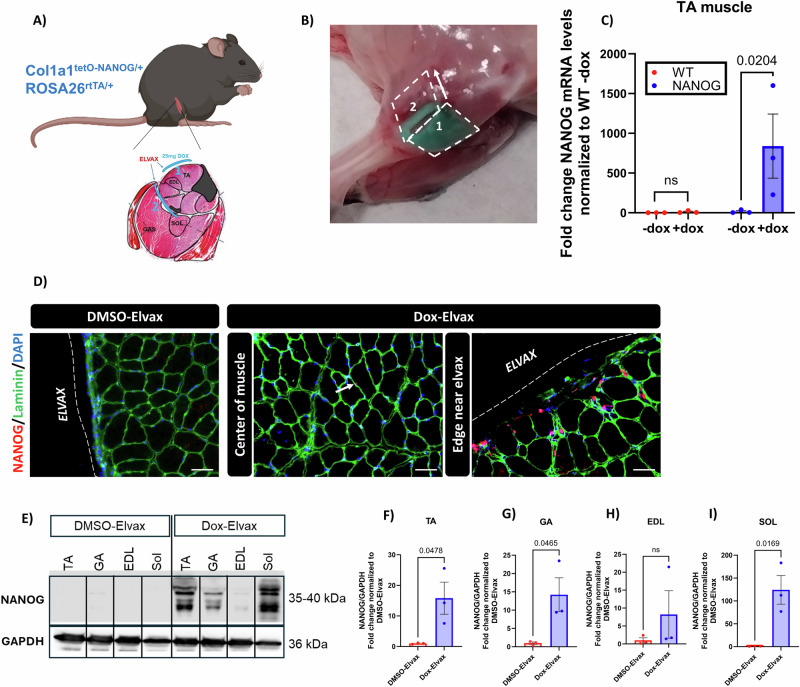
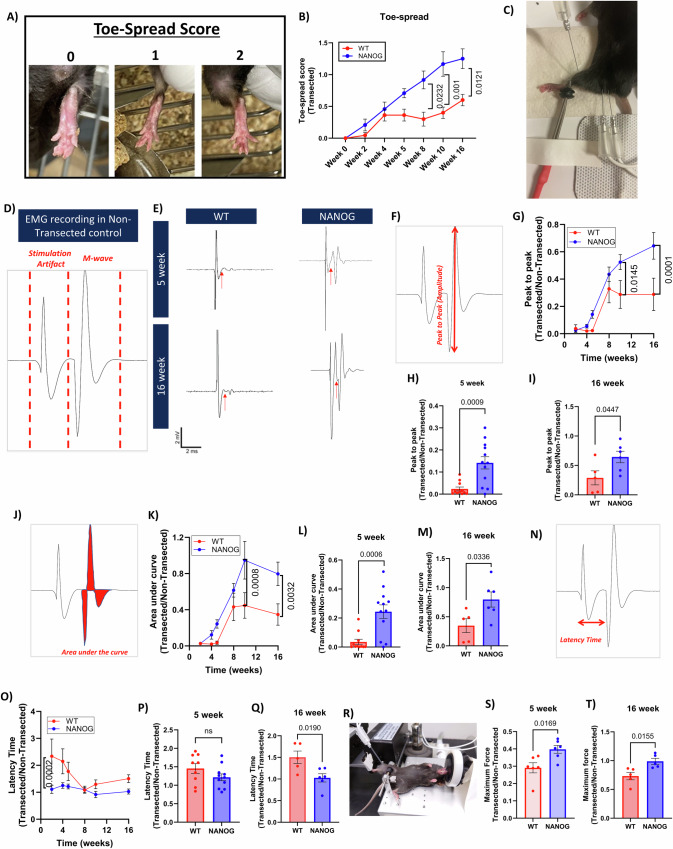
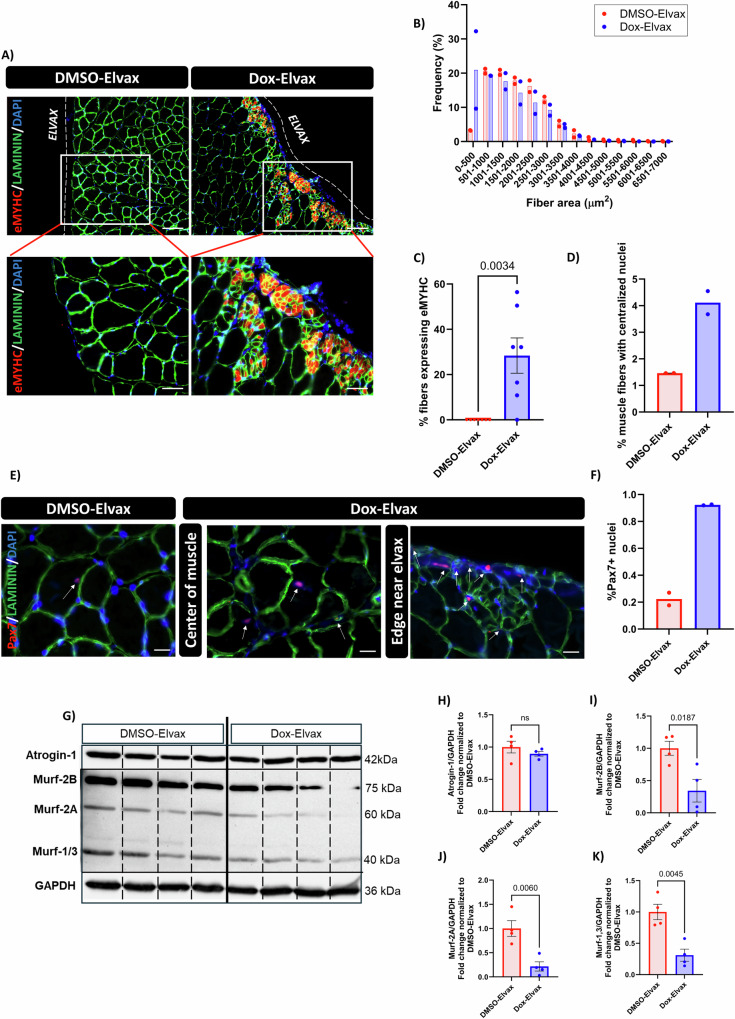
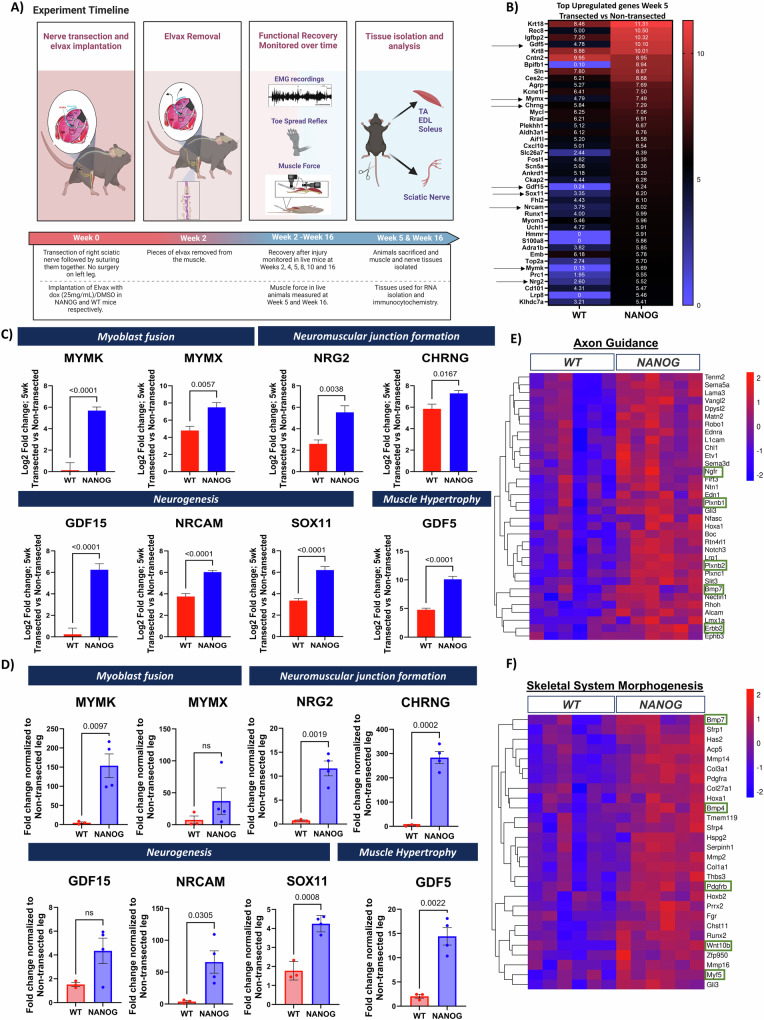
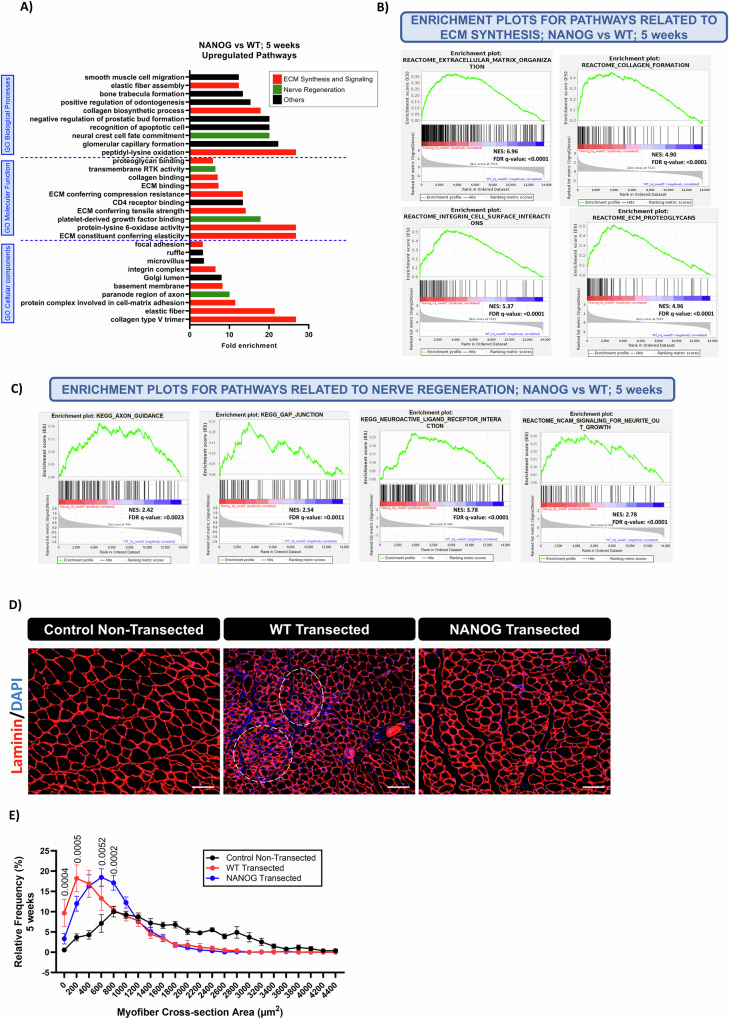
Peripheral Nerve Injuries (PNI) affect more than 20 million Americans and severely impact quality of life by causing long-term disability. PNI is characterized by nerve degeneration distal to the site of nerve injury resulting in long periods of skeletal muscle denervation. During this period, muscle fibers atrophy and frequently become incapable of "accepting" innervation because of the slow speed of axon regeneration post injury. We hypothesize that reprogramming the skeletal muscle to an embryonic-like state may preserve its reinnervation capability following PNI. To this end, we generate a mouse model in which NANOG, a pluripotency-associated transcription factor is expressed locally upon delivery of doxycycline (Dox) in a polymeric vehicle. NANOG expression in the muscle upregulates the percentage of Pax7+ nuclei and expression of eMYHC along with other genes that are involved in muscle development. In a sciatic nerve transection model, NANOG expression leads to upregulation of key genes associated with myogenesis, neurogenesis and neuromuscular junction (NMJ) formation. Further, NANOG mice demonstrate extensive overlap between synaptic vesicles and NMJ acetylcholine receptors (AChRs) indicating restored innervation. Indeed, NANOG mice show greater improvement in motor function as compared to wild-type (WT) animals, as evidenced by improved toe-spread reflex, EMG responses and isometric force production. In conclusion, we demonstrate that reprogramming muscle can be an effective strategy to improve reinnervation and functional outcomes after PNI.
周围神经损伤(PNI)影响超过 2000 万美国人,通过导致长期残疾严重影响生活质量。PNI 的特征是神经损伤部位远端的神经变性,导致长时间的骨骼肌肉去神经支配。在此期间,肌肉纤维萎缩,并且由于损伤后轴突再生速度较慢,经常变得无法“接受”神经支配。我们假设重新编程骨骼肌使其具有胚胎样状态,可以在 PNI 后保留其再神经支配能力。为此,我们生成了一种小鼠模型,其中多能相关转录因子 NANOG 在聚合物载体中递送至强力霉素(Dox)时局部表达。肌肉中的 NANOG 表达上调了 Pax7+核的百分比和 eMYHC 的表达,以及其他参与肌肉发育的基因。在坐骨神经横断模型中,NANOG 表达导致与肌发生、神经发生和神经肌肉接头(NMJ)形成相关的关键基因上调。此外,NANOG 小鼠表现出突触小泡和 NMJ 乙酰胆碱受体(AChR)之间的广泛重叠,表明恢复了神经支配。事实上,与野生型(WT)动物相比,NANOG 小鼠在运动功能方面表现出更大的改善,表现为脚趾伸展反射、EMG 反应和等长力量产生的改善。总之,我们证明了重新编程肌肉是改善 PNI 后再神经支配和功能结果的有效策略。