Department of Cardiovascular Surgery, The Affiliated Hospital of Southwest Medical University, NO25, Taiping Street, Luzhou City, 646000, China.
Cardiovascular Remodeling and Dysfunction Key Laboratory of Luzhou, Luzhou, China.
BMC Genomics. 2024 Oct 25;25(1):1001. doi: 10.1186/s12864-024-10922-x.
Atrial fibrillation (AF) stands as a prevalent and detrimental arrhythmic disorder, characterized by intricate pathophysiological mechanisms. The availability of reliable and reproducible AF models is pivotal in unraveling the underlying mechanisms of this complex condition. Unfortunately, the researchers are still confronted with the absence of consistent in vitro AF models, hindering progress in this crucial area of research.
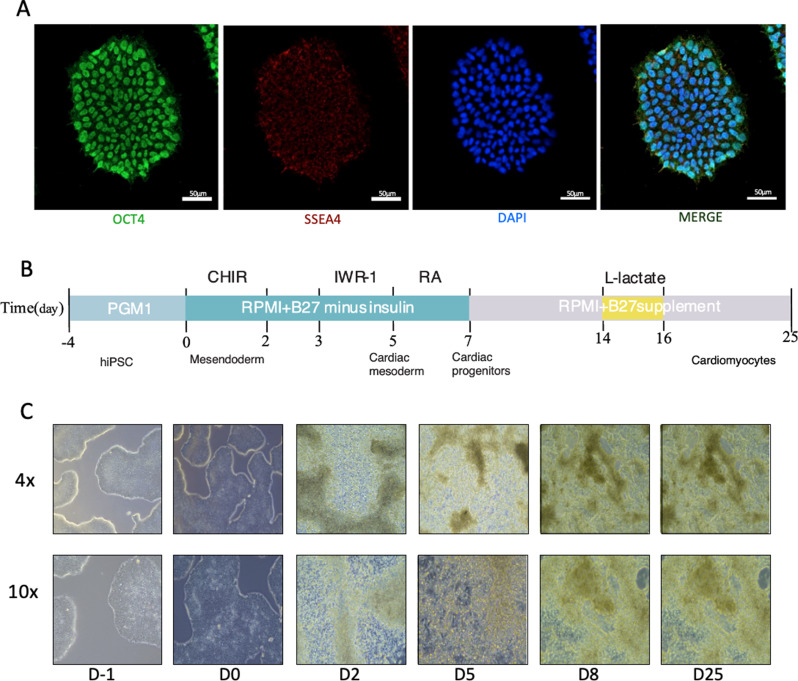
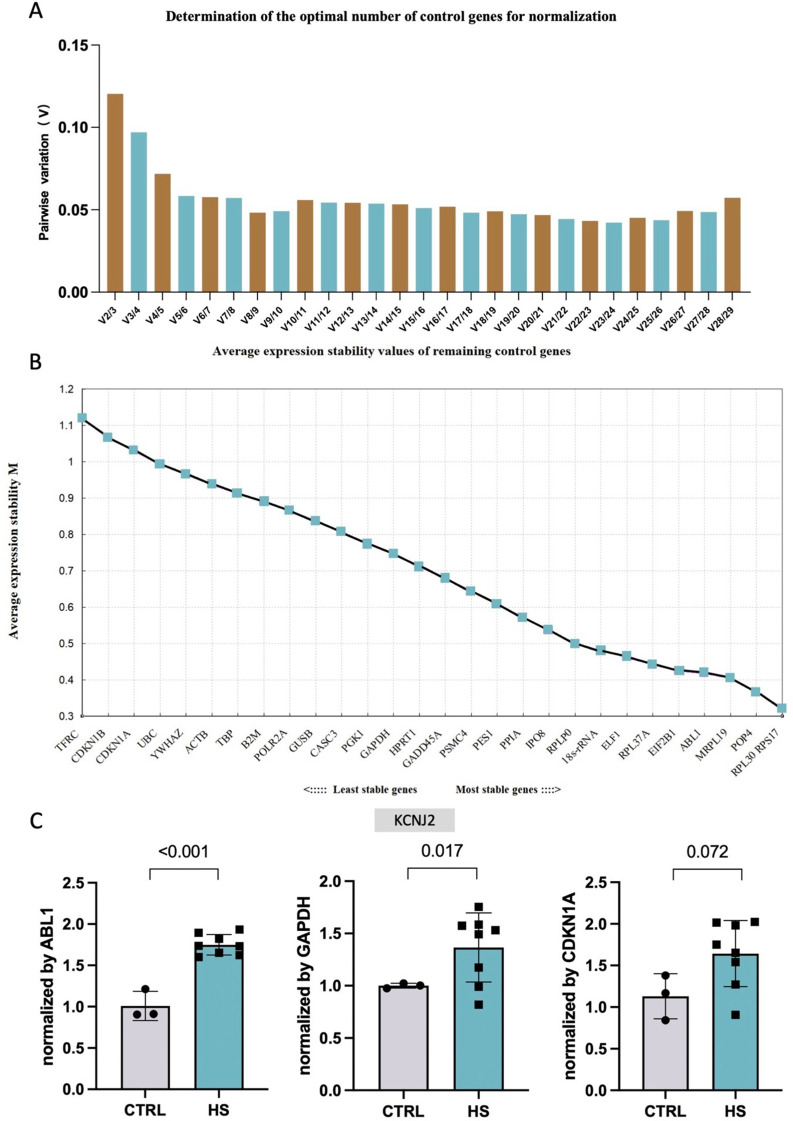
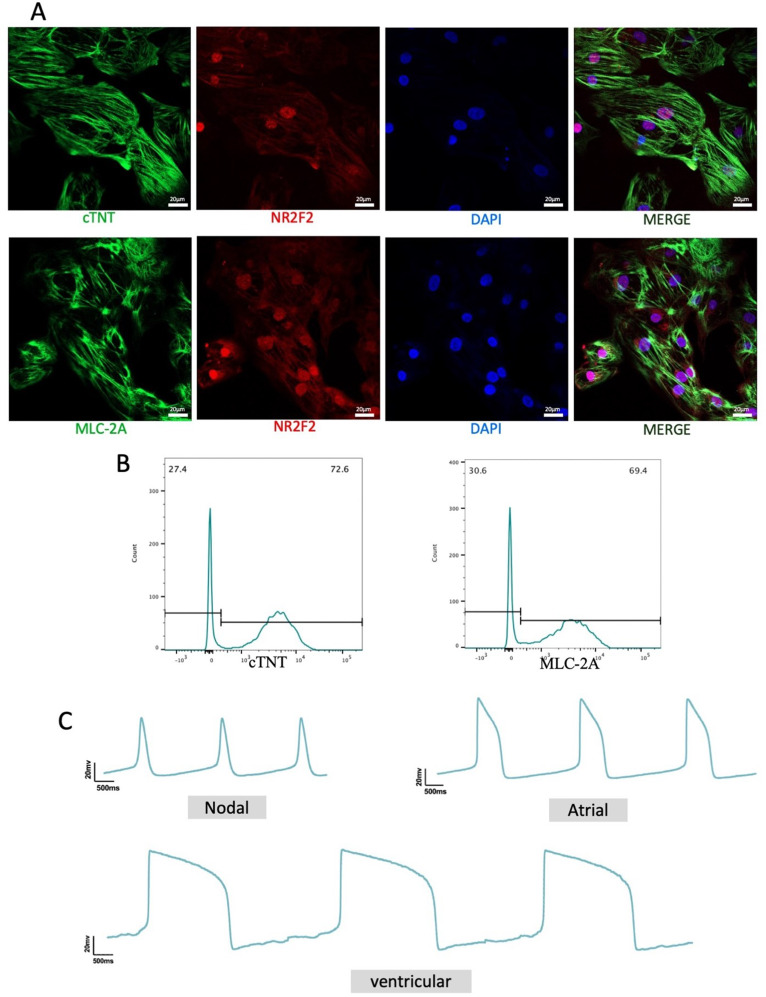
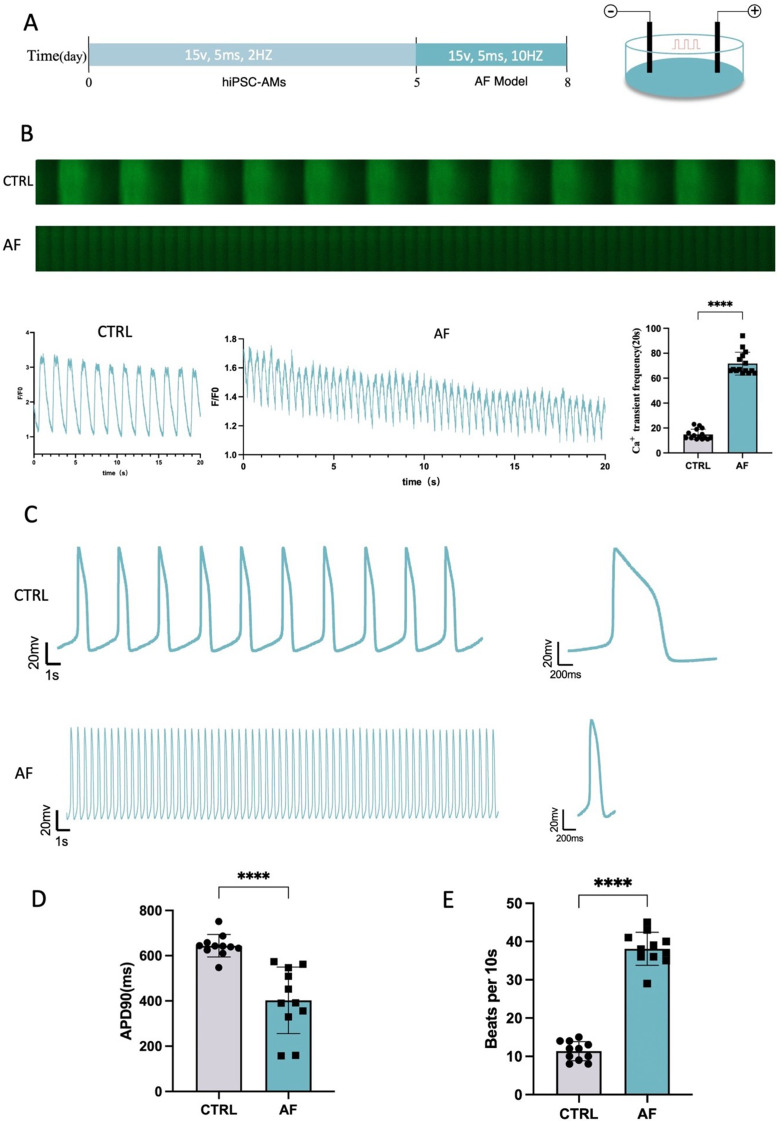
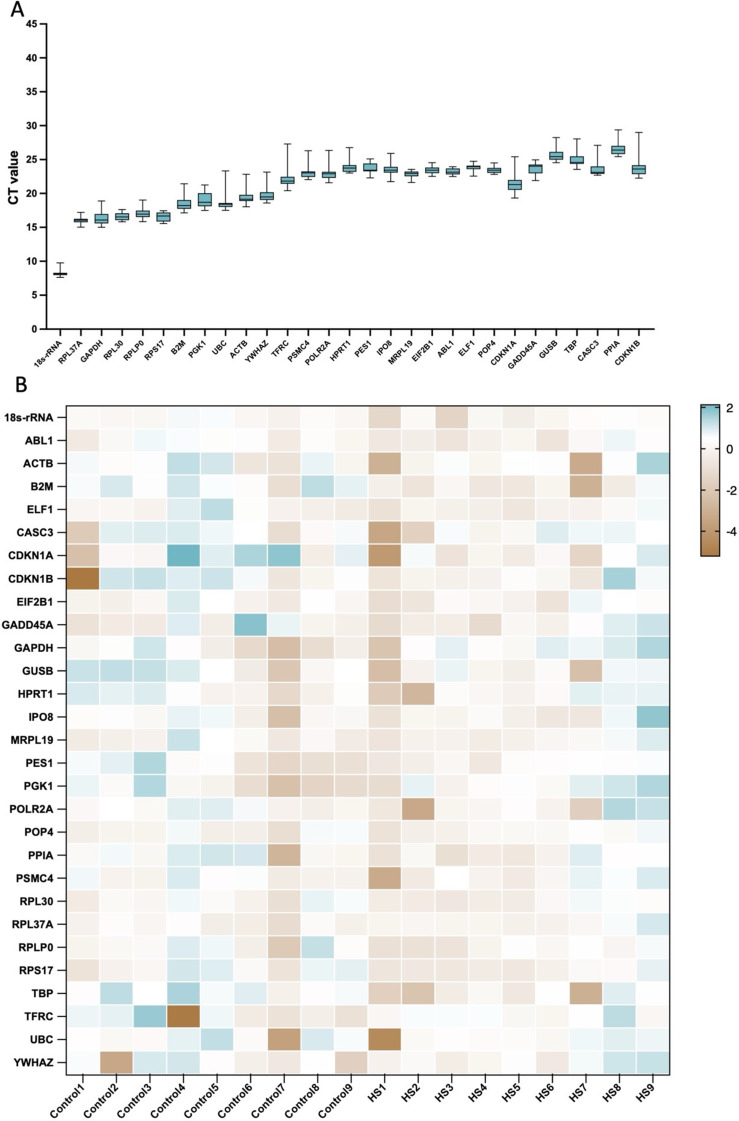
Human induced pluripotent stem cells derived atrial myocytes (hiPSC-AMs) were generated based on the GiWi methods and were verified by whole-cell patch clamp, immunofluorescent staining, and flow cytometry. Then hiPSC-AMs were employed to establish the AF model by HS. Whole-cell patch clamp technique and calcium imaging were used to identify the AF model. The stability of 29 reference genes was evaluated using delta-Ct, GeNorm, NormFinder, and BestKeeper algorithms; RESULTS: HiPSC-AMs displayed atrial myocyte action potentials and expressed the atrial-specific protein MLC-2 A and NR2F2, about 70% of the cardiomyocytes were MLC-2 A positive. After HS, hiPSC-AMs showed a significant increase in beating frequency, a shortened action potential duration, and increased calcium transient frequency. Of the 29 candidate genes, the top five most stably ranked genes were ABL1, RPL37A, POP4, RPL30, and EIF2B1. After normalization using ABL1, KCNJ2 was significantly upregulated in the AF model; Conclusions: In the hiPSC-AMs AF model established by HS, ABL1 provides greater normalization efficiency than commonly used GAPDH.
心房颤动(AF)是一种常见且有害的心律失常性疾病,其特征为复杂的病理生理机制。可靠且可重现的 AF 模型的可用性对于揭示这种复杂疾病的潜在机制至关重要。然而,研究人员仍然面临缺乏一致的体外 AF 模型的问题,这阻碍了该关键研究领域的进展。
基于 GiWi 方法生成人诱导多能干细胞衍生的心房肌细胞(hiPSC-AMs),并通过全细胞膜片钳、免疫荧光染色和流式细胞术进行验证。然后,使用 HS 建立 hiPSC-AMs 的 AF 模型。全细胞膜片钳技术和钙成像用于鉴定 AF 模型。使用 delta-Ct、GeNorm、NormFinder 和 BestKeeper 算法评估 29 个参考基因的稳定性;
hiPSC-AMs 表现出心房肌细胞动作电位,并表达心房特异性蛋白 MLC-2A 和 NR2F2,约 70%的心肌细胞为 MLC-2A 阳性。HS 后,hiPSC-AMs 的搏动频率显著增加,动作电位时程缩短,钙瞬变频率增加。在 29 个候选基因中,排名前五的最稳定基因依次为 ABL1、RPL37A、POP4、RPL30 和 EIF2B1。使用 ABL1 归一化后,AF 模型中 KCNJ2 的表达显著上调;
在 HS 建立的 hiPSC-AMs AF 模型中,ABL1 提供了比常用的 GAPDH 更高的归一化效率。