Department of Osteoarthritis, Yantai City Yantai Shan Hospital, No. 91 of Jiefang Road, Zhifu District, Yantai, 264001, China.
Pharmacy Intravenous Admixture Services, Yantai City Yantai Shan Hospital, No. 91 of Jiefang Road, Zhifu District, Yantai, 264001, China.
Eur J Med Res. 2024 Oct 26;29(1):515. doi: 10.1186/s40001-024-02118-6.
The aim of this study is to investigate the viability of performing initial artificial joint replacement surgery in patients presenting with unexplained elevations in erythrocyte sedimentation rate (ESR) and C-reactive protein (CRP) levels.
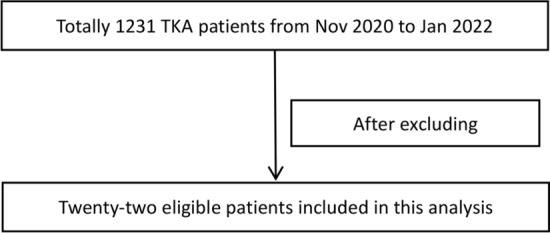
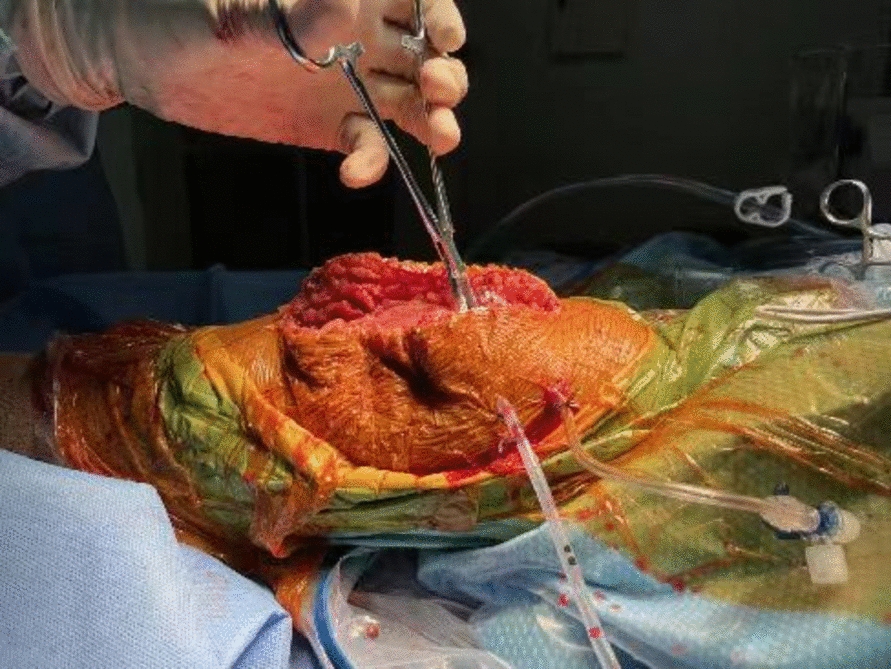
A cohort of 22 patients, comprising 11 cases each for knee and hip joint replacements, who underwent initial artificial joint replacement surgery between November 2020 and January 2022, was recruited. All patients exhibited elevated levels of ESR and CRP prior to surgery, the etiology of which remained undetermined. Intraoperatively, joint effusion and periarticular tissues were preserved for subsequent bacterial culture and metagenomic next-generation sequencing (mNGS). Postoperatively, a combination of intravenous and local antibiotics was administered for anti-infective management. In cases where bacterial culture and/or mNGS yielded positive results, patients were diagnosed with periprosthetic joint infections (PJI) and underwent one-stage revision; conversely, negative findings led to the discontinuation of intravenous and local antibiotics therapy.
Among the cohort of 22 patients, bacterial cultures yielded negative results, while mNGS identified bacterial infection in 14 patients (63.63%), viral infection in 1 patient (4.55%), and yielded negative results in 7 patients (31.82%). All surgical incisions achieved per primam. Subsequent follow-up assessments conducted for more than 1 year postoperatively revealed absence of PJI among the patients, all of whom exhibited satisfactory progress in their rehabilitation exercises. Notably, the Knee Society Score (KSS) for knee joint patients significantly improved from a preoperative mean of 48.7 ± 3.3 points to 84.3 ± 2.2 points postoperatively, whereas the Harris Hip Score for hip joint patients increased significantly from preoperative mean of 50.6 ± 3.6 points to 87.1 ± 1.6 points (P < 0.01).
In cases where patients present with unexplained elevations in ESR and CRP levels, primary artificial joint replacement can be undertaken following a one-stage revision approach for PJI.
本研究旨在探讨对红细胞沉降率(ESR)和 C 反应蛋白(CRP)水平升高的不明原因患者行初次人工关节置换术的可行性。
本研究纳入了 2020 年 11 月至 2022 年 1 月期间行初次人工关节置换术的 22 例患者,包括膝关节和髋关节各 11 例。所有患者术前 ESR 和 CRP 升高,病因不明。术中保留关节积液和关节周围组织,以备进行细菌培养和宏基因组下一代测序(mNGS)。术后采用静脉和局部联合抗生素进行抗感染治疗。如果细菌培养和/或 mNGS 结果阳性,患者被诊断为假体周围关节感染(PJI),行一期翻修;反之,如果结果阴性,则停止静脉和局部抗生素治疗。
22 例患者中,细菌培养均为阴性,mNGS 检出 14 例(63.63%)患者存在细菌感染,1 例(4.55%)患者存在病毒感染,7 例(31.82%)患者 mNGS 结果为阴性。所有手术切口均一期愈合。术后随访 1 年以上,患者均无 PJI,康复锻炼进展良好。值得注意的是,膝关节患者的膝关节功能评分(KSS)由术前的 48.7±3.3 分显著提高至术后的 84.3±2.2 分(P<0.01),髋关节患者的 Harris 髋关节评分由术前的 50.6±3.6 分显著提高至术后的 87.1±1.6 分(P<0.01)。
对于 ESR 和 CRP 水平升高的不明原因患者,可行 PJI 一期翻修后行初次人工关节置换术。