Wang Xiao-Lan, Li Lianjian, Meng Xianfang
Department of Nephrology, Union Hospital, Tongji Medical College, Huazhong University of Science and Technology, Wuhan 430022, China.
Department of Vascular Surgery, Hubei Provincial Hospital of Traditional Chinese Medicine, Affiliated Hospital of Hubei University of Traditional Chinese Medicine, Hubei Academy of Chinese Medicine, Wuhan 430061, China.
Antioxidants (Basel). 2024 Sep 24;13(10):1156. doi: 10.3390/antiox13101156.
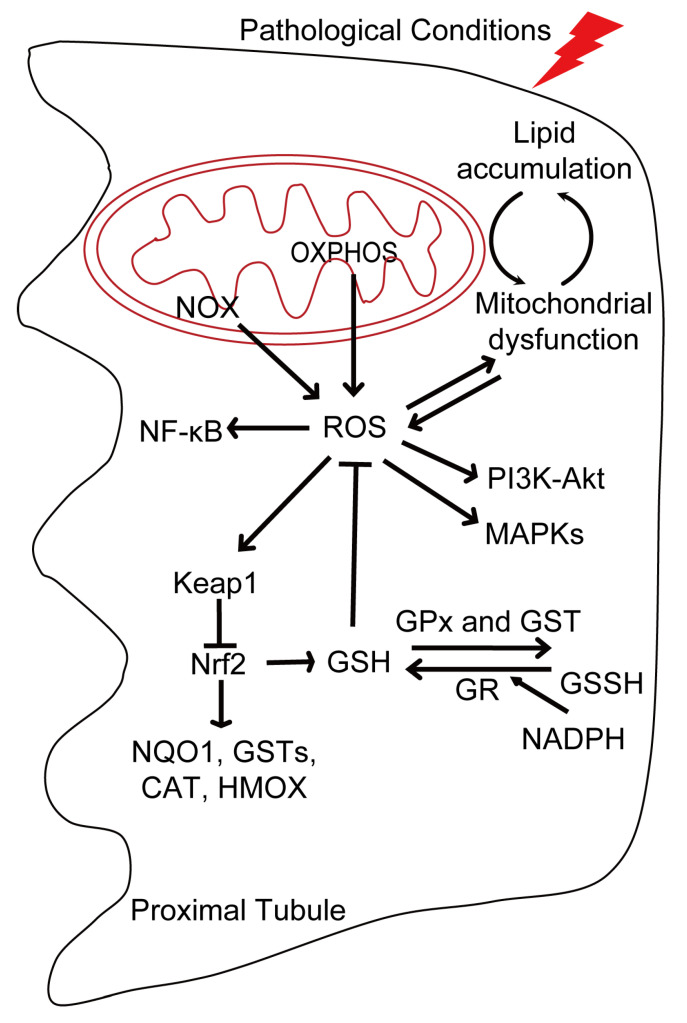
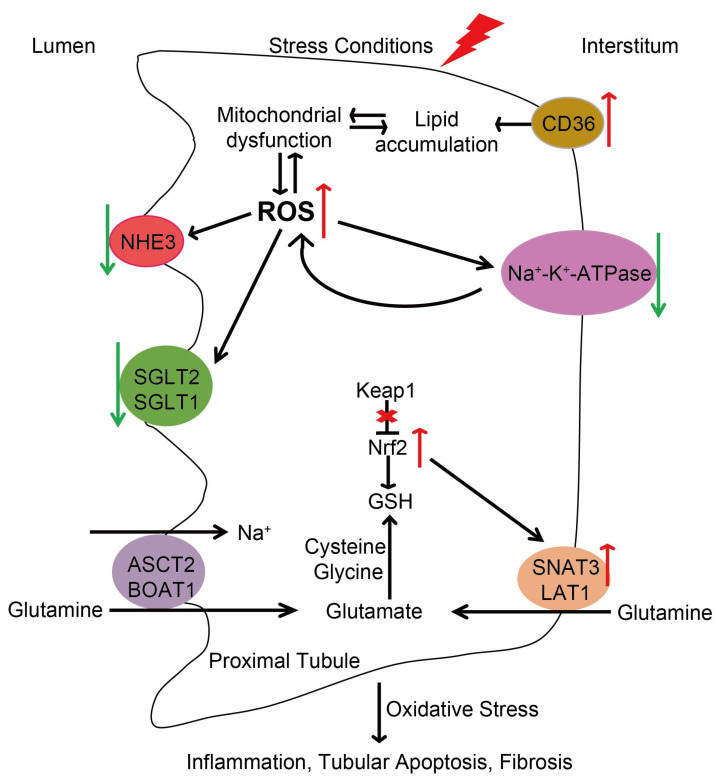
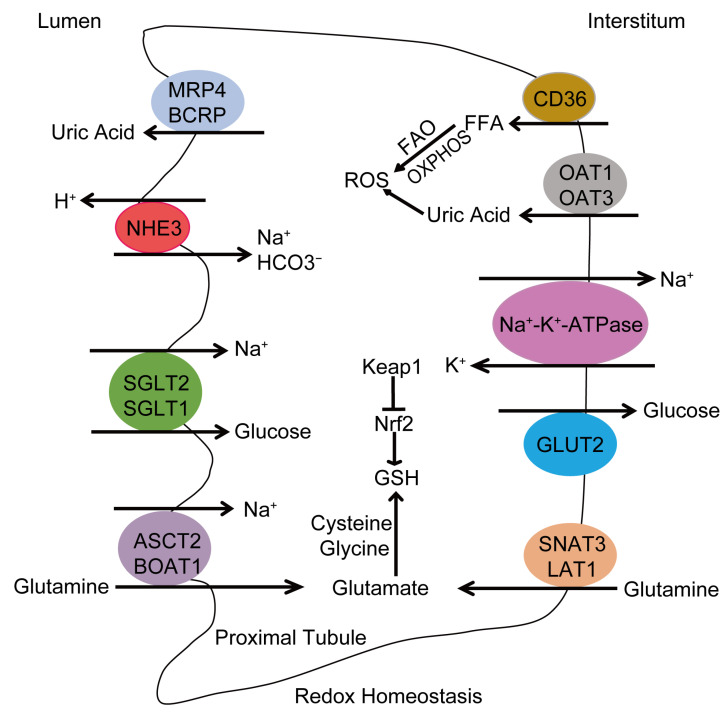
The kidney plays a critical role in maintaining the homeostasis of body fluid by filtration of metabolic wastes and reabsorption of nutrients. Due to the overload, a vast of energy is required through aerobic metabolism, which inevitably leads to the generation of reactive oxygen species (ROS) in the kidney. Under unstressed conditions, ROS are counteracted by antioxidant systems and maintained at low levels, which are involved in signal transduction and physiological processes. Accumulating evidence indicates that the reduction-oxidation (redox) system interacts with renal tubular transport. Redox imbalance or dysfunction of tubular transport leads to renal disease. Here, we discuss the ROS and antioxidant systems in the kidney and outline the metabolic dysfunction that is a common feature of renal disease. Importantly, we describe the key molecules involved in renal tubular transport and their relationship to the redox system and, finally, summarize the impact of their dysregulation on the pathogenesis and progression of acute and chronic kidney disease.
肾脏在通过过滤代谢废物和重吸收营养物质来维持体液平衡方面发挥着关键作用。由于负荷过重,需通过有氧代谢消耗大量能量,这不可避免地导致肾脏中活性氧(ROS)的产生。在无应激条件下,ROS 被抗氧化系统抵消并维持在低水平,这些抗氧化系统参与信号转导和生理过程。越来越多的证据表明,氧化还原(redox)系统与肾小管转运相互作用。氧化还原失衡或肾小管转运功能障碍会导致肾脏疾病。在此,我们讨论肾脏中的 ROS 和抗氧化系统,并概述作为肾脏疾病共同特征的代谢功能障碍。重要的是,我们描述了参与肾小管转运的关键分子及其与氧化还原系统的关系,最后总结了它们的失调对急性和慢性肾脏病发病机制及进展的影响。