Dixson Jamie D, Vumma Lavanya, Azad Rajeev K
Department of Biological Sciences and BioDiscovery Institute, University of North Texas, Denton, TX 76203, USA.
Texas Academy of Mathematics and Science, University of North Texas, Denton, TX 76203, USA.
Microorganisms. 2024 Oct 5;12(10):2021. doi: 10.3390/microorganisms12102021.
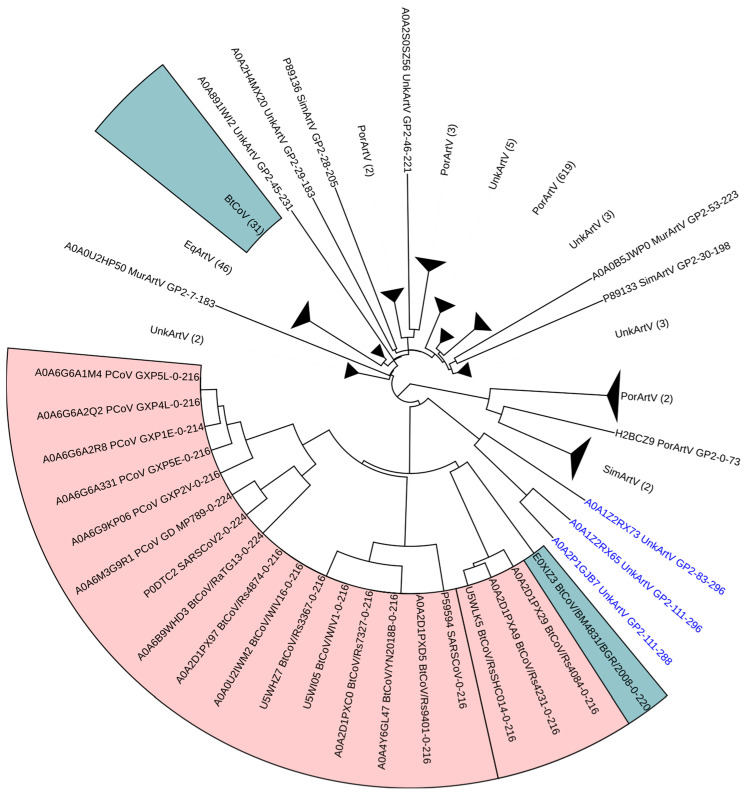
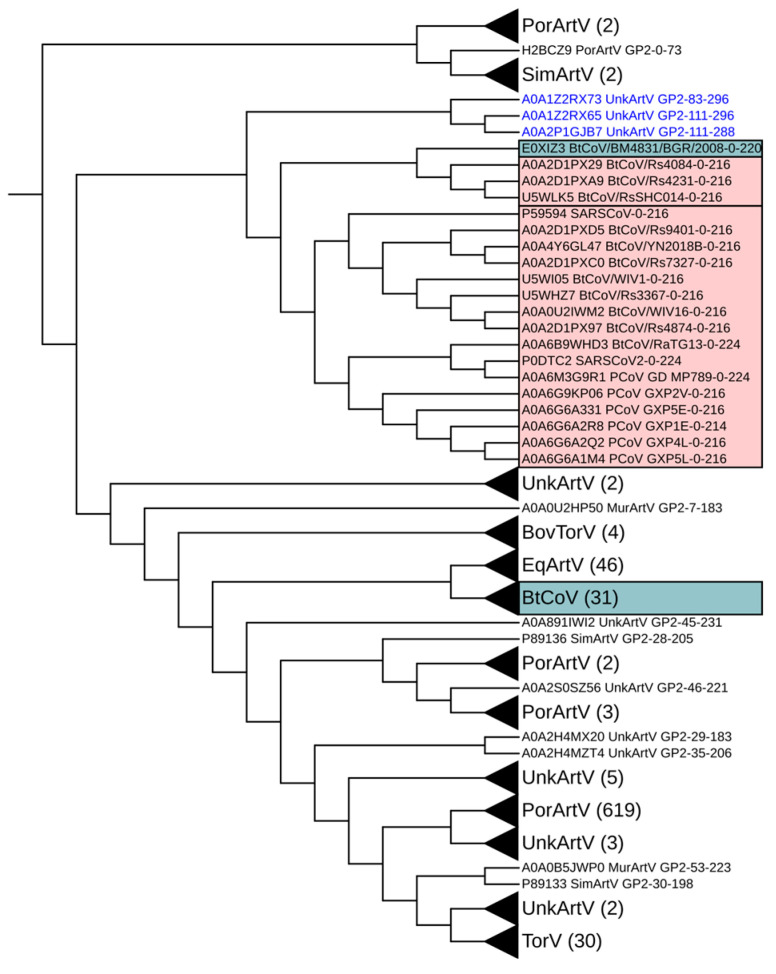
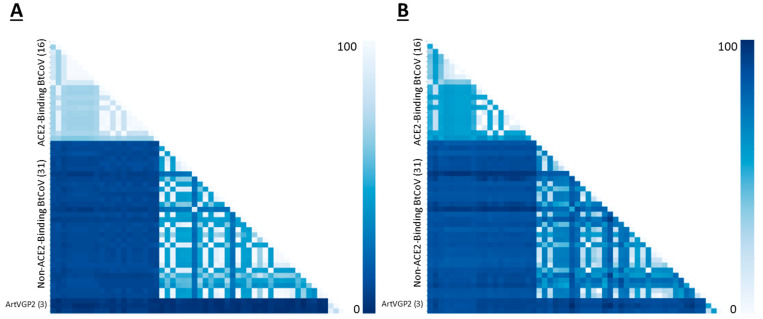
Recently, we proposed a new method, based on protein profiles derived from physicochemical dynamic time warping (PCDTW), to functionally/structurally classify coronavirus spike protein receptor binding domains (RBD). Our method, as used herein, uses waveforms derived from two physicochemical properties of amino acids (molecular weight and hydrophobicity (MWHP)) and is designed to reach into the twilight zone of homology, and therefore, has the potential to reveal structural/functional relationships and potentially homologous relationships over greater evolutionary time spans than standard primary sequence alignment-based techniques. One potential application of our method is inferring deep evolutionary relationships such as those between the RBD of the spike protein of betacoronaviruses and functionally similar proteins found in other families of viruses, a task that is extremely difficult, if not impossible, using standard multiple alignment-based techniques. Here, we applied PCDTW to compare members of four divergent families of viruses to betacoronaviruses in terms of MWHP physicochemical similarity of their RBDs. We hypothesized that some members of the families Arteriviridae, Astroviridae, Reoviridae (both from the genera rotavirus and orthoreovirus considered separately), and Toroviridae would show greater physicochemical similarity to betacoronaviruses in protein regions similar to the RBD of the betacoronavirus spike protein than they do to other members of their respective taxonomic groups. This was confirmed to varying degrees in each of our analyses. Three arteriviruses (the glycoprotein-2 sequences) clustered more closely with ACE2-binding betacoronaviruses than to other arteriviruses, and a clade of 33 toroviruses was found embedded within a clade of non-ACE2-binding betacoronaviruses, indicating potentially shared structure/function of RBDs between betacoronaviruses and members of other virus clades.
最近,我们提出了一种基于物理化学动态时间规整(PCDTW)衍生的蛋白质谱的新方法,用于对冠状病毒刺突蛋白受体结合域(RBD)进行功能/结构分类。我们在此使用的方法利用了从氨基酸的两种物理化学性质(分子量和疏水性(MWHP))衍生的波形,旨在深入到同源性的模糊区域,因此,与基于标准一级序列比对的技术相比,有潜力在更大的进化时间跨度内揭示结构/功能关系以及潜在的同源关系。我们方法的一个潜在应用是推断深层次的进化关系,例如β冠状病毒刺突蛋白的RBD与在其他病毒家族中发现的功能相似蛋白质之间的关系,而使用基于标准多重比对的技术完成这项任务即便不是不可能,也是极其困难的。在此,我们应用PCDTW,根据其RBD的MWHP物理化学相似性,将四个不同病毒家族的成员与β冠状病毒进行比较。我们假设动脉炎病毒科、星状病毒科、呼肠孤病毒科(分别考虑轮状病毒属和正呼肠孤病毒属)和环曲病毒科的一些成员,在与β冠状病毒刺突蛋白的RBD相似的蛋白质区域中,与β冠状病毒的物理化学相似性会高于它们与各自分类组中其他成员的相似性。在我们的每项分析中,这一点都在不同程度上得到了证实。三种动脉炎病毒(糖蛋白-2序列)与结合血管紧张素转换酶2(ACE2)的β冠状病毒聚在一起,比与其他动脉炎病毒的关系更为密切,并且发现一个由33种环曲病毒组成的进化枝嵌入在不结合ACE2的β冠状病毒进化枝中,这表明β冠状病毒与其他病毒进化枝成员之间的RBD可能具有共同的结构/功能。