Takazawa Samuel K, Popenhagen Sarah K, Ocampo Giraldo Luis A, Hix Jay D, Thompson Scott J, Chichester David L, Zeiler Cleat P, Garcés Milton A
Infrasound Laboratory, Hawai'i Institute of Geophysics and Planetology, School of Ocean and Earth Science and Technology, University of Hawai'i at Mānoa, Kailua-Kona, HI 96740, USA.
Idaho National Laboratory, Idaho Falls, ID 83415, USA.
Sensors (Basel). 2024 Oct 17;24(20):6688. doi: 10.3390/s24206688.
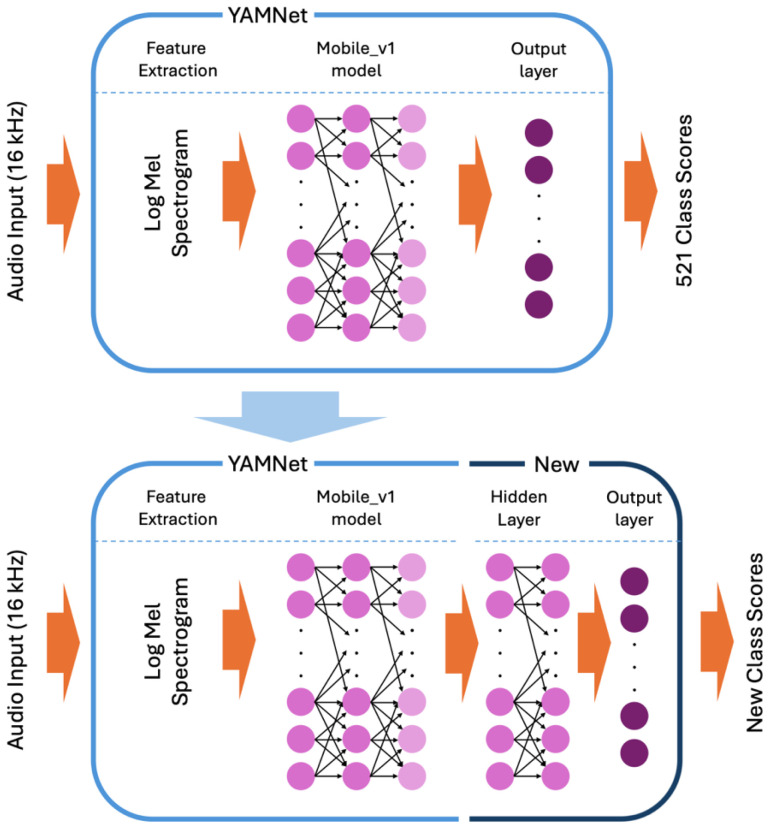
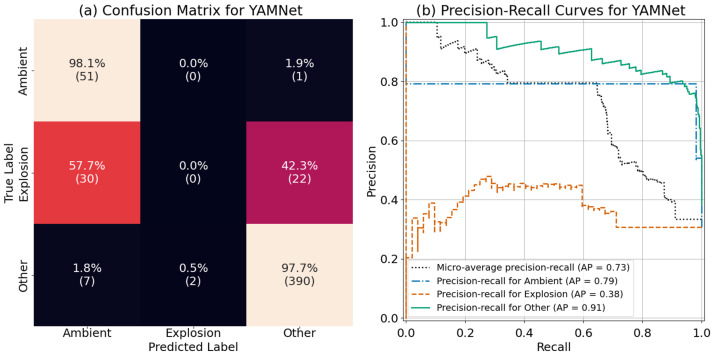
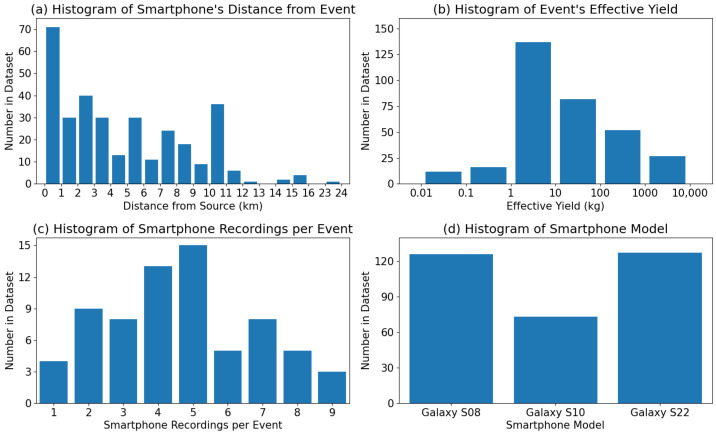
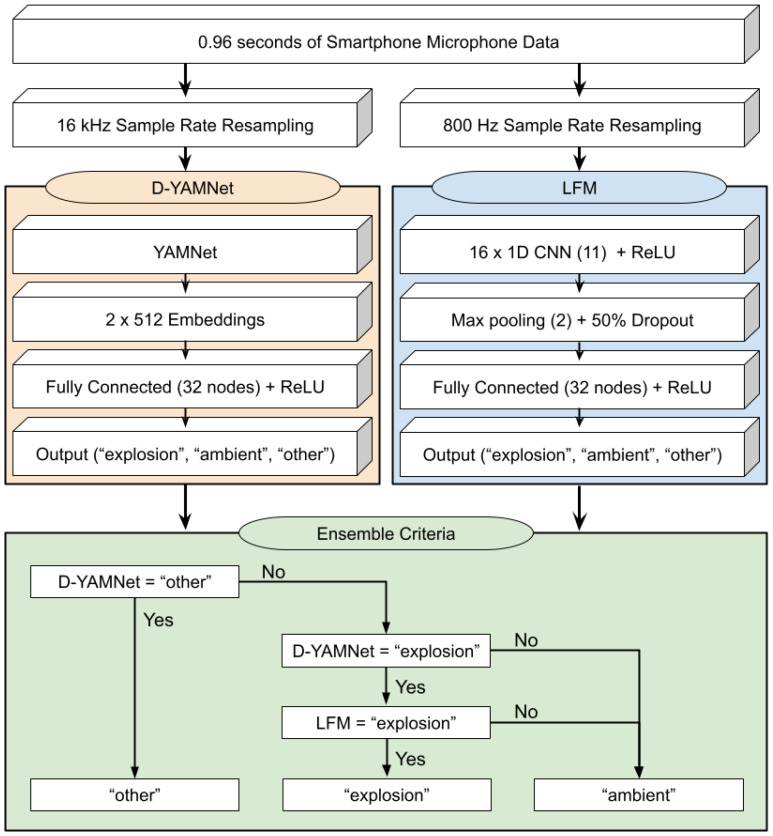
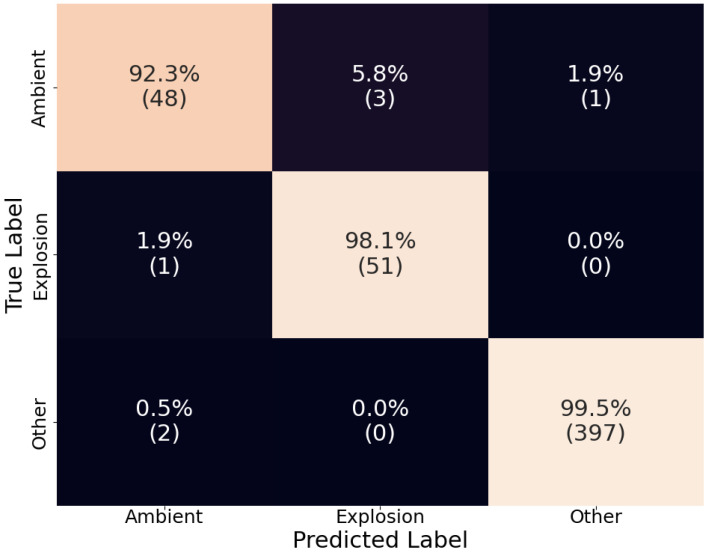
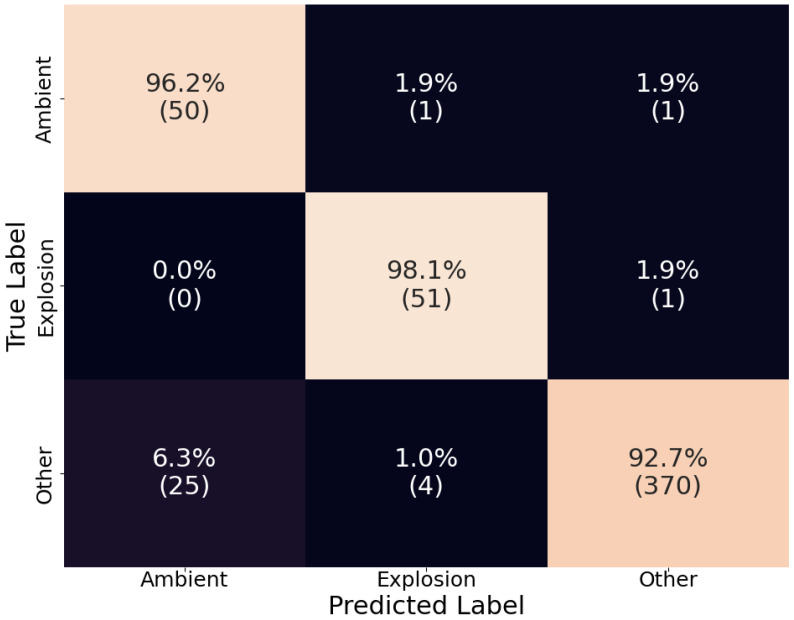
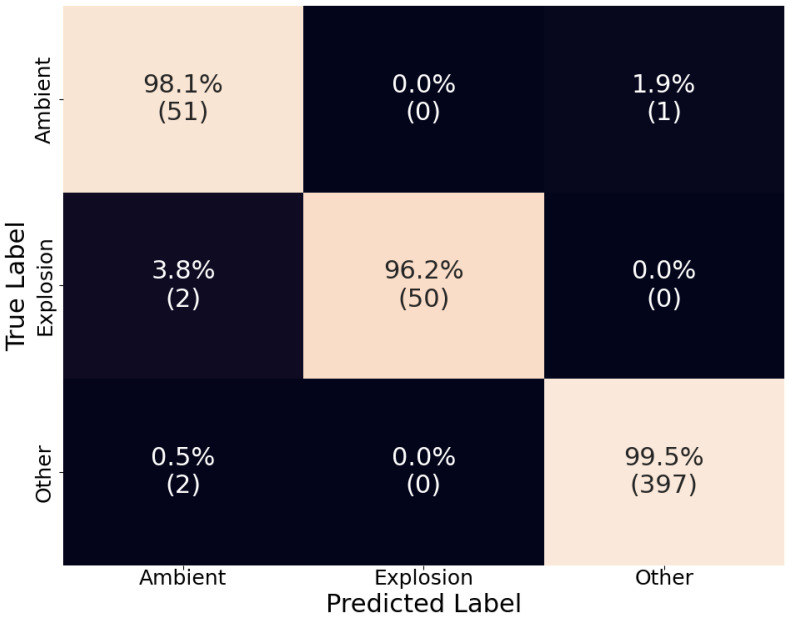
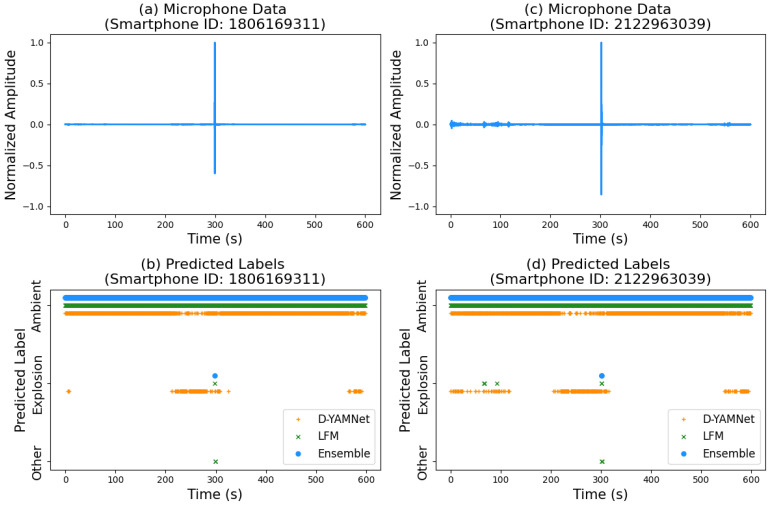
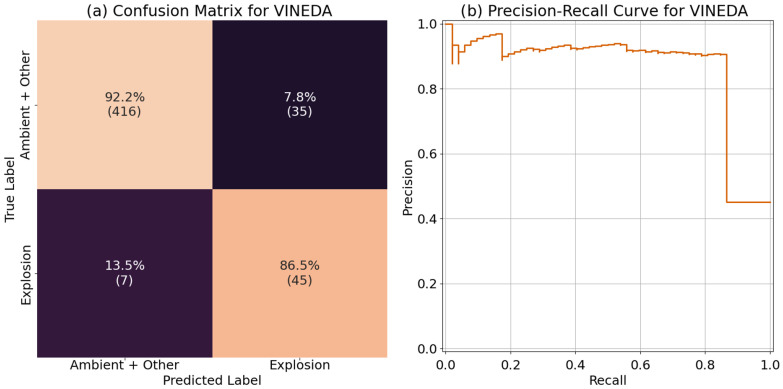
Explosion monitoring is performed by infrasound and seismoacoustic sensor networks that are distributed globally, regionally, and locally. However, these networks are unevenly and sparsely distributed, especially at the local scale, as maintaining and deploying networks is costly. With increasing interest in smaller-yield explosions, the need for more dense networks has increased. To address this issue, we propose using smartphone sensors for explosion detection as they are cost-effective and easy to deploy. Although there are studies using smartphone sensors for explosion detection, the field is still in its infancy and new technologies need to be developed. We applied a machine learning model for explosion detection using smartphone microphones. The data used were from the Smartphone High-explosive Audio Recordings Dataset (SHAReD), a collection of 326 waveforms from 70 high-explosive (HE) events recorded on smartphones, and the ESC-50 dataset, a benchmarking dataset commonly used for environmental sound classification. Two machine learning models were trained and combined into an ensemble model for explosion detection. The resulting ensemble model classified audio signals as either "explosion", "ambient", or "other" with true positive rates (recall) greater than 96% for all three categories.
爆炸监测由分布在全球、区域和本地的次声和地震声学传感器网络执行。然而,这些网络分布不均且稀疏,特别是在本地尺度上,因为维护和部署网络成本高昂。随着对小当量爆炸的兴趣增加,对更密集网络的需求也在增加。为了解决这个问题,我们建议使用智能手机传感器进行爆炸检测,因为它们具有成本效益且易于部署。尽管有使用智能手机传感器进行爆炸检测的研究,但该领域仍处于起步阶段,需要开发新技术。我们应用了一种使用智能手机麦克风进行爆炸检测的机器学习模型。所使用的数据来自智能手机高爆音频记录数据集(SHAReD),该数据集包含70个高爆(HE)事件在智能手机上记录的326个波形,以及ESC-50数据集,这是一个常用于环境声音分类的基准数据集。训练了两个机器学习模型并将其组合成一个用于爆炸检测的集成模型。所得的集成模型将音频信号分类为“爆炸”、“环境”或“其他”,所有三个类别的真阳性率(召回率)均大于96%。