• 文献检索
  • 文档翻译
  • 深度研究
  • 学术资讯
  • Suppr Zotero 插件Zotero 插件
  • 邀请有礼
  • 套餐&价格
  • 历史记录
应用&插件
Suppr Zotero 插件Zotero 插件浏览器插件Mac 客户端Windows 客户端微信小程序
定价
高级版会员购买积分包购买API积分包
服务
文献检索文档翻译深度研究API 文档MCP 服务
关于我们
关于 Suppr公司介绍联系我们用户协议隐私条款
关注我们

Suppr 超能文献

核心技术专利:CN118964589B侵权必究
粤ICP备2023148730 号-1Suppr @ 2026

文献检索

告别复杂PubMed语法,用中文像聊天一样搜索,搜遍4000万医学文献。AI智能推荐,让科研检索更轻松。

立即免费搜索

文件翻译

保留排版,准确专业,支持PDF/Word/PPT等文件格式,支持 12+语言互译。

免费翻译文档

深度研究

AI帮你快速写综述,25分钟生成高质量综述,智能提取关键信息,辅助科研写作。

立即免费体验

用N-乙酰谷氨酸进行外源处理可使植物对热胁迫产生耐受性。

Exogenous treatment with N-acetylglutamic acid confers tolerance to heat stress in plants.

作者信息

Hirakawa Takeshi, Tanno Seia, Ohara Kazuaki

机构信息

Kirin Central Research Institute, Kirin Holdings Company, Ltd., 26-1, Muraoka-Higashi 2, Fujisawa, Kanagawa 251-8555, Japan.

出版信息

Plant Biotechnol (Tokyo). 2024 Mar 25;41(1):71-76. doi: 10.5511/plantbiotechnology.23.1211a.

DOI:10.5511/plantbiotechnology.23.1211a
PMID:39464869
原文链接:https://pmc.ncbi.nlm.nih.gov/articles/PMC11500599/
Abstract

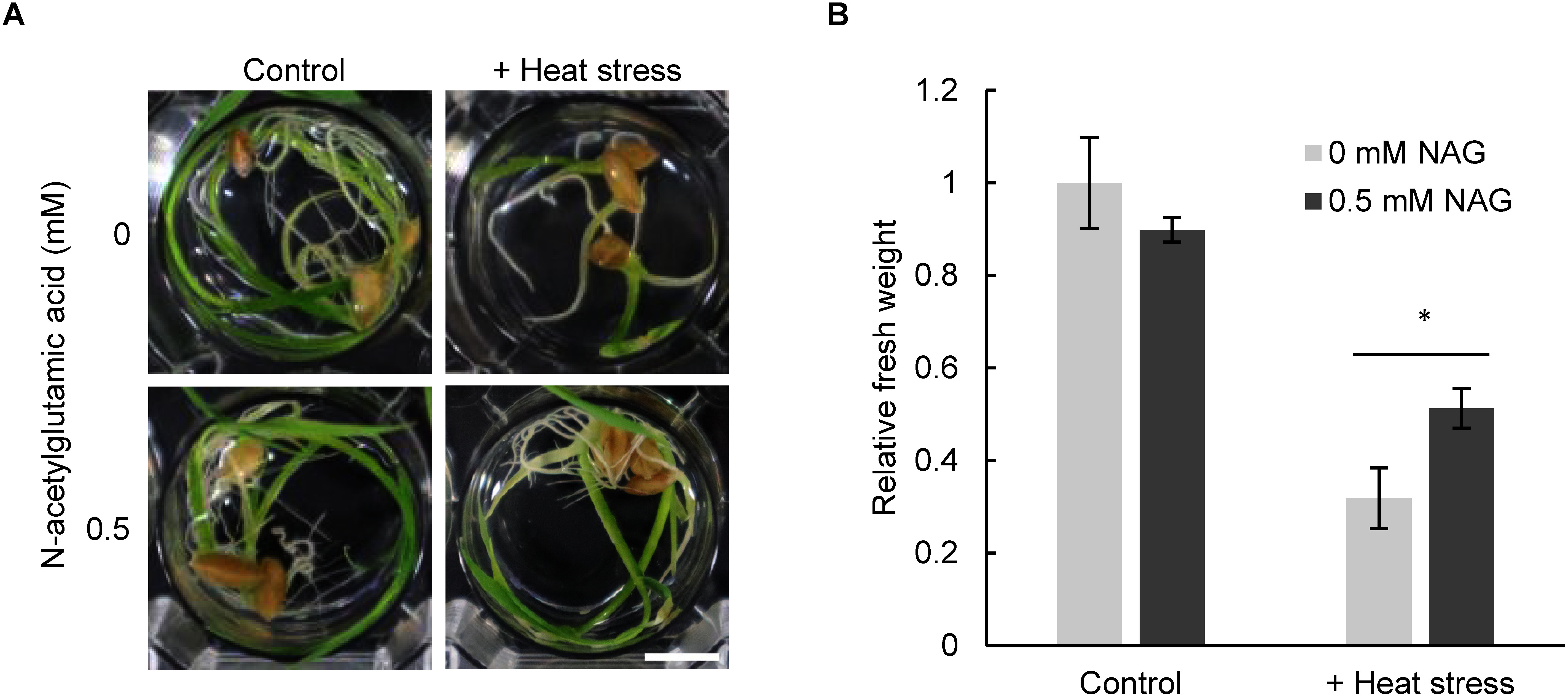
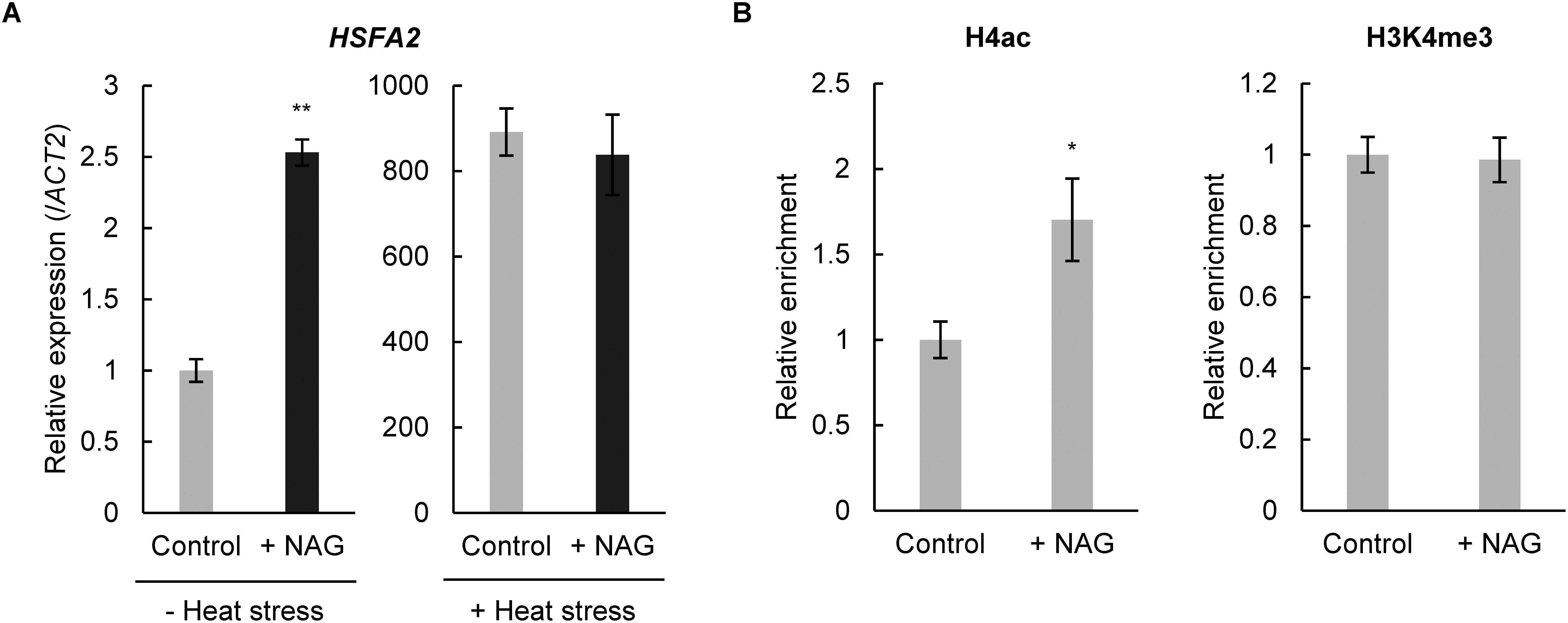
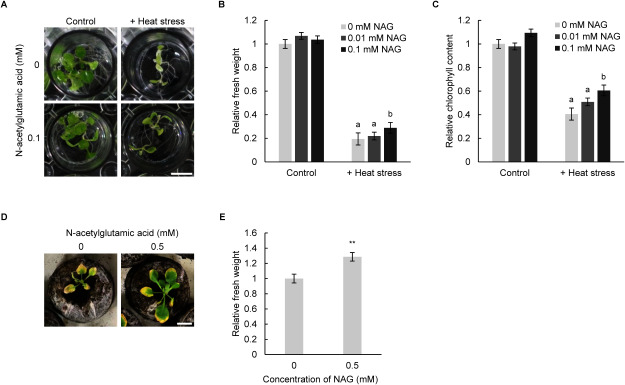
Heat stress, which occurs when temperatures exceed the optimal range for growth, challenges the maintenance of crop yield because it disrupts plant homeostasis at the cellular and developmental levels. Chemical priming, which can activate the response to environmental stress using chemical compounds, is a promising method of maintaining plant growth under stressful conditions. Recently, we found that the non-proteogenic amino acid N-acetylglutamic acid (NAG) confers tolerance to oxidative stress through the activation of genes related to scavenging reactive oxygen species in plants. However, it has been unknown whether NAG alleviates environmental stress except oxidative stress. Here, we revealed that the response to heat stress was enhanced by exogenous treatment with NAG in plants. NAG alleviated the reduction in chlorophyll content induced by heat stress in . Gene expression analysis showed that NAG activates the transcription factor , which is regarded as a master regulator of the transcriptional cascade in response to heat stress. NAG induces histone H4 acetylation, an active histone modification, at the locus, suggesting that NAG could activate the expression of based on epigenetic modifications such as histone acetylation. Additionally, we found that treated with NAG showed tolerance to heat stress. These results suggest that NAG could be used for chemical priming in the maintenance of plant growth under heat-stress conditions.

摘要

当温度超过生长的最佳范围时会发生热应激,这对作物产量的维持构成挑战,因为它会在细胞和发育水平上破坏植物的体内平衡。化学引发是一种利用化合物激活对环境胁迫的反应的方法,是在胁迫条件下维持植物生长的一种有前景的方法。最近,我们发现非蛋白质氨基酸N-乙酰谷氨酸(NAG)通过激活植物中与清除活性氧相关的基因来赋予对氧化应激的耐受性。然而,除了氧化应激外,NAG是否能缓解环境胁迫尚不清楚。在这里,我们揭示了在植物中用NAG进行外源处理可增强对热应激的反应。NAG减轻了热应激诱导的叶绿素含量的降低。基因表达分析表明,NAG激活了转录因子,该转录因子被认为是热应激反应中转录级联的主要调节因子。NAG在基因座处诱导组蛋白H4乙酰化,这是一种活跃的组蛋白修饰,表明NAG可以基于组蛋白乙酰化等表观遗传修饰激活基因的表达。此外,我们发现用NAG处理的植物对热应激表现出耐受性。这些结果表明,NAG可用于在热应激条件下维持植物生长的化学引发。
https://cdn.ncbi.nlm.nih.gov/pmc/blobs/f533/11500599/b342d37f91ac/plantbiotechnology-41-1-23.1211a-figure03.jpg
https://cdn.ncbi.nlm.nih.gov/pmc/blobs/f533/11500599/597b0fcf9bb6/plantbiotechnology-41-1-23.1211a-figure01.jpg
https://cdn.ncbi.nlm.nih.gov/pmc/blobs/f533/11500599/afa8d54572bf/plantbiotechnology-41-1-23.1211a-figure02.jpg
https://cdn.ncbi.nlm.nih.gov/pmc/blobs/f533/11500599/b342d37f91ac/plantbiotechnology-41-1-23.1211a-figure03.jpg
https://cdn.ncbi.nlm.nih.gov/pmc/blobs/f533/11500599/597b0fcf9bb6/plantbiotechnology-41-1-23.1211a-figure01.jpg
https://cdn.ncbi.nlm.nih.gov/pmc/blobs/f533/11500599/afa8d54572bf/plantbiotechnology-41-1-23.1211a-figure02.jpg
https://cdn.ncbi.nlm.nih.gov/pmc/blobs/f533/11500599/b342d37f91ac/plantbiotechnology-41-1-23.1211a-figure03.jpg

相似文献

1
Exogenous treatment with N-acetylglutamic acid confers tolerance to heat stress in plants.用N-乙酰谷氨酸进行外源处理可使植物对热胁迫产生耐受性。
Plant Biotechnol (Tokyo). 2024 Mar 25;41(1):71-76. doi: 10.5511/plantbiotechnology.23.1211a.
2
N-acetylglutamic acid alleviates oxidative stress based on histone acetylation in plants.N-乙酰谷氨酸基于植物中的组蛋白乙酰化减轻氧化应激。
Front Plant Sci. 2023 May 8;14:1165646. doi: 10.3389/fpls.2023.1165646. eCollection 2023.
3
PIF4 Promotes Expression of to Enhance Basal Thermotolerance in .PIF4 促进 的表达,增强 中的基础耐热性。
Int J Mol Sci. 2022 May 27;23(11):6017. doi: 10.3390/ijms23116017.
4
Arabidopsis heat shock transcription factor A2 as a key regulator in response to several types of environmental stress.拟南芥热激转录因子A2作为响应多种环境胁迫的关键调节因子。
Plant J. 2006 Nov;48(4):535-47. doi: 10.1111/j.1365-313X.2006.02889.x. Epub 2006 Oct 19.
5
Epigenomics in stress tolerance of plants under the climate change.植物在气候变化下的应激耐受中的表观基因组学。
Mol Biol Rep. 2023 Jul;50(7):6201-6216. doi: 10.1007/s11033-023-08539-6. Epub 2023 Jun 9.
6
ERF49 mediates brassinosteroid regulation of heat stress tolerance in Arabidopsis thaliana.ERF49 介导油菜素内酯调控拟南芥的耐热性。
BMC Biol. 2022 Nov 10;20(1):254. doi: 10.1186/s12915-022-01455-4.
7
Early signaling enhance heat tolerance in Arabidopsis through modulating jasmonic acid synthesis mediated by HSFA2.早期信号通过调节 HSFA2 介导的茉莉酸合成增强拟南芥的耐热性。
Int J Biol Macromol. 2024 May;267(Pt 2):131256. doi: 10.1016/j.ijbiomac.2024.131256. Epub 2024 Mar 29.
8
Histone acetyltransferase GCN5 is essential for heat stress-responsive gene activation and thermotolerance in Arabidopsis.组蛋白乙酰转移酶GCN5对于拟南芥中热应激反应基因的激活和耐热性至关重要。
Plant J. 2015 Dec;84(6):1178-91. doi: 10.1111/tpj.13076.
9
Genomic and epigenomic determinants of heat stress-induced transcriptional memory in Arabidopsis.热应激诱导的拟南芥转录记忆的基因组和表观基因组决定因素。
Genome Biol. 2023 May 30;24(1):129. doi: 10.1186/s13059-023-02970-5.
10
High-level overexpression of the Arabidopsis HsfA2 gene confers not only increased themotolerance but also salt/osmotic stress tolerance and enhanced callus growth.拟南芥热激转录因子A2(HsfA2)基因的高水平过表达不仅赋予植物更高的耐热性,还赋予其耐盐/渗透胁迫能力,并促进愈伤组织生长。
J Exp Bot. 2007;58(12):3373-83. doi: 10.1093/jxb/erm184. Epub 2007 Sep 20.

本文引用的文献

1
N-acetylglutamic acid alleviates oxidative stress based on histone acetylation in plants.N-乙酰谷氨酸基于植物中的组蛋白乙酰化减轻氧化应激。
Front Plant Sci. 2023 May 8;14:1165646. doi: 10.3389/fpls.2023.1165646. eCollection 2023.
2
γ-Aminobutyric acid plays a key role in plant acclimation to a combination of high light and heat stress.γ-氨基丁酸在植物适应高光和热胁迫的组合中起着关键作用。
Plant Physiol. 2022 Mar 28;188(4):2026-2038. doi: 10.1093/plphys/kiac010.
3
Mitochondrial Fission Complex Is Required for Long-Term Heat Tolerance of Arabidopsis.
线粒体分裂复合物是拟南芥长期耐热所必需的。
Plant Cell Physiol. 2022 Mar 11;63(3):296-304. doi: 10.1093/pcp/pcab171.
4
H3K27me3 demethylases alter HSP22 and HSP17.6C expression in response to recurring heat in Arabidopsis.H3K27me3 去甲基酶改变 HSP22 和 HSP17.6C 的表达以响应拟南芥中反复出现的热。
Nat Commun. 2021 Jun 9;12(1):3480. doi: 10.1038/s41467-021-23766-w.
5
Primary carbohydrate metabolism genes participate in heat-stress memory at the shoot apical meristem of Arabidopsis thaliana.初生碳水化合物代谢基因参与拟南芥茎尖分生组织的热胁迫记忆。
Mol Plant. 2021 Sep 6;14(9):1508-1524. doi: 10.1016/j.molp.2021.05.024. Epub 2021 May 27.
6
Global Warming, Climate Change, and Environmental Pollution: Recipe for a Multifactorial Stress Combination Disaster.全球变暖、气候变化和环境污染:多重因素压力组合灾难的成因。
Trends Plant Sci. 2021 Jun;26(6):588-599. doi: 10.1016/j.tplants.2021.02.011. Epub 2021 Mar 18.
7
Recapitulation of the Function and Role of ROS Generated in Response to Heat Stress in Plants.植物热应激响应过程中产生的活性氧的功能与作用概述
Plants (Basel). 2021 Feb 15;10(2):371. doi: 10.3390/plants10020371.
8
An ER-Golgi Tethering Factor SLOH4/MIP3 Is Involved in Long-Term Heat Tolerance of Arabidopsis.内质网-高尔基体连接因子 SLOH4/MIP3 参与拟南芥的长期耐热性。
Plant Cell Physiol. 2021 May 11;62(2):272-279. doi: 10.1093/pcp/pcaa157.
9
Advances in Chemical Priming to Enhance Abiotic Stress Tolerance in Plants.化学引发提高植物非生物胁迫耐受性的研究进展
Plant Cell Physiol. 2021 Feb 4;61(12):1995-2003. doi: 10.1093/pcp/pcaa119.
10
Molecular Regulation of Plant Responses to Environmental Temperatures.植物对环境温度响应的分子调控。
Mol Plant. 2020 Apr 6;13(4):544-564. doi: 10.1016/j.molp.2020.02.004. Epub 2020 Feb 14.