Siddals Steven, Torous John, Coxon Astrid
King's College London, London, UK.
Beth Israel Deaconess Medical Center & Harvard Medical School, Boston, MA, USA.
Npj Ment Health Res. 2024 Oct 27;3(1):48. doi: 10.1038/s44184-024-00097-4.
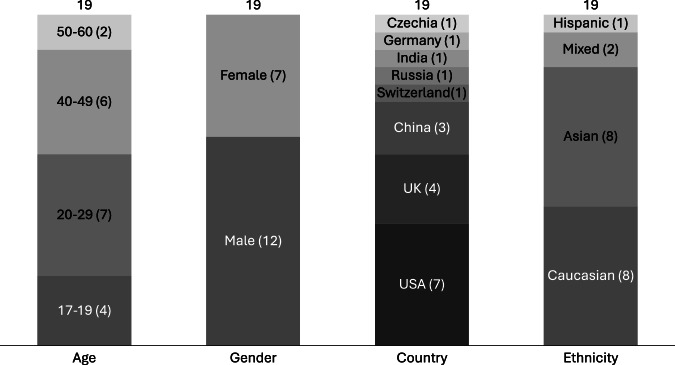
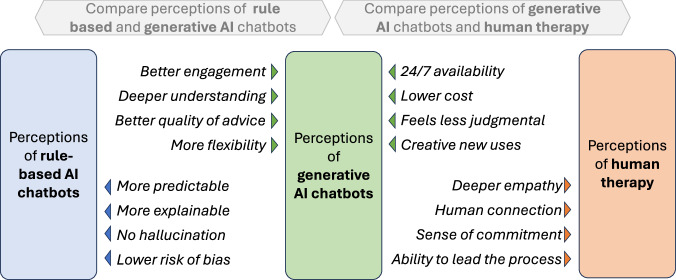
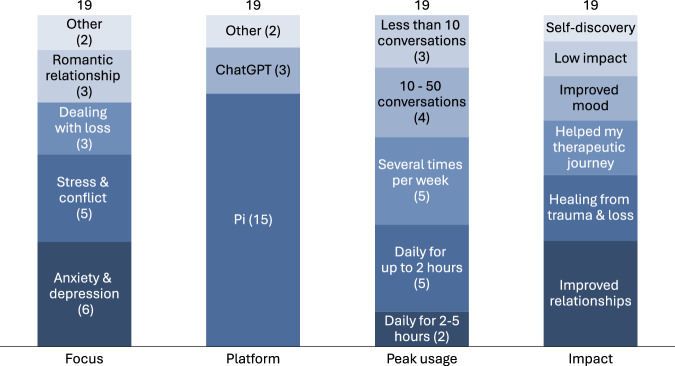
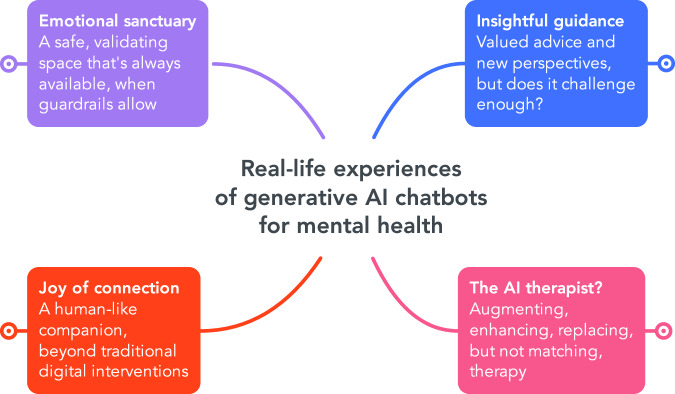
The global mental health crisis underscores the need for accessible, effective interventions. Chatbots based on generative artificial intelligence (AI), like ChatGPT, are emerging as novel solutions, but research on real-life usage is limited. We interviewed nineteen individuals about their experiences using generative AI chatbots for mental health. Participants reported high engagement and positive impacts, including better relationships and healing from trauma and loss. We developed four themes: (1) a sense of 'emotional sanctuary', (2) 'insightful guidance', particularly about relationships, (3) the 'joy of connection', and (4) comparisons between the 'AI therapist' and human therapy. Some themes echoed prior research on rule-based chatbots, while others seemed novel to generative AI. Participants emphasised the need for better safety guardrails, human-like memory and the ability to lead the therapeutic process. Generative AI chatbots may offer mental health support that feels meaningful to users, but further research is needed on safety and effectiveness.
全球心理健康危机凸显了获得可及且有效的干预措施的必要性。基于生成式人工智能(AI)的聊天机器人,如ChatGPT,正作为新颖的解决方案崭露头角,但关于其在现实生活中使用情况的研究有限。我们就19个人使用生成式人工智能聊天机器人促进心理健康的经历进行了访谈。参与者报告了高度的参与度和积极影响,包括改善人际关系以及从创伤和损失中痊愈。我们归纳出四个主题:(1)“情感庇护所”之感,(2)“富有洞察力的指导”,尤其是关于人际关系方面的,(3)“连接的喜悦”,以及(4)“人工智能治疗师”与人类治疗的比较。一些主题与先前关于基于规则的聊天机器人的研究相呼应,而其他一些主题对生成式人工智能而言似乎是新颖的。参与者强调需要更好的安全保障、类似人类的记忆以及引领治疗过程的能力。生成式人工智能聊天机器人或许能提供对用户而言有意义的心理健康支持,但在安全性和有效性方面还需要进一步研究。