Department of Neurology, Washington University School of Medicine, 4523 Clayton Avenue, Box 8111, Saint Louis, MO, 63110, USA.
Division of Genetics and Genomics, Boston Children's Hospital, The Manton Center for Orphan Disease Research, Harvard Medical School, Boston, USA.
Acta Neuropathol Commun. 2024 Oct 28;12(1):171. doi: 10.1186/s40478-024-01878-w.
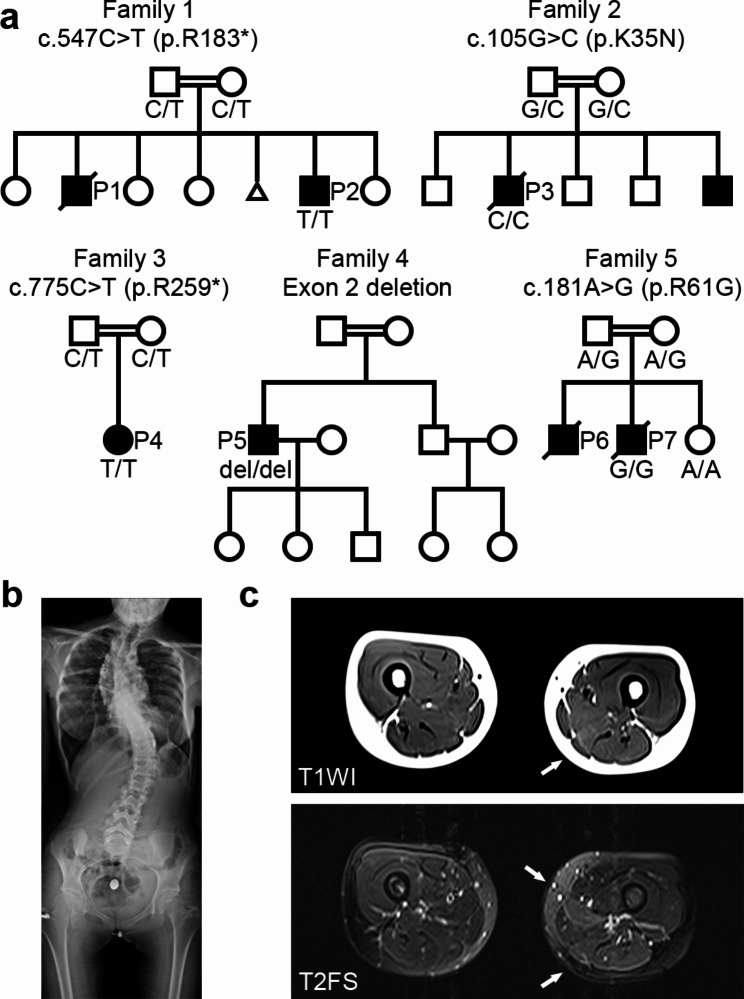
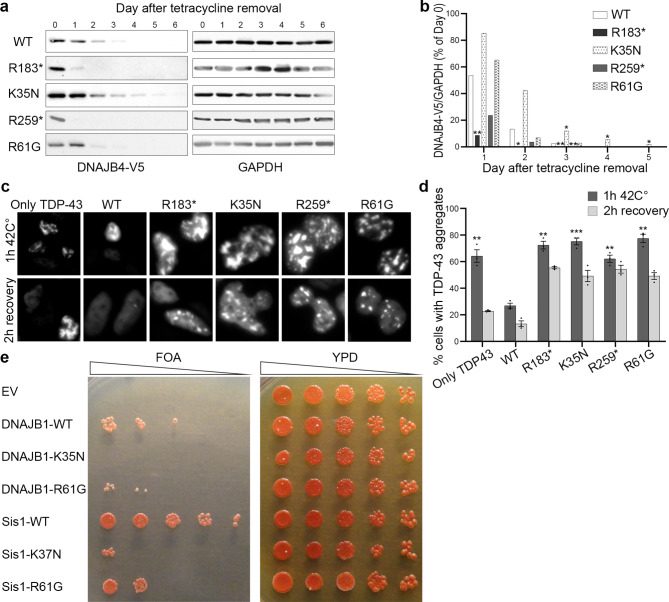
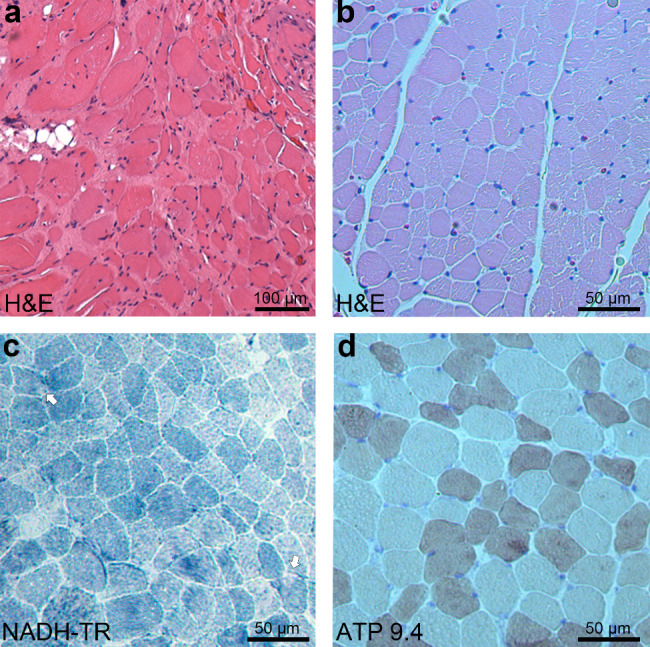
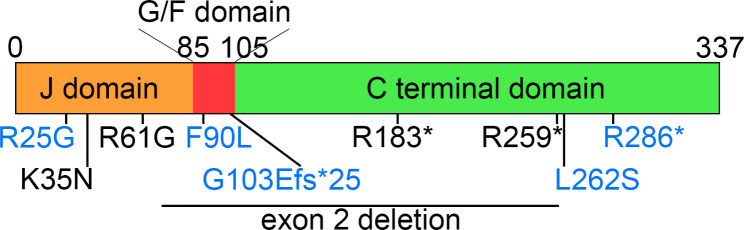
Protein aggregate myopathies can result from pathogenic variants in genes encoding protein chaperones. DNAJB4 is a cochaperone belonging to the heat shock protein-40 (HSP40) family and plays a vital role in cellular proteostasis. Recessive loss-of-function variants in DNAJB4 cause myopathy with early respiratory failure and spinal rigidity, presenting from infancy to adulthood. This study investigated the broader clinical and genetic spectrum of DNAJB4 myopathy. In this study, we performed whole-exome sequencing on seven patients with early respiratory failure of unknown genetic etiology. We identified five distinct pathogenic variants in DNAJB4 in five unrelated families of diverse ethnic backgrounds: three loss-of-function variants (c.547 C > T, p.R183*; c.775 C > T, p.R259*; an exon 2 deletion) and two missense variants (c.105G > C, p.K35N; c.181 A > G, p.R61G). All patients were homozygous. Most affected individuals exhibited early respiratory failure, and patients from three families had rigid spine syndrome with axial weakness in proportion to appendicular weakness. Additional symptoms included dysphagia, ankle contractures, scoliosis, neck stiffness, and cardiac dysfunction. Notably, J-domain missense variants were associated with a more severe phenotype, including an earlier age of onset and a higher mortality rate, suggesting a strong genotype‒phenotype correlation. Consistent with a loss of function, the nonsense variants presented decreased stability. In contrast, the missense variants exhibited normal or increased stability but behaved as loss-of-function variants in yeast complementation and TDP-43 disaggregation assays. Our findings suggest that DNAJB4 is an emerging cause of myopathy with rigid spine syndrome of variable age of onset and severity. This diagnosis should be considered in individuals presenting with suggestive symptoms, particularly if they exhibit neck stiffness during infancy or experience respiratory failure in adults without significant limb muscle weakness. Missense variants in the J domain may predict a more severe phenotype.
蛋白聚集肌病可由编码蛋白伴侣的基因中的致病性变异引起。DNAJB4 是热休克蛋白 40(HSP40)家族的共伴侣,在细胞蛋白稳态中发挥重要作用。DNAJB4 隐性失功能变异导致肌病伴早期呼吸衰竭和脊柱僵硬,从婴儿期到成年期发病。本研究探讨了 DNAJB4 肌病更广泛的临床和遗传谱。在这项研究中,我们对七个具有未知遗传病因的早期呼吸衰竭的患者进行了全外显子组测序。我们在五个不同种族背景的无关家庭中发现了 DNAJB4 中的五个不同的致病性变异:三个失功能变异(c.547C>T,p.R183*;c.775C>T,p.R259*;外显子 2 缺失)和两个错义变异(c.105G>C,p.K35N;c.181A>G,p.R61G)。所有患者均为纯合子。大多数受影响的个体表现出早期呼吸衰竭,来自三个家庭的患者有刚性脊柱综合征,伴有轴向无力与四肢无力成比例。其他症状包括吞咽困难、踝关节挛缩、脊柱侧凸、颈部僵硬和心脏功能障碍。值得注意的是,J 结构域错义变异与更严重的表型相关,包括发病年龄更早和死亡率更高,提示存在很强的基因型-表型相关性。与功能丧失一致,无意义变异显示稳定性降低。相比之下,错义变异表现出正常或增加的稳定性,但在酵母互补和 TDP-43 解聚测定中表现为失功能变异。我们的研究结果表明,DNAJB4 是一种新兴的肌病原因,具有可变发病年龄和严重程度的刚性脊柱综合征。如果患者出现提示性症状,尤其是在婴儿期出现颈部僵硬或成年期出现无明显四肢肌无力的呼吸衰竭,应考虑该诊断。J 结构域中的错义变异可能预示着更严重的表型。