Laboratoire de Biodiversité et Gestion des Ecosystèmes Tropicaux, Unité de Recherche en Génétique et Epidémiologie Moléculaire, UFR Environnement, Université Jean Lorougnon Guédé, Daloa, Côte d'Ivoire.
College of Veterinary Medicine, Animal Resources and Biosecurity, Makerere University, Kampala, Uganda.
Parasite. 2024;31:66. doi: 10.1051/parasite/2024049. Epub 2024 Oct 29.
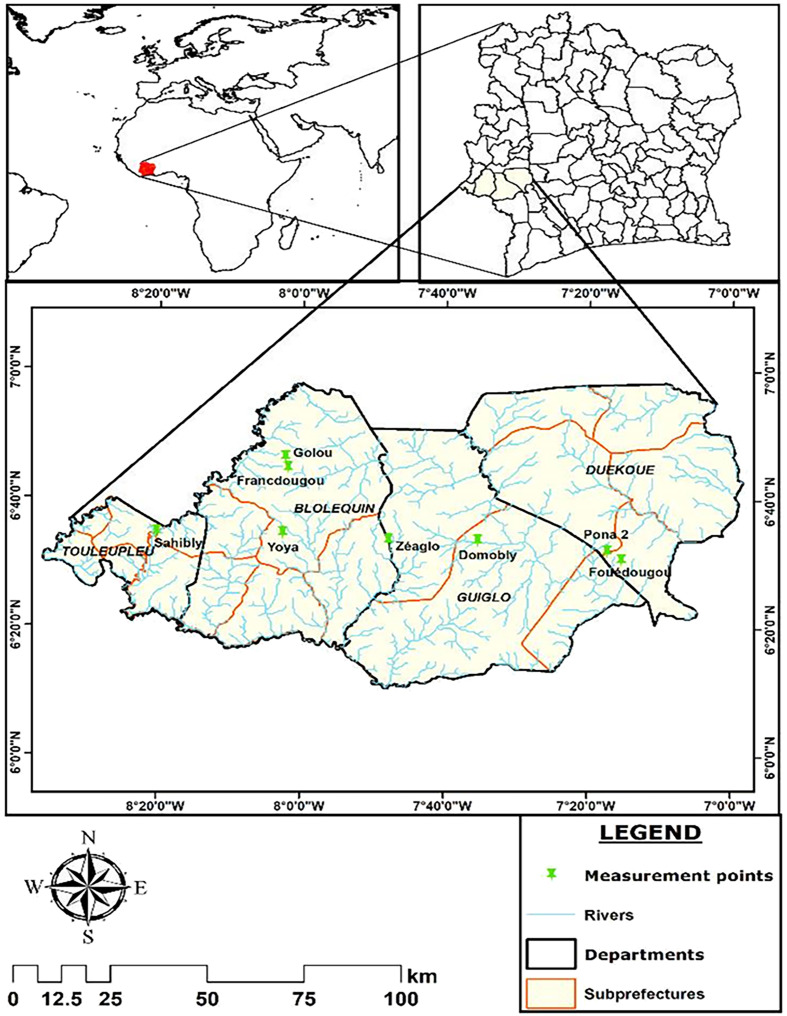
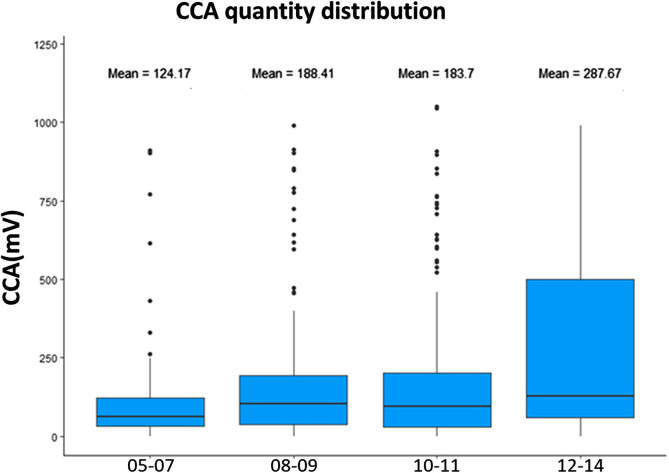
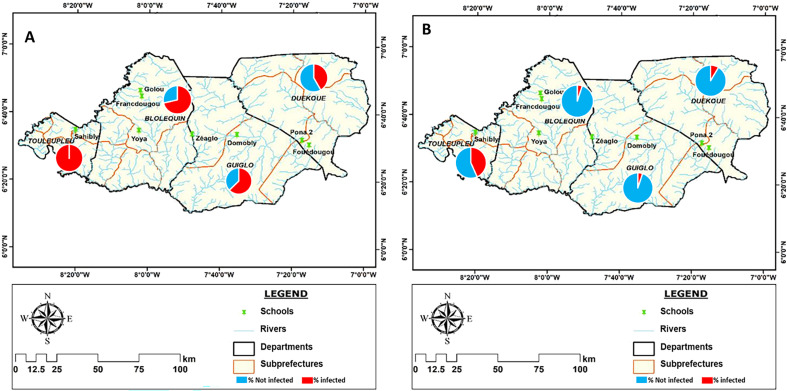
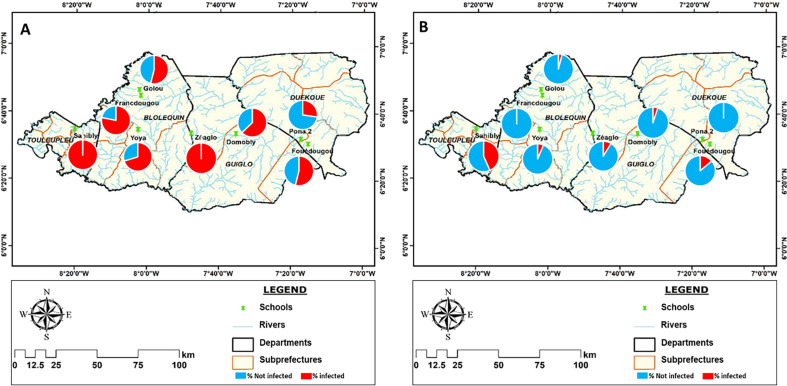
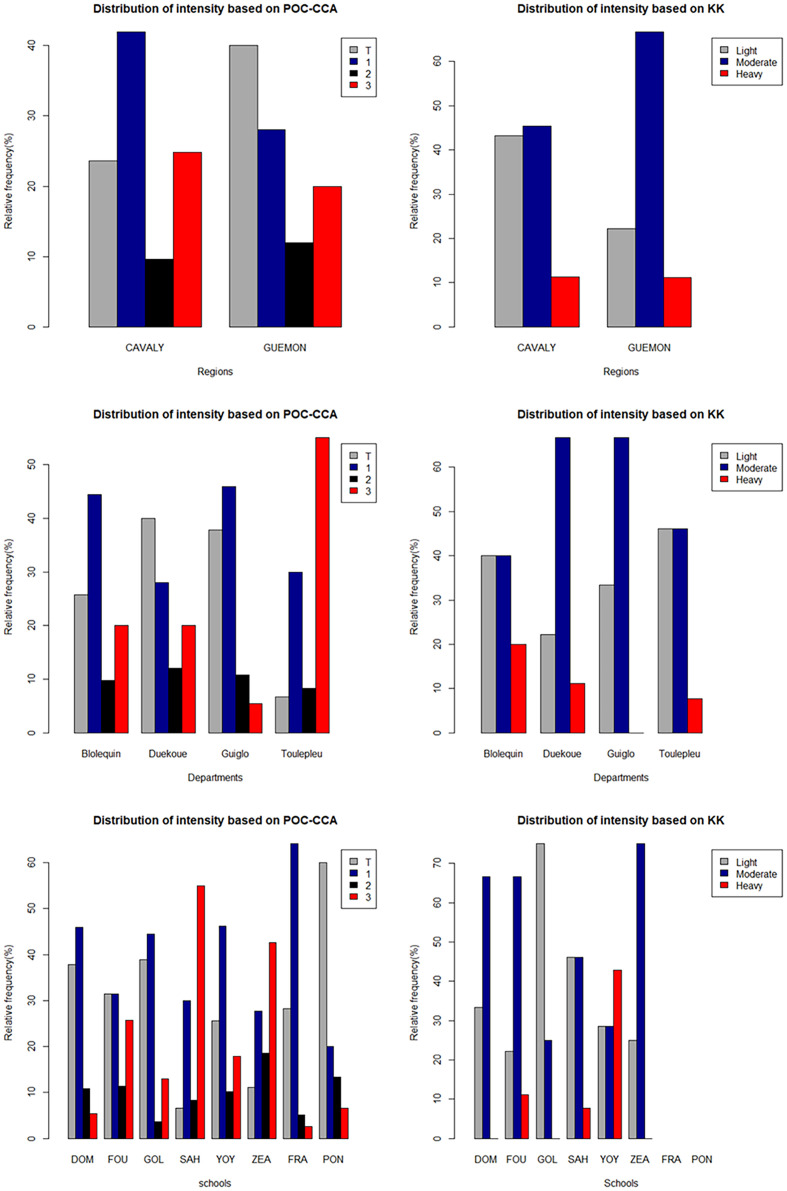
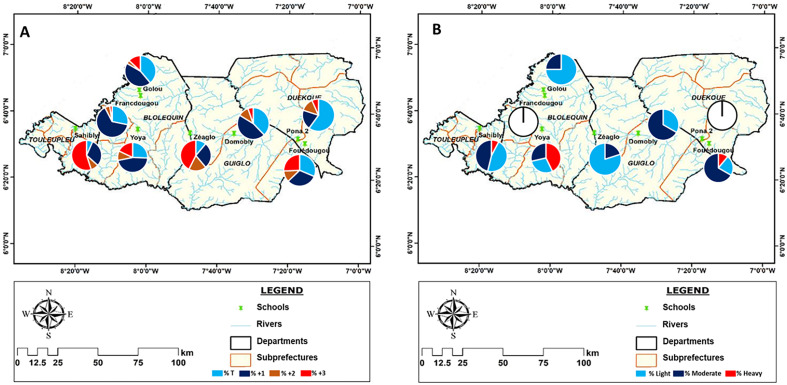
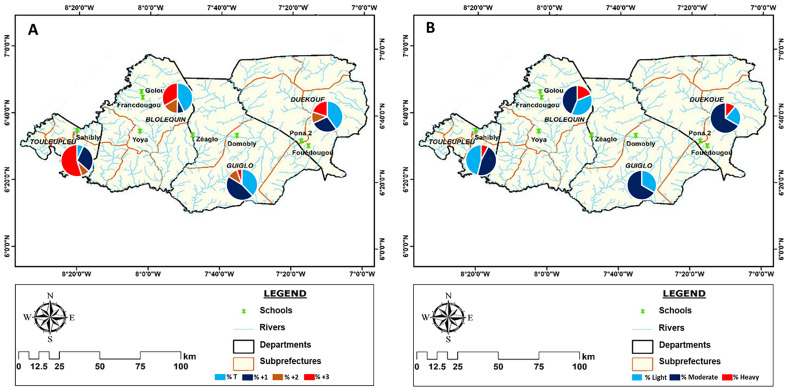
Schistosomiasis is an endemic disease in Côte d'Ivoire. We compared the conventional Kato Katz (KK) test and a more sensitive but rarely used method, the point-of-care circulating cathodic antigen (POC-CCA), in order to contribute to the development of a more appropriate strategy for the control and elimination of intestinal schistosomiasis in western Côte d'Ivoire. A cross-sectional epidemiological survey was conducted in eight elementary schools in the Guémon and Cavally regions from February to December 2020. Selected schoolchildren provided stool and urine samples to detect the presence of Schistosoma mansoni eggs and parasite antigen using the KK and POC-CCA tests, respectively. A total of 554 schoolchildren were included in the study. The overall prevalence of intestinal schistosomiasis was 10% and 67% for KK and POC-CCA, respectively. The POC-CCA detected an infection rate of 100%, while the KK yielded a rate of 42%. In schools, prevalence ranged from 27 to 100% with POC-CCA and from 0 to 42% with KK. Swimming, fishing, washing clothes, and dishwashing were significantly associated with the onset of infection and high intensities. The epidemiological risk factors for intestinal schistosomiasis updated here using KK and POC-CCA diagnostic methods showed that prevalence was much higher than previously estimated using the KK. The POC-CCA is more sensitive and ways should be considered to improve its specificity in order to improve the diagnosis.
在科特迪瓦,血吸虫病是一种地方病。我们比较了传统的加藤厚涂片(Kato Katz,KK)检测法和一种更敏感但很少使用的方法,即时检测环卵沉淀试验(point-of-care circulating cathodic antigen,POC-CCA),以帮助制定更适合科特迪瓦西部控制和消除肠道血吸虫病的策略。2020 年 2 月至 12 月,在Guémon 和 Cavally 地区的八所小学进行了一项横断面流行病学调查。选取在校学生提供粪便和尿液样本,分别使用 KK 和 POC-CCA 检测法检测曼氏血吸虫虫卵和寄生虫抗原的存在。共有 554 名学生纳入研究。肠道血吸虫病的总流行率分别为 10%和 67%,KK 和 POC-CCA。POC-CCA 检测到的感染率为 100%,而 KK 为 42%。在学校,PPOC-CCA 的流行率范围为 27%至 100%,KK 的流行率范围为 0%至 42%。游泳、钓鱼、洗衣服和洗碗与感染和高强度感染显著相关。本研究采用 KK 和 POC-CCA 诊断方法更新了肠道血吸虫病的流行病学危险因素,结果显示,其流行率远高于以往使用 KK 检测的估计值。POC-CCA 更敏感,应考虑改进其特异性以改善诊断。