Department of Transplantation Surgery, Karolinska University Hospital, Stockholm, Sweden.
Division of Transplantation Surgery, Department of Clinical Science, Intervention and Technology, Karolinska Institutet, Stockholm, Sweden.
PLoS One. 2024 Oct 29;19(10):e0311613. doi: 10.1371/journal.pone.0311613. eCollection 2024.
Ischemia-reperfusion injury (IRI) inevitably occurs during kidney transplantation and extended ischemia is associated with delayed graft function and poor outcomes. Remote ischemic preconditioning (RIPC) is a simple, noninvasive procedure aimed at reducing IRI and improving graft function. Experimental studies have implicated the kynurenine pathway as a protective mechanism behind RIPC.
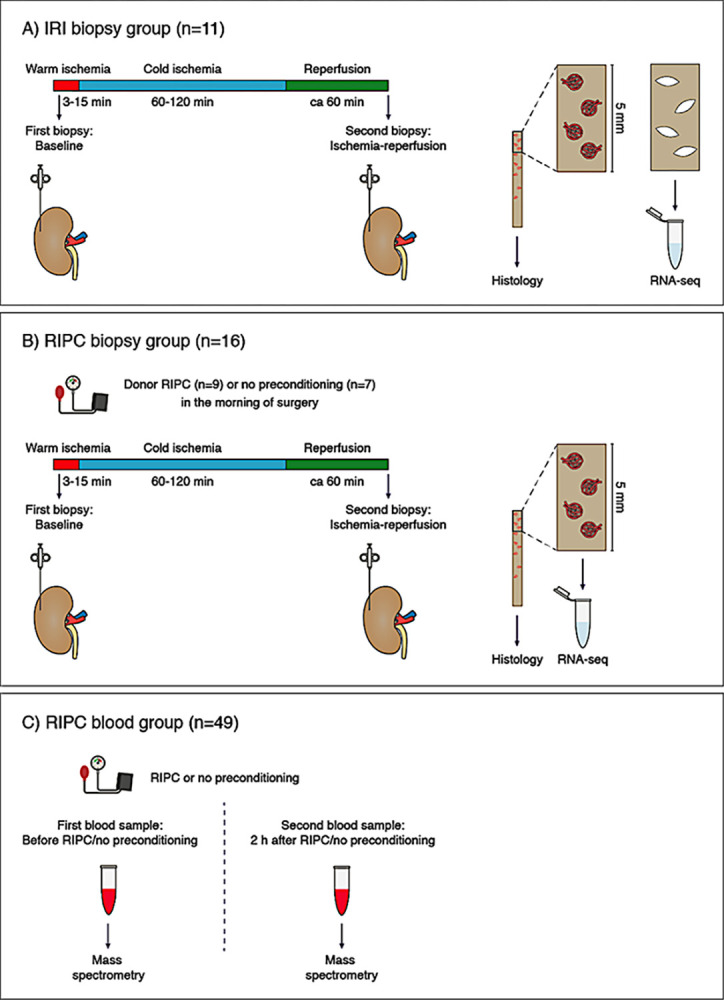
First, paired biopsies from 11 living kidney donors were analyzed to characterize the acute transcriptomic response to IRI. Second, 16 living kidney donors were subjected to either RIPC (n = 9) or no pretreatment (n = 7) to evaluate the impact of RIPC on the transcriptomic response to IRI. Finally, the effect of RIPC on plasma metabolites was analyzed in 49 healthy subjects.
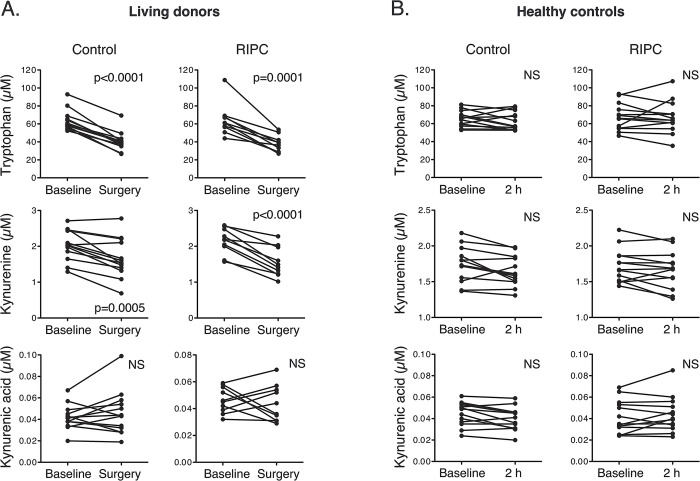
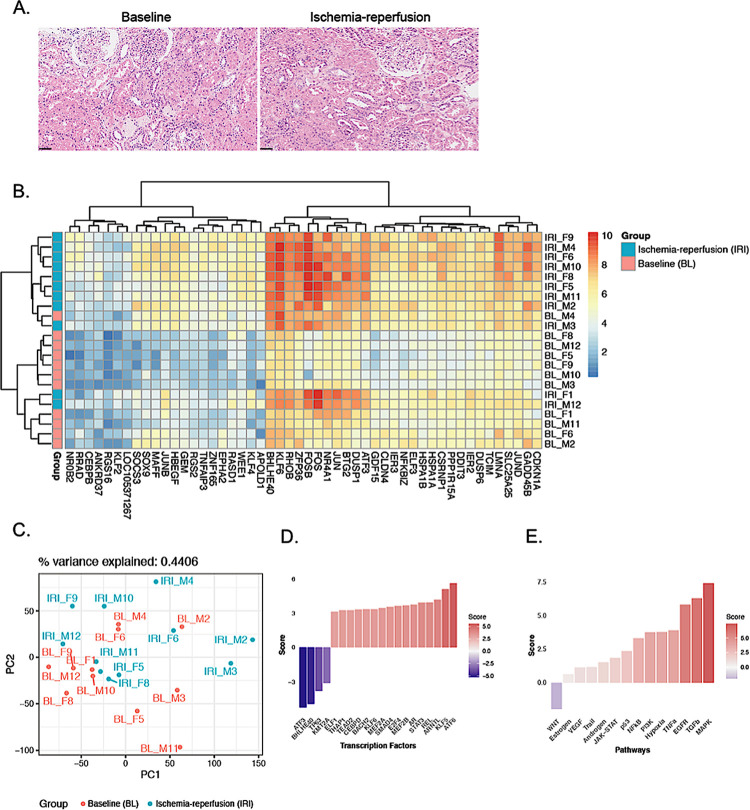
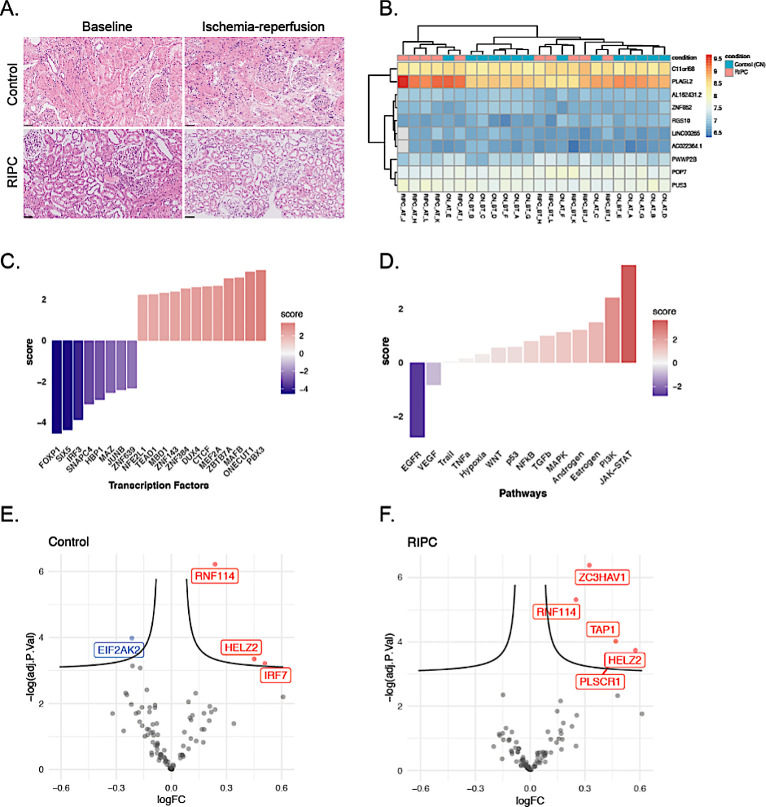
There was a robust immediate response to IRI in the renal transcriptomes of living-donor kidney transplantation, including activation of the mitogen-activated protein kinase (MAPK) and epidermal growth factor receptor (EGFR) pathways. Preconditioning with RIPC did not significantly alter the transcriptomic response to IRI or the concentration of plasma metabolites.
The present data validate living-donor kidney transplantation as a suitable model for mechanistic studies of IRI in human kidneys. The failure of RIPC to alter transcriptomic responses or metabolites in the kynurenine pathway raises the question of the robustness of the standard procedure used to induce RIPC, and might explain the mixed results in clinical trials evaluating RIPC as a method to attenuate IRI.
肾移植过程中不可避免地会发生缺血再灌注损伤(IRI),而延长缺血时间与移植物功能延迟和预后不良有关。远程缺血预处理(RIPC)是一种简单、非侵入性的操作,旨在减轻 IRI 并改善移植物功能。实验研究表明,犬尿氨酸途径是 RIPC 背后的一种保护机制。
首先,分析了 11 例活体供肾者的配对活检,以描述IRI 后的急性转录组学反应。其次,16 例活体供肾者接受 RIPC(n = 9)或无预处理(n = 7),以评估 RIPC 对 IRI 转录组学反应的影响。最后,分析了 49 例健康受试者中 RIPC 对血浆代谢物的影响。
活体供肾者肾移植的肾转录组中存在强烈的IRI 即刻反应,包括丝裂原活化蛋白激酶(MAPK)和表皮生长因子受体(EGFR)途径的激活。RIPC 预处理并未显著改变 IRI 的转录组学反应或血浆代谢物的浓度。
本研究数据验证了活体供肾者肾移植作为研究人类肾脏 IRI 机制的合适模型。RIPC 未能改变犬尿氨酸途径的转录组学反应或代谢物浓度,这引发了对诱导 RIPC 所使用的标准程序的稳健性的质疑,也可能解释了临床试验中评估 RIPC 作为减轻 IRI 方法的结果不一致的原因。