Department of Laboratory of General Surgery, The First Affiliated Hospital, Sun Yat-sen University, Guangzhou 510080, China.
Department of Center for Translational Medicine, Institute of Precision Medicine, The First Affiliated Hospital, Sun Yat-sen University, Guangzhou 510080, China.
Proc Natl Acad Sci U S A. 2024 Nov 5;121(45):e2405886121. doi: 10.1073/pnas.2405886121. Epub 2024 Oct 29.
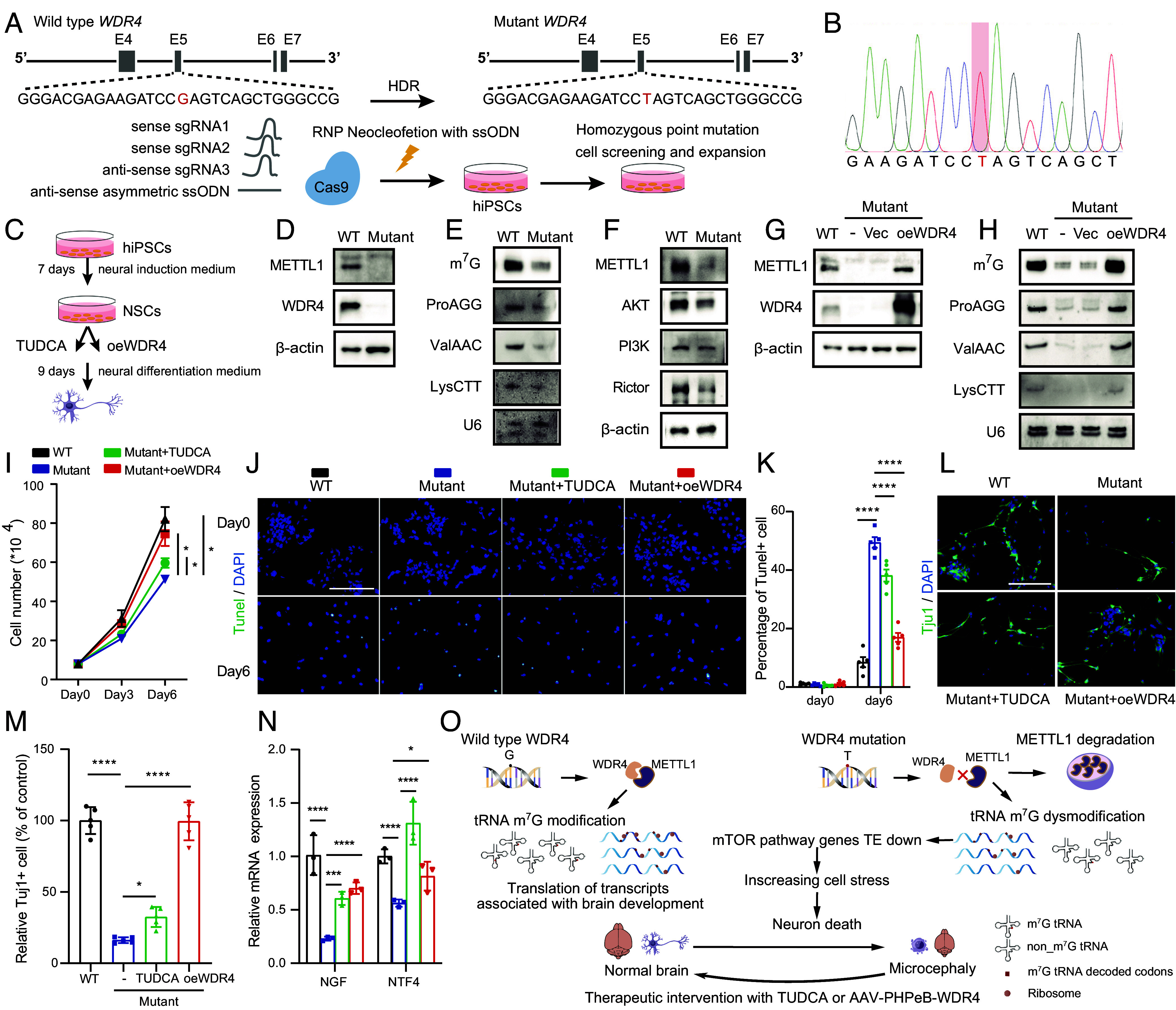
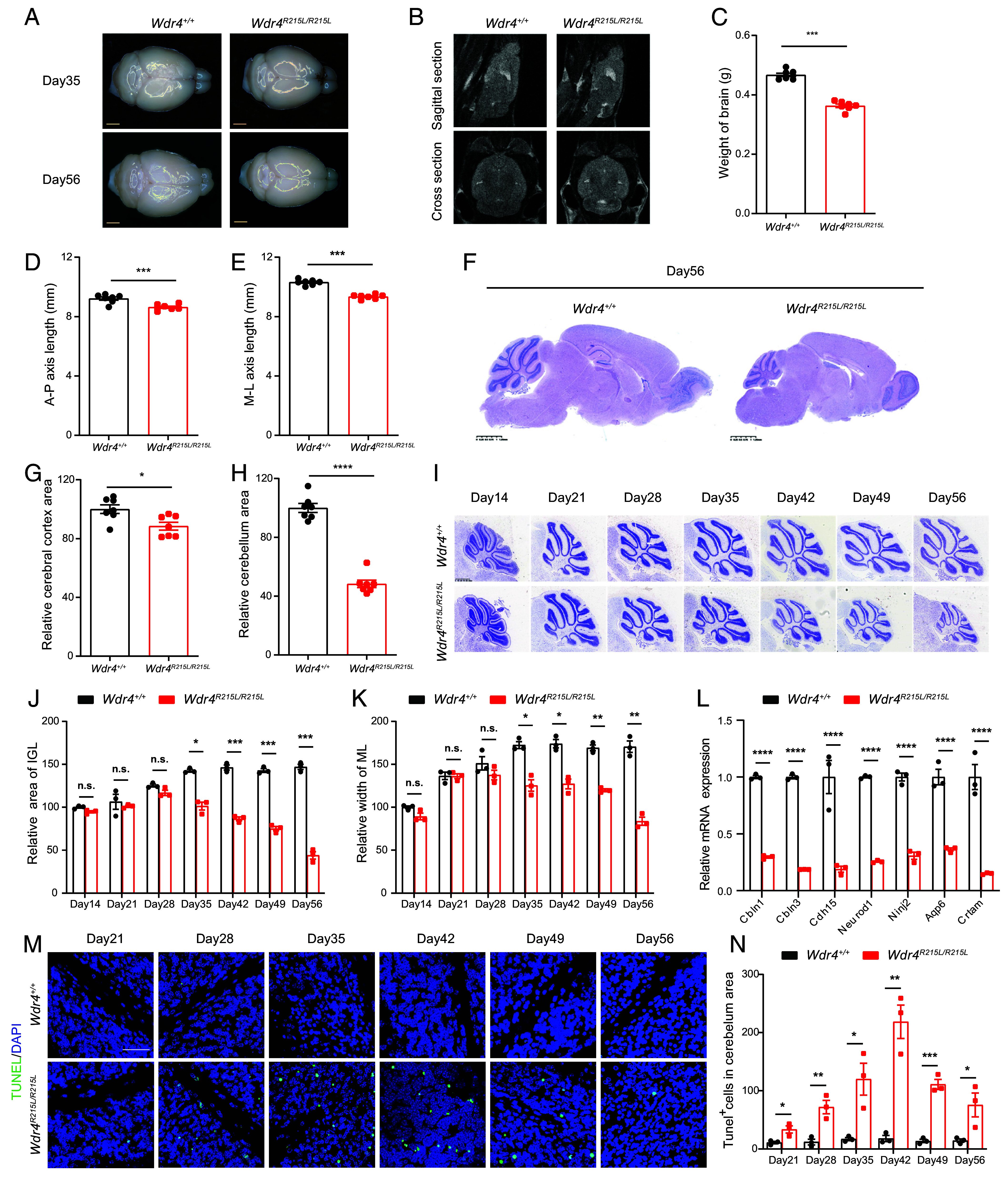
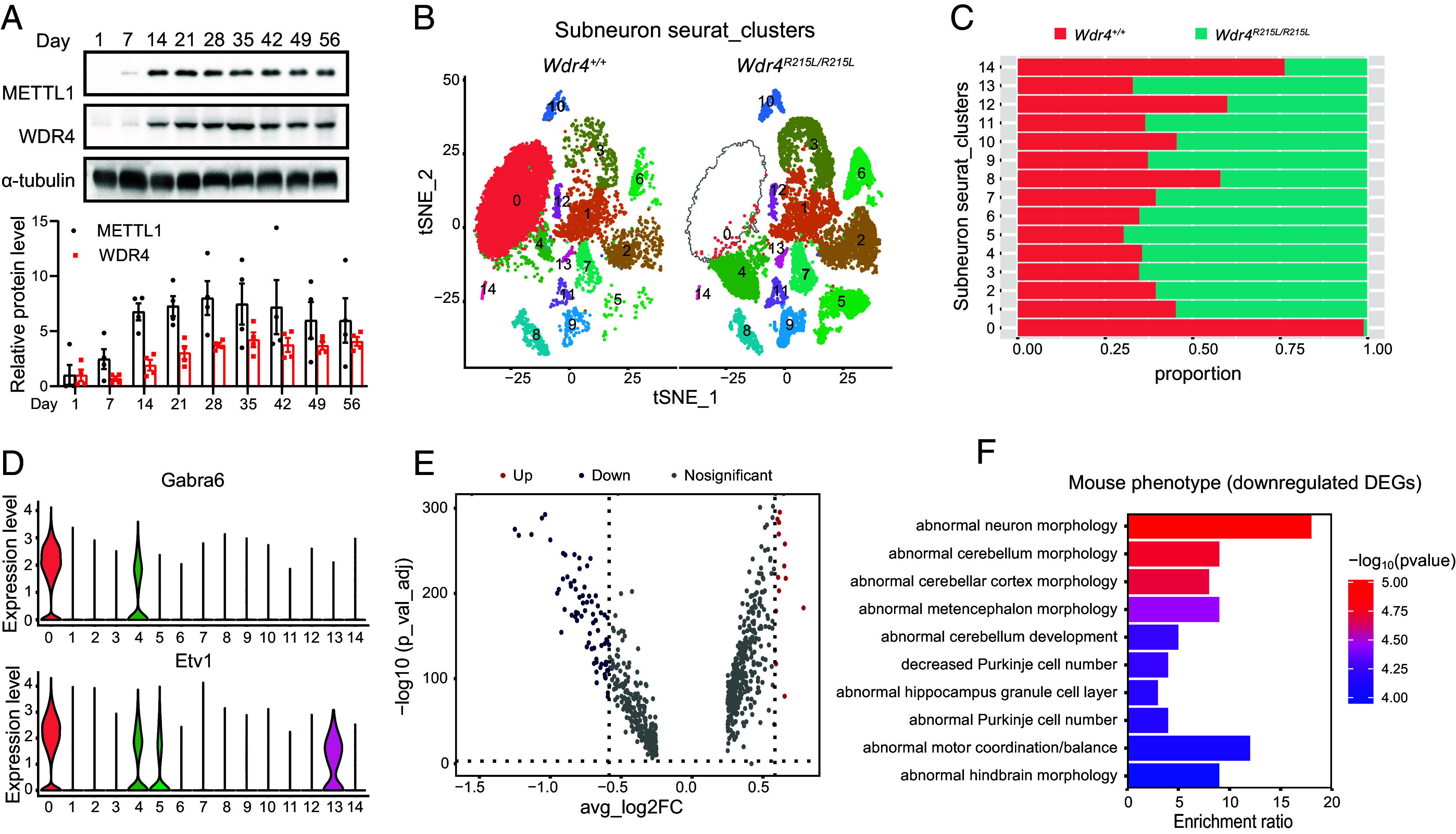
Mutations modification enzymes including the tRNA N-methylguanosine (mG) methyltransferase complex component WDR4 were frequently found in patients with neural disorders, while the pathogenic mechanism and therapeutic intervention strategies are poorly explored. In this study, we revealed that patient-derived mutation leads to temporal and cell-type-specific neural degeneration, and directly causes neural developmental disorders in mice. Mechanistically, point mutation disrupts the interaction between WDR4 and METTL1 and accelerates METTL1 protein degradation. We further uncovered that impaired tRNA mG modification caused by mutation decreases the mRNA translation of genes involved in mTOR pathway, leading to elevated endoplasmic reticulum stress markers, and increases neural cell apoptosis. Importantly, treatment with stress-attenuating drug Tauroursodeoxycholate (TUDCA) significantly decreases neural cell death and improves neural functions of the mutated mice. Moreover, adeno-associated virus mediated transduction of wild-type WDR4 restores METTL1 protein level and tRNA mG modification in the mouse brain, and achieves long-lasting therapeutic effect in mutated mice. Most importantly, we further demonstrated that both TUDCA treatment and WDR4 restoration significantly improve the survival and functions of human iPSCs-derived neuron stem cells that harbor the patient's mutation. Overall, our study uncovers molecular insights underlying mutation in the pathogenesis of neural diseases and develops two promising therapeutic strategies for treatment of neural diseases caused by impaired tRNA modifications.
突变修饰酶,包括 tRNA N-甲基鸟苷(mG)甲基转移酶复合物成分 WDR4,在神经疾病患者中经常被发现,而其致病机制和治疗干预策略仍未得到充分探索。在这项研究中,我们揭示了患者来源的突变导致时间和细胞类型特异性神经退行性变,并直接导致小鼠的神经发育障碍。机制上,突变破坏了 WDR4 和 METTL1 之间的相互作用,并加速了 METTL1 蛋白的降解。我们进一步发现,突变导致的 tRNA mG 修饰受损会降低 mTOR 通路相关基因的 mRNA 翻译,导致内质网应激标志物升高,并增加神经细胞凋亡。重要的是,应激减弱药物牛磺熊脱氧胆酸(TUDCA)的治疗显著减少了神经细胞死亡并改善了突变小鼠的神经功能。此外,腺相关病毒介导的野生型 WDR4 的转导可恢复小鼠大脑中的 METTL1 蛋白水平和 tRNA mG 修饰,并在突变小鼠中实现持久的治疗效果。最重要的是,我们进一步证明,TUDCA 治疗和 WDR4 恢复都显著改善了携带患者突变的人诱导多能干细胞源性神经元干细胞的存活和功能。总之,我们的研究揭示了突变在神经疾病发病机制中的分子机制,并为治疗因 tRNA 修饰受损引起的神经疾病开发了两种有前途的治疗策略。