Albizu Alejandro, Indahlastari Aprinda, Suen Paulo, Huang Ziqian, Waner Jori L, Stolte Skylar E, Fang Ruogu, Brunoni Andre R, Woods Adam J
Center for Cognitive Aging and Memory, McKnight Brain Institute, University of Florida, Gainesville, USA.
Department of Neuroscience, College of Medicine, University of Florida, Gainesville, USA.
Bioelectron Med. 2024 Oct 30;10(1):25. doi: 10.1186/s42234-024-00157-2.
BACKGROUND/OBJECTIVES: Transcranial direct current stimulation (tDCS) is a non-invasive brain stimulation intervention that shows promise as a potential treatment for depression. However, the clinical efficacy of tDCS varies, possibly due to individual differences in head anatomy affecting tDCS dosage. While functional changes in brain activity are more commonly reported in major depressive disorder (MDD), some studies suggest that subtle macroscopic structural differences, such as cortical thickness or brain volume reductions, may occur in MDD and could influence tDCS electric field (E-field) distributions. Therefore, accounting for individual anatomical differences may provide a pathway to optimize functional gains in MDD by formulating personalized tDCS dosage.
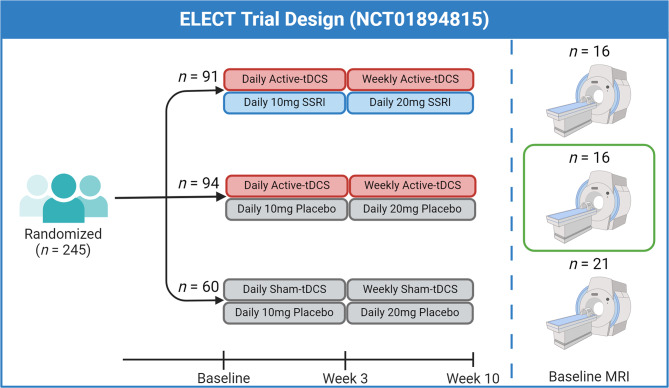
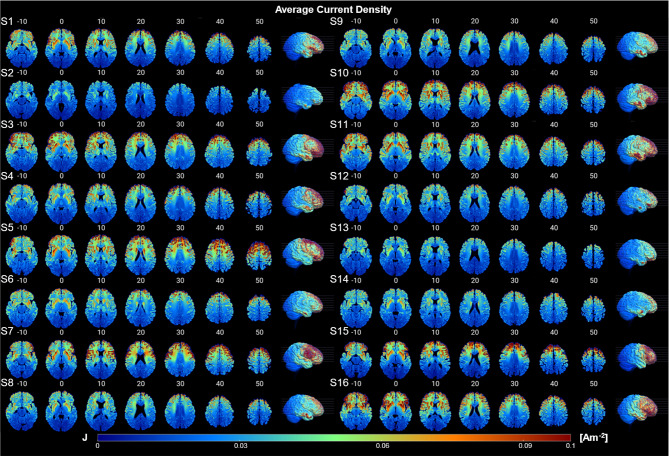
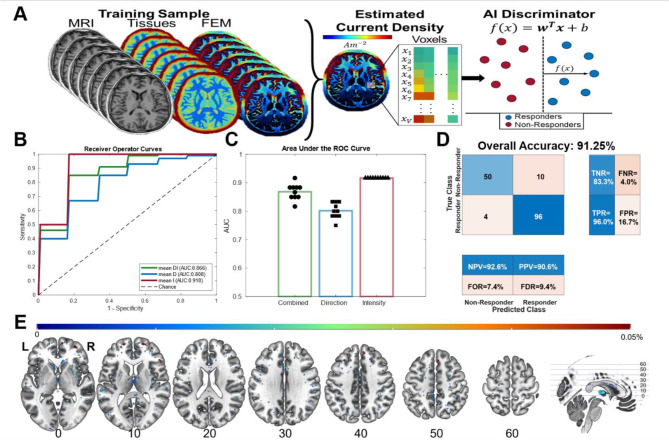
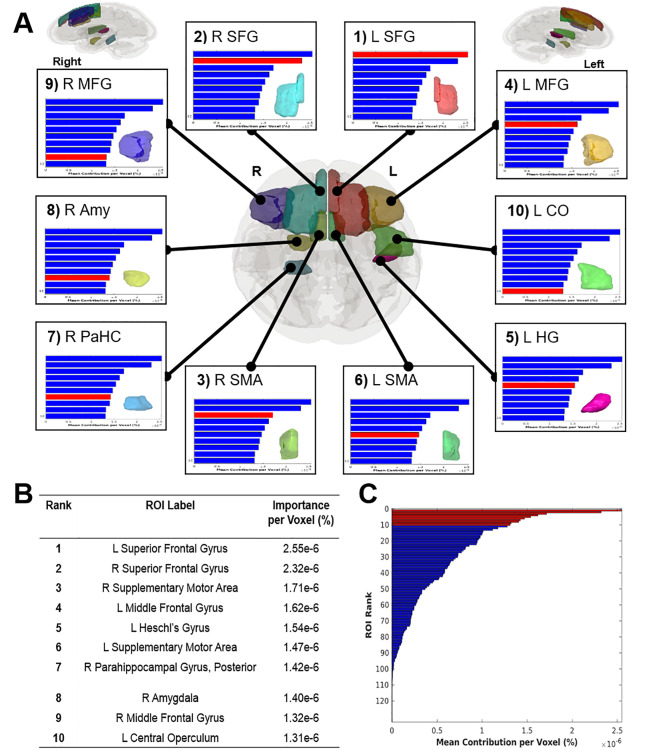
To address the dosing variability of tDCS, we examined a subsample of sixteen active-tDCS participants' data from the larger ELECT clinical trial (NCT01894815). With this dataset, individualized neuroimaging-derived computational models of tDCS current were generated for (1) classifying treatment response, (2) elucidating essential stimulation features associated with treatment response, and (3) computing a personalized dose of tDCS to maximize the likelihood of treatment response in MDD.
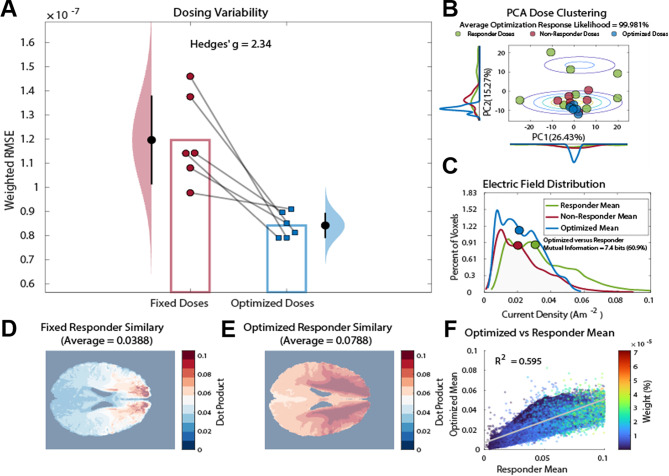
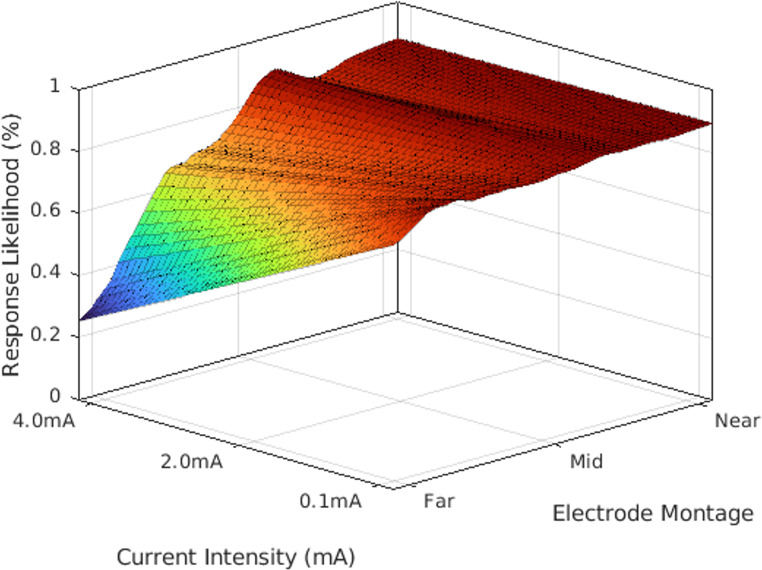
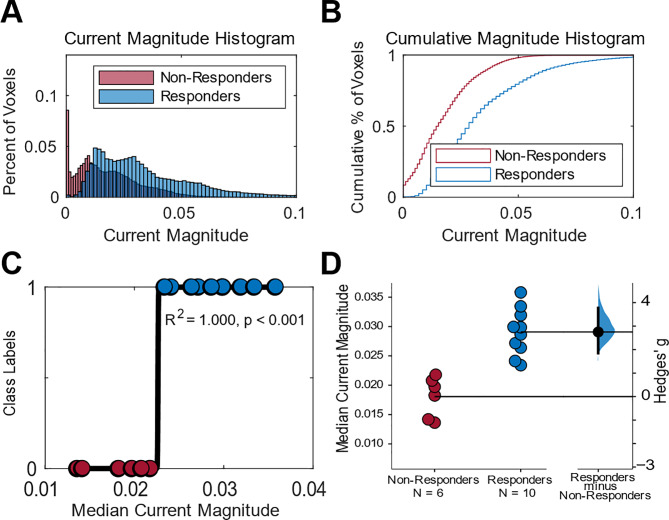
In the ELECT trial, tDCS was superior to placebo (3.2 points [95% CI, 0.7 to 5.5; P = 0.01]). Our algorithm achieved over 90% overall accuracy in classifying treatment responders from the active-tDCS group (AUC = 0.90, F1 = 0.92, MCC = 0.79). Computed precision doses also achieved an average response likelihood of 99.981% and decreased dosing variability by 91.9%.
These findings support our previously developed precision-dosing method for a new application in psychiatry by optimizing the statistical likelihood of tDCS treatment response in MDD.
背景/目的:经颅直流电刺激(tDCS)是一种非侵入性脑刺激干预手段,有望成为治疗抑郁症的潜在方法。然而,tDCS的临床疗效存在差异,这可能是由于头部解剖结构的个体差异影响了tDCS剂量。虽然在重度抑郁症(MDD)中更常报道大脑活动的功能变化,但一些研究表明,MDD中可能会出现细微的宏观结构差异,如皮质厚度或脑容量减少,这可能会影响tDCS电场(E-field)分布。因此,考虑个体解剖差异可能为通过制定个性化tDCS剂量来优化MDD的功能改善提供一条途径。
为了解决tDCS剂量的变异性问题,我们从更大规模的ELECT临床试验(NCT01894815)中选取了16名接受主动tDCS治疗参与者的数据子样本进行研究。利用该数据集,生成了基于个体神经影像的tDCS电流计算模型,用于(1)分类治疗反应,(2)阐明与治疗反应相关的基本刺激特征,以及(3)计算个性化的tDCS剂量,以最大化MDD治疗反应的可能性。
在ELECT试验中,tDCS优于安慰剂(3.2分[95%CI,0.7至5.5;P = 0.01])。我们的算法在区分主动tDCS组的治疗反应者方面总体准确率超过90%(AUC = 0.90,F1 = 0.92,MCC = 0.79)。计算出的精确剂量的平均反应可能性也达到了99.981%,剂量变异性降低了91.9%。
这些发现支持了我们之前开发的精确给药方法在精神病学新应用中的有效性,即通过优化MDD中tDCS治疗反应的统计可能性来实现。