NIHR Health Protection Research Unit in Emerging and Zoonotic Infections, Liverpool, United Kingdom.
Clinical Infection Microbiology and Immunology, Institute of Infection Ecology and Veterinary Sciences, University of Liverpool, Liverpool, United Kingdom.
Front Immunol. 2024 Oct 14;15:1440324. doi: 10.3389/fimmu.2024.1440324. eCollection 2024.
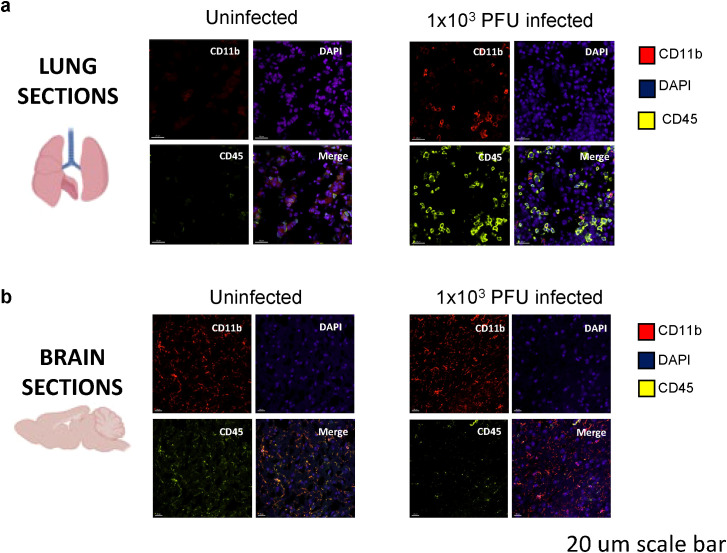
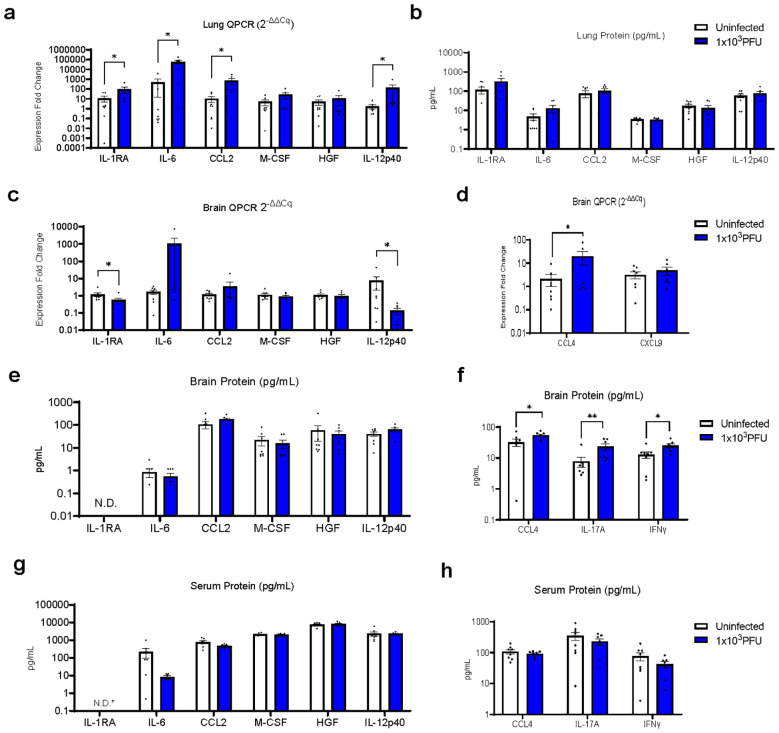
Neurological complications, including encephalopathy and stroke, occur in a significant proportion of COVID-19 cases but viral protein is seldom detected in the brain parenchyma. To model this situation, we developed a novel low-inoculum K18-hACE2 mouse model of SARS-CoV-2 infection during which active viral replication was consistently seen in mouse lungs but not in the brain. We found that several mediators previously associated with encephalopathy in clinical samples were upregulated in the lung, including CCL2, and IL-6. In addition, several inflammatory mediations, including CCL4, IFNγ, IL-17A, were upregulated in the brain, associated with microglial reactivity. Parallel experiments demonstrated that the filtered supernatant from SARS-CoV-2 virion exposed brain endothelial cells induced activation of uninfected microglia. This model successfully recreates SARS-CoV-2 virus-associated para-infectious brain inflammation which can be used to study the pathophysiology of the neurological complications and the identification of potential immune targets for treatment.
神经系统并发症,包括脑病和中风,在很大比例的 COVID-19 病例中发生,但很少在脑实质中检测到病毒蛋白。为了模拟这种情况,我们开发了一种新型的低接种量 K18-hACE2 小鼠 SARS-CoV-2 感染模型,在此模型中,在小鼠肺部持续观察到活跃的病毒复制,但在大脑中没有。我们发现,与临床样本中脑病相关的几种介质在肺部上调,包括 CCL2 和 IL-6。此外,几种炎症介质,包括 CCL4、IFNγ、IL-17A,在大脑中上调,与小胶质细胞反应有关。平行实验表明,来自 SARS-CoV-2 病毒粒子暴露的脑内皮细胞的过滤上清液诱导未感染的小胶质细胞激活。该模型成功地再现了 SARS-CoV-2 病毒相关的副感染性脑炎症,可用于研究神经系统并发症的病理生理学和治疗的潜在免疫靶点。