Key Laboratory of Measurement and Evaluation in Exercise Bioinformation of Hebei Province, School of Physical Education, Hebei Normal University, Shijiazhuang, 050024, China.
Regenerative Medicine Institute, School of Medicine, University of Galway, Galway, H91 W2TY, Ireland.
Sci Rep. 2024 Oct 30;14(1):26106. doi: 10.1038/s41598-024-77710-1.
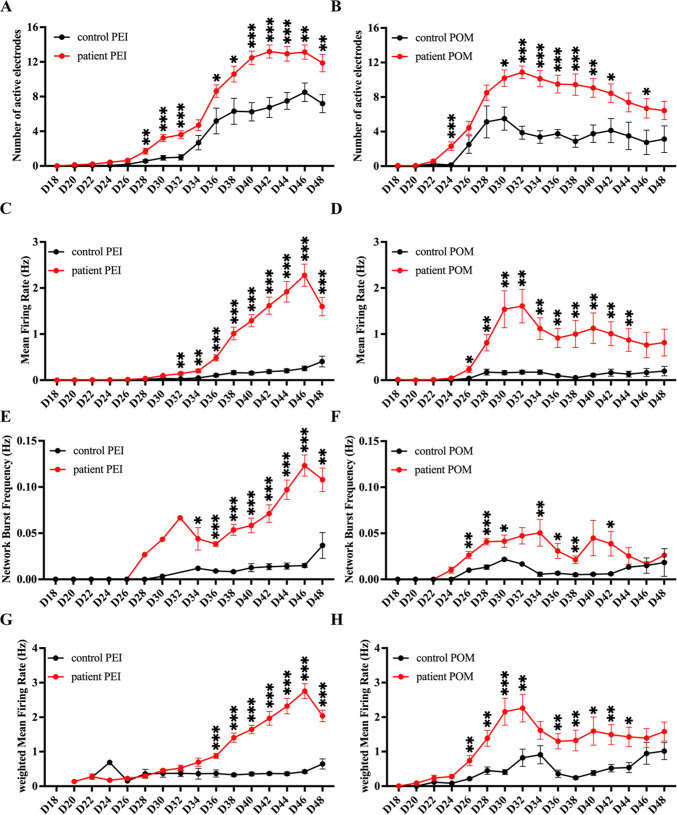
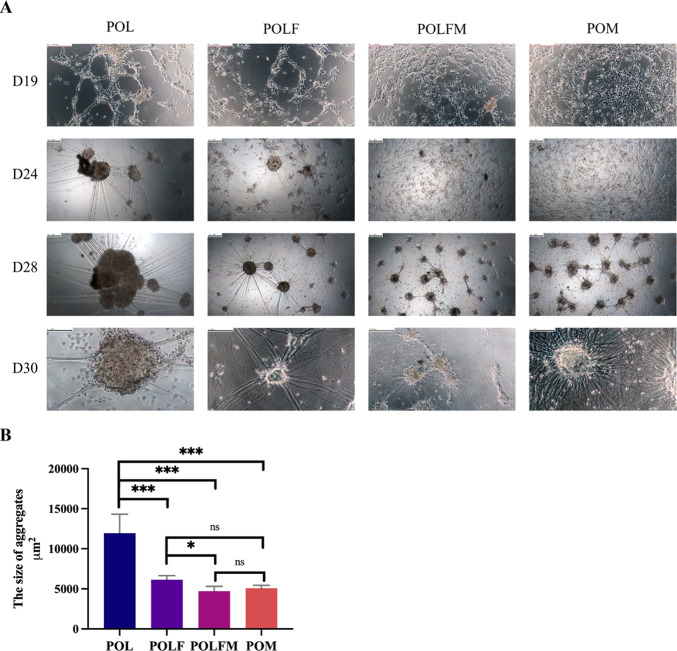
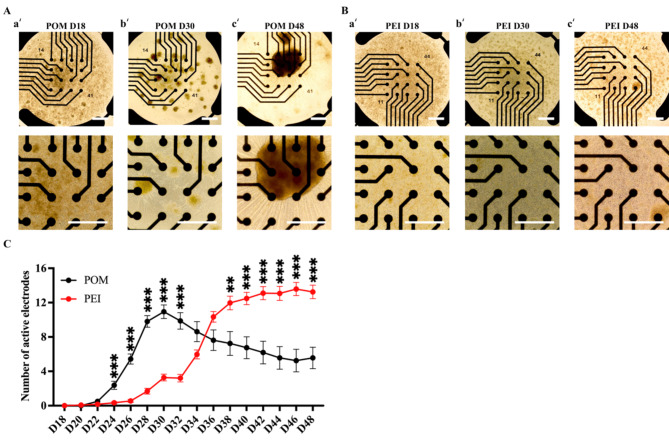
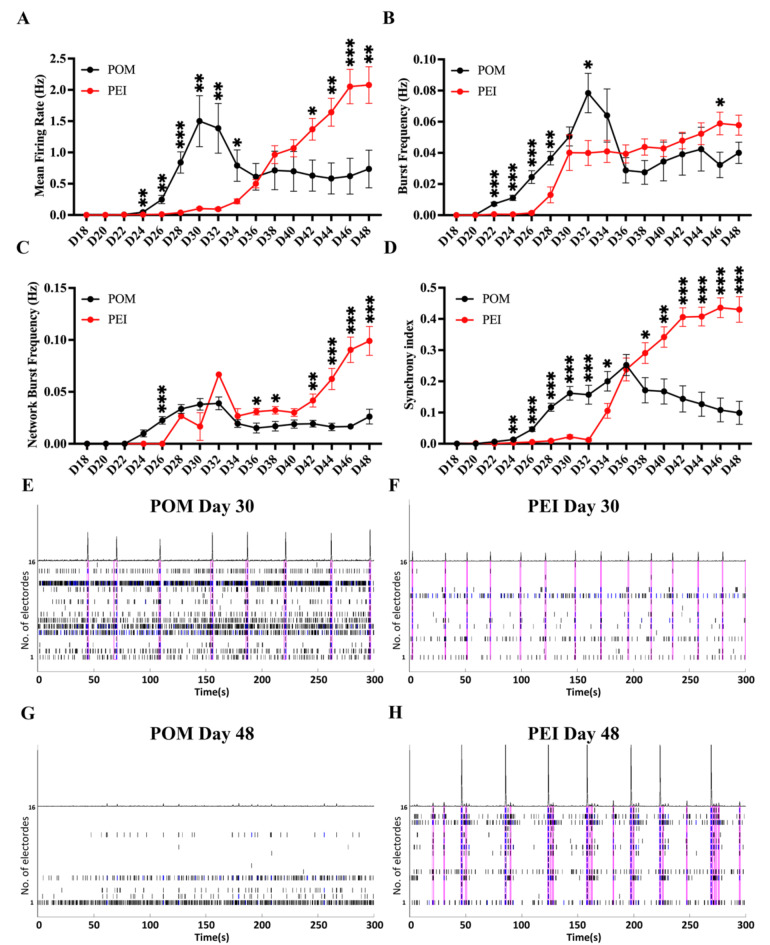
Induced pluripotent stem cell (iPSC) technology, in combination with electrophysiological characterization via multielectrode array (MEA), has facilitated the utilization of iPSC-derived motor neurons (iPSC-MNs) as highly valuable models for underpinning pathogenic mechanisms and developing novel therapeutic interventions for motor neuron diseases (MNDs). However, the challenge of MN adherence to the MEA plate and the heterogeneity presented in iPSC-derived cultures raise concerns about the reproducibility of the findings obtained from these cellular models. We discovered that one novel factor modulating the electrophysiological activity of iPSC-MNs is the extracellular matrix (ECM) used in the coating to support in vitro growth, differentiation and maturation of iPSC-MNs. The current study showed that two coating conditions, namely, Poly-L-ornithine/Matrigel (POM) and Polyethyleneimine (PEI) strongly promoted attachment of iPSC-MNs on MEA culture dishes compared to three other coating conditions, and both facilitated the maturation of iPSC-MNs as characterized by the detection of extensive electrophysiological activities from the MEA plates. POM coating accelerated the maturation of the iPSC-MNs for up to 5 weeks, which suits modeling of neurodevelopmental disorders. However, the application of PEI resulted in more even distribution of the MNs on the culture dish and reduced variability of electrophysiological signals from the iPSC-MNs in 7-week cultures, which permitted the detection of enhanced excitability in iPSC-MNs from patients with amyotrophic lateral sclerosis (ALS). This study provides a comprehensive comparison of five coating conditions and offers POM and PEI as favorable coatings for in vitro modeling of neurodevelopmental and neurodegenerative disorders, respectively.
诱导多能干细胞(iPSC)技术与多电极阵列(MEA)的电生理特性分析相结合,促进了 iPSC 衍生运动神经元(iPSC-MN)的利用,使其成为支持致病机制和开发运动神经元疾病(MND)新治疗方法的极具价值的模型。然而,MN 对 MEA 板的黏附以及 iPSC 衍生培养物中的异质性是个挑战,这引起了对这些细胞模型中获得的研究结果的可重复性的关注。我们发现,一种新的调节 iPSC-MN 电生理活性的因素是细胞外基质(ECM),它用于支持 iPSC-MN 的体外生长、分化和成熟。目前的研究表明,两种涂层条件,即多聚-L-鸟氨酸/Matrigel(POM)和聚乙烯亚胺(PEI),与其他三种涂层条件相比,强烈促进了 iPSC-MN 附着在 MEA 培养皿上,并且都促进了 iPSC-MN 的成熟,表现在从 MEA 板上检测到广泛的电生理活动。POM 涂层加速了 iPSC-MN 的成熟,最长可达 5 周,适合神经发育障碍的建模。然而,PEI 的应用导致 MN 在培养皿上的分布更加均匀,并且减少了来自患有肌萎缩侧索硬化症(ALS)的患者的 iPSC-MN 的电生理信号的可变性,从而可以检测到 iPSC-MN 的兴奋性增强。这项研究全面比较了五种涂层条件,分别将 POM 和 PEI 作为体外神经发育和神经退行性疾病建模的有利涂层。