Department of Pharmacology, University of California San Diego, San Diego, California, United States of America.
Department of Mechanical and Aerospace Engineering, University of California San Diego, San Diego, California, United States of America.
PLoS Comput Biol. 2024 Oct 31;20(10):e1012564. doi: 10.1371/journal.pcbi.1012564. eCollection 2024 Oct.
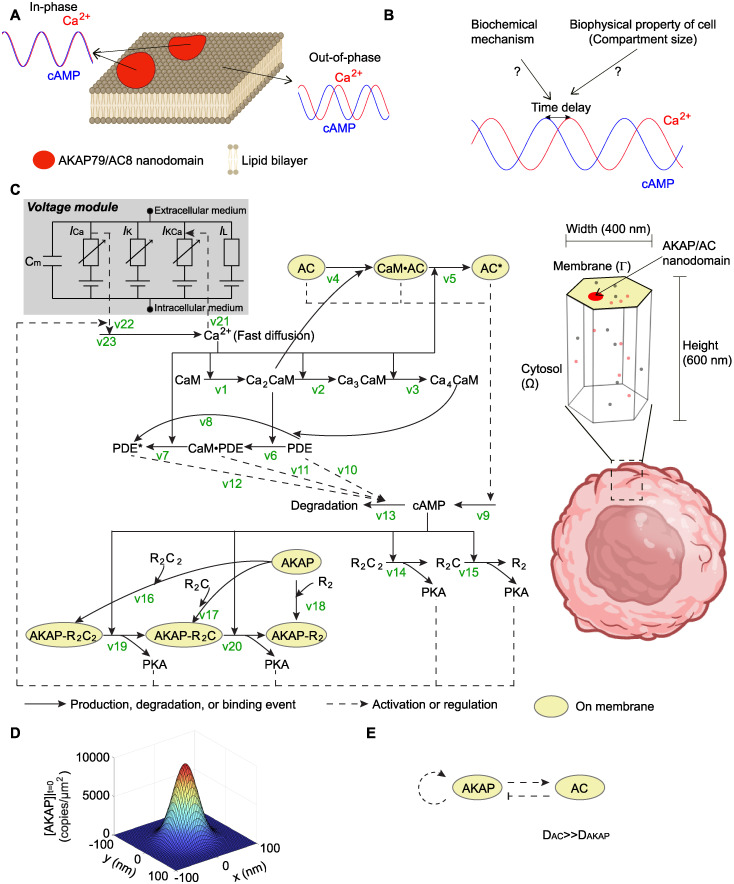
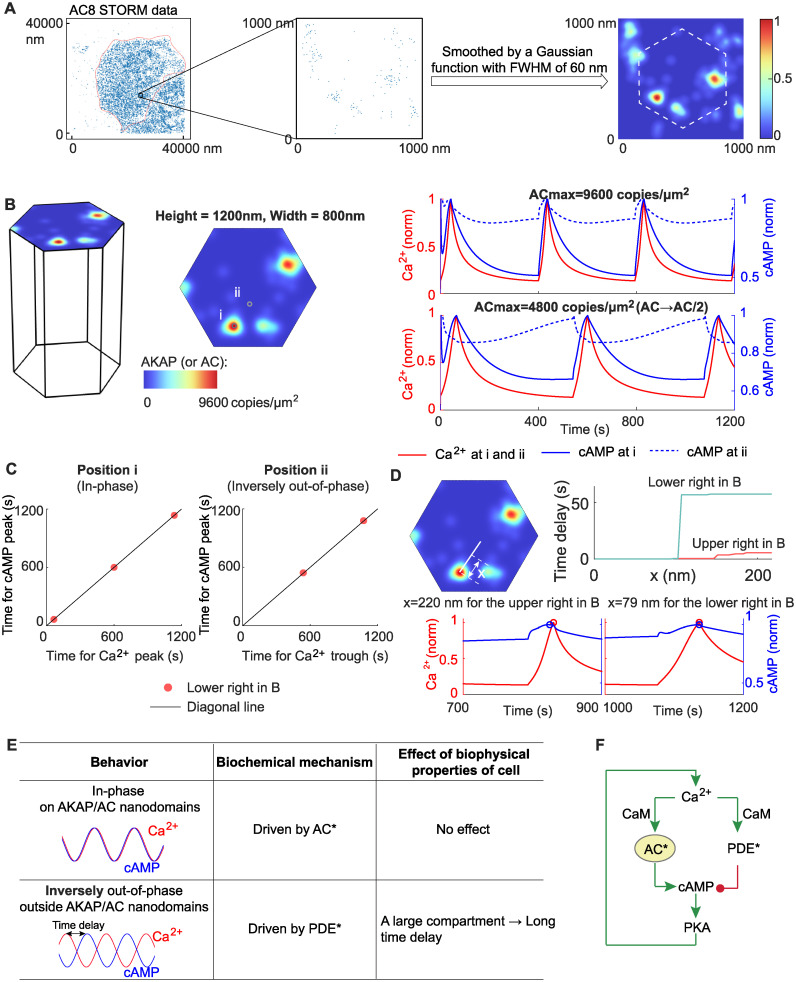
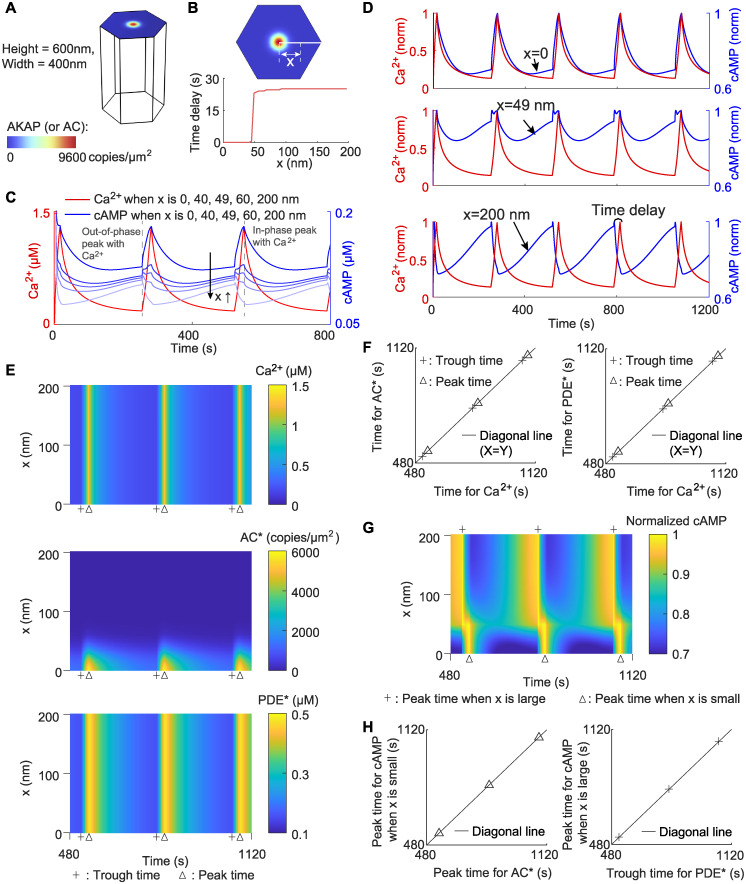
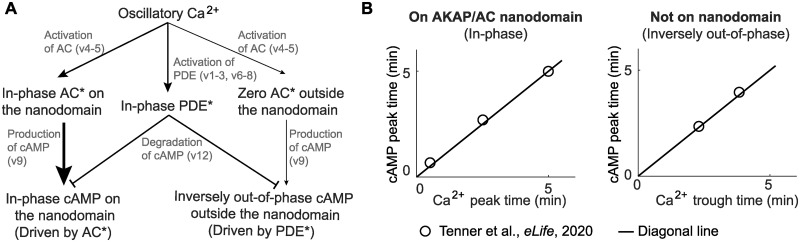
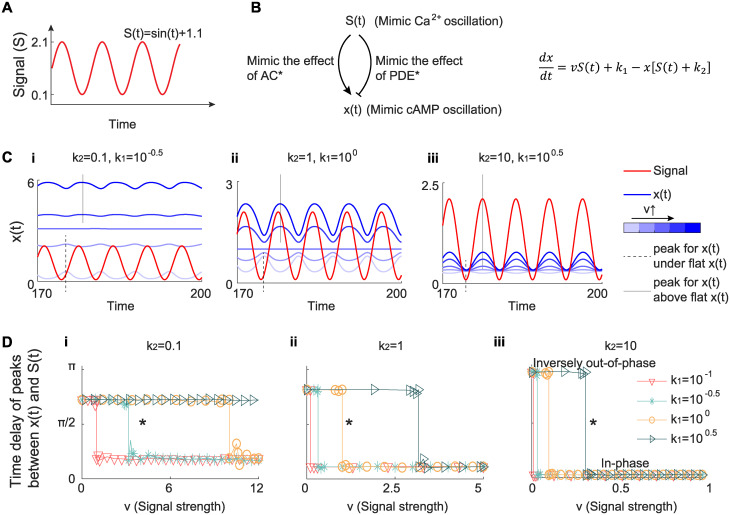
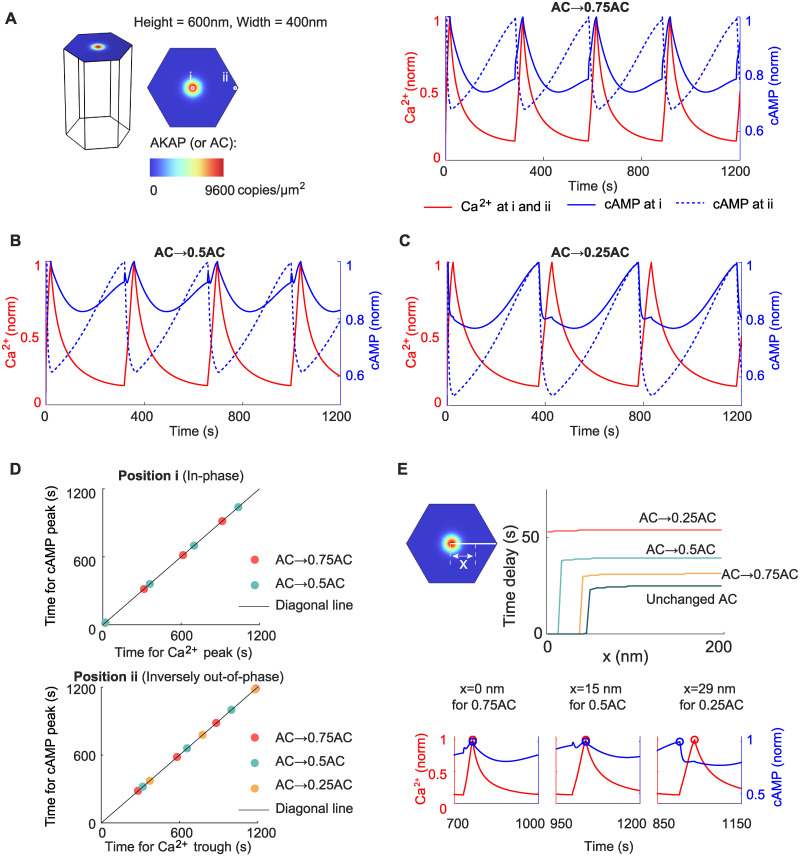
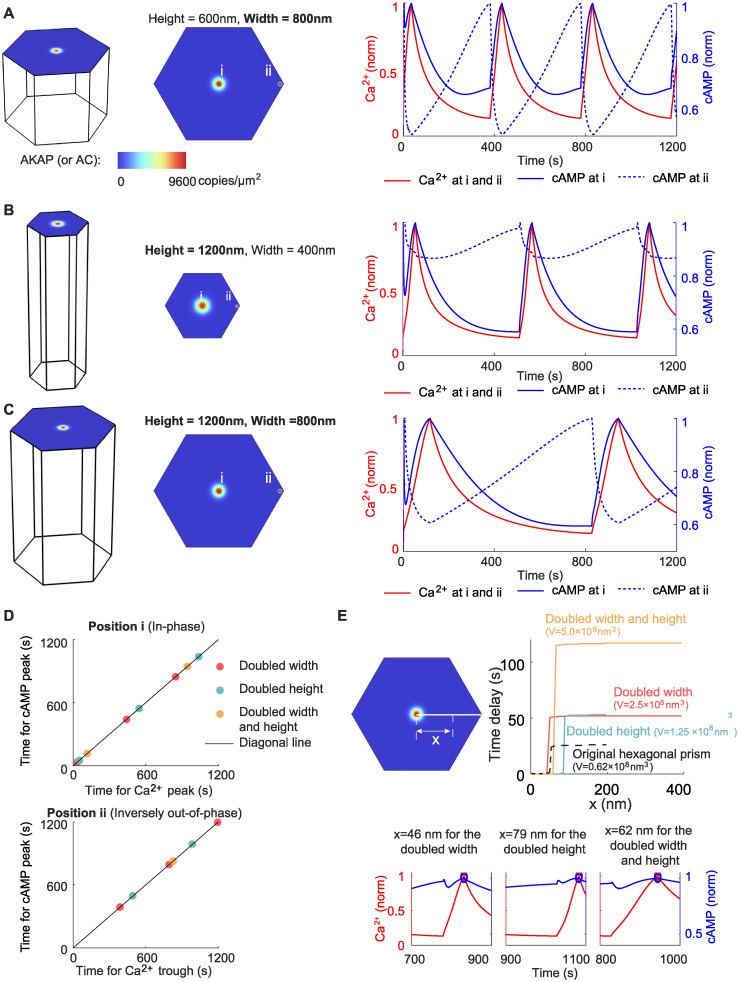
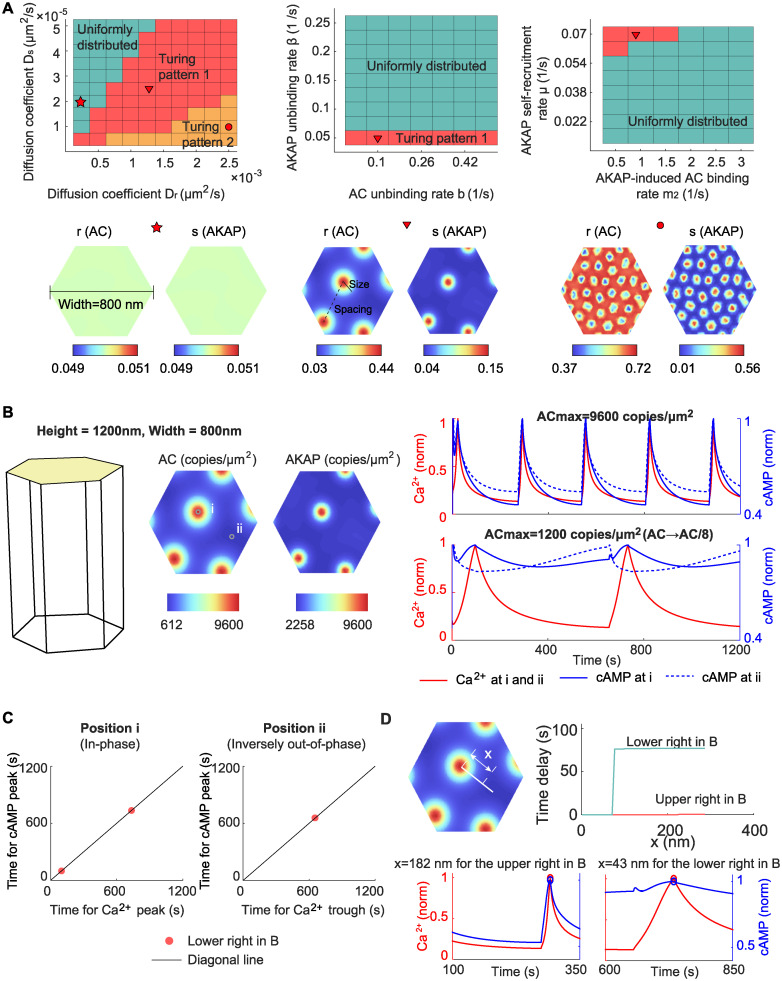
The nanoscale organization of enzymes associated with the dynamics of second messengers is critical for ensuring compartmentation and localization of signaling molecules in cells. Specifically, the spatiotemporal orchestration of cAMP and Ca2+ oscillations is critical for many cellular functions. Previous experimental studies have shown that the formation of nanodomains of A-kinase anchoring protein 79/150 (AKAP150) and adenylyl cyclase 8 (AC8) on the surface of pancreatic MIN6 β cells modulates the phase of Ca2+-cAMP oscillations from out-of-phase to in-phase. In this work, we develop computational models of the Ca2+/cAMP pathway and AKAP/AC nanodomain formation that give rise to the two important predictions: instead of an arbitrary phase difference, the out-of-phase Ca2+/cAMP oscillation reaches Ca2+ trough and cAMP peak simultaneously, which is defined as inversely out-of-phase; the in-phase and inversely out-of-phase oscillations associated with Ca2+-cAMP dynamics on and away from the nanodomains can be explained by an incoherent feedforward loop. Factors such as cellular surface-to-volume ratio, compartment size, and distance between nanodomains do not affect the existence of in-phase or inversely out-of-phase Ca2+/cAMP oscillation, but cellular surface-to-volume ratio and compartment size can affect the time delay for the inversely out-of-phase Ca2+/cAMP oscillation while the distance between two nanodomains does not. Finally, we predict that both the Turing pattern-generated nanodomains and experimentally measured nanodomains demonstrate the existence of in-phase and inversely out-of-phase Ca2+/cAMP oscillation when the AC8 is at a low level, consistent with the behavior of an incoherent feedforward loop. These findings unveil the key circuit motif that governs cAMP and Ca2+ oscillations and advance our understanding of how nanodomains can lead to spatial compartmentation of second messengers.
与第二信使动力学相关的酶的纳米级组织对于确保细胞内信号分子的区室化和定位至关重要。具体来说,cAMP 和 Ca2+ 振荡的时空协调对于许多细胞功能至关重要。先前的实验研究表明,在胰腺 MIN6 β 细胞表面上 A-激酶锚定蛋白 79/150(AKAP150)和腺苷酸环化酶 8(AC8)纳米域的形成调节了 Ca2+-cAMP 振荡的相位从异相到同相。在这项工作中,我们开发了 Ca2+/cAMP 途径和 AKAP/AC 纳米域形成的计算模型,这些模型产生了两个重要预测:与任意相位差相反,异相 Ca2+/cAMP 振荡同时达到 Ca2+ 谷和 cAMP 峰,这被定义为反向异相;与纳米域上和远离纳米域的 Ca2+-cAMP 动力学相关的同相和反向异相振荡可以用非相干前馈环来解释。细胞表面积与体积比、隔室大小和纳米域之间的距离等因素不会影响同相或反向异相 Ca2+/cAMP 振荡的存在,但细胞表面积与体积比和隔室大小会影响反向异相 Ca2+/cAMP 振荡的时间延迟,而两个纳米域之间的距离不会。最后,我们预测当 AC8 水平较低时,无论是图灵模式产生的纳米域还是实验测量的纳米域都表现出同相和反向异相 Ca2+/cAMP 振荡的存在,这与非相干前馈环的行为一致。这些发现揭示了控制 cAMP 和 Ca2+ 振荡的关键电路模式,并增进了我们对纳米域如何导致第二信使空间区室化的理解。