Ciccarella Marta, Laurent Romain, Szpiech Zachary A, Patin Etienne, Dessarps-Freichey Françoise, Utgé José, Lémée Laure, Semo Armando, Rocha Jorge, Verdu Paul
UMR7206 Eco-anthropologie, CNRS, MNHN, Université Paris Cité, France.
CIBIO, Centro de Investigação em Biodiversidade e Recursos Genéticos, InBIO Laboratório Associado, Campus de Vairão, Universidade do Porto, 4485-661 Vairão, Portugal.
bioRxiv. 2024 Oct 23:2024.10.21.619344. doi: 10.1101/2024.10.21.619344.
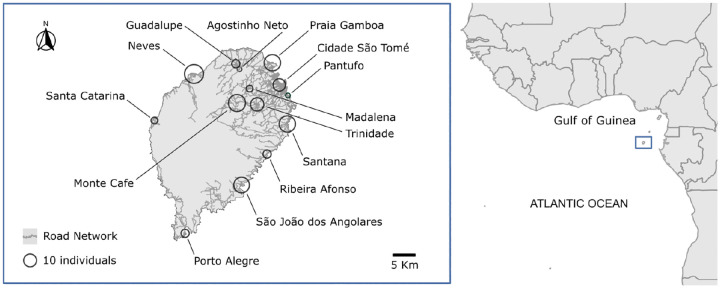
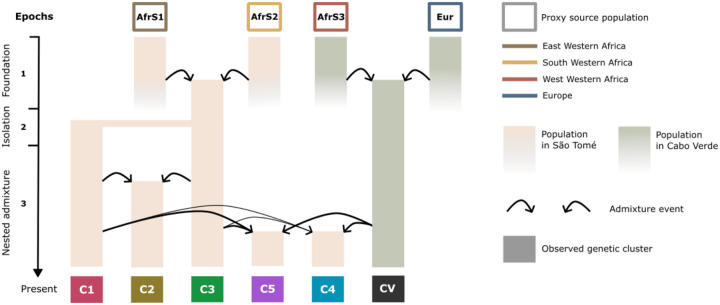
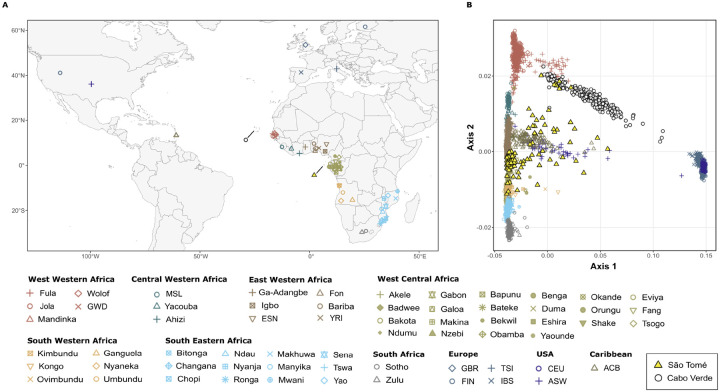
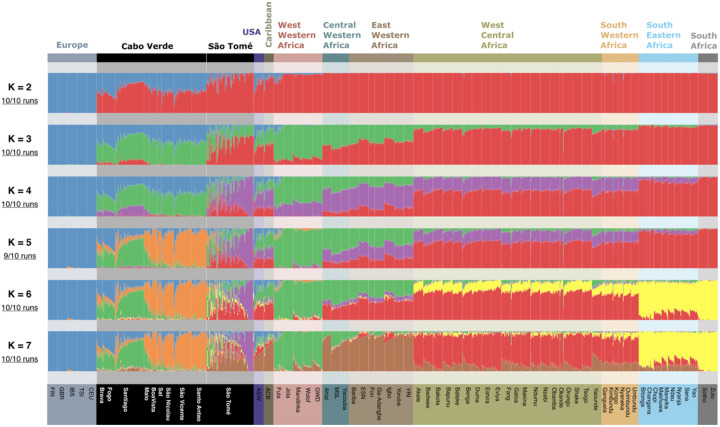
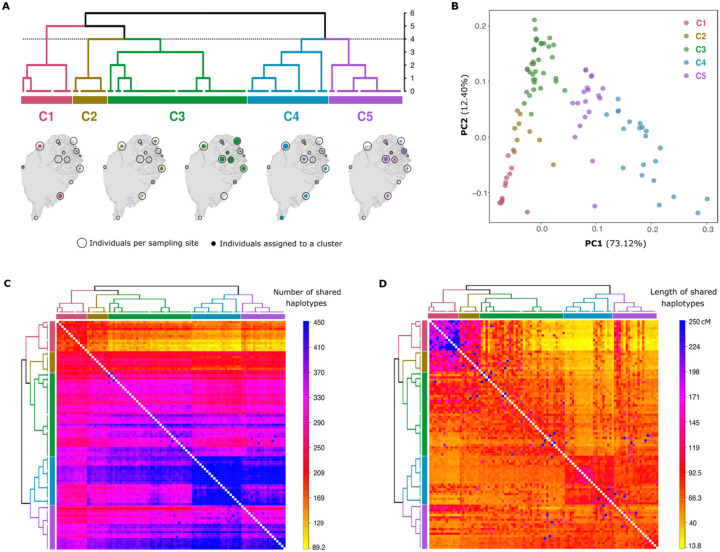
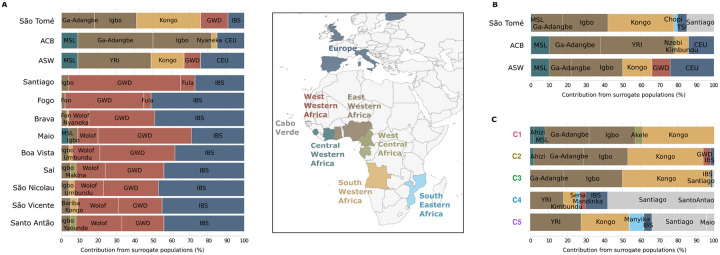
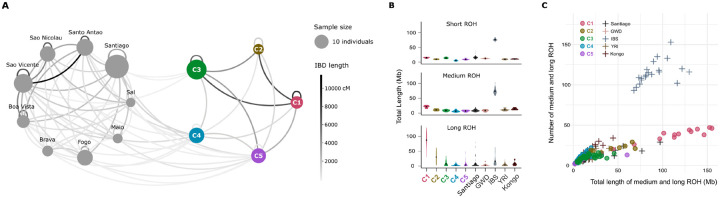
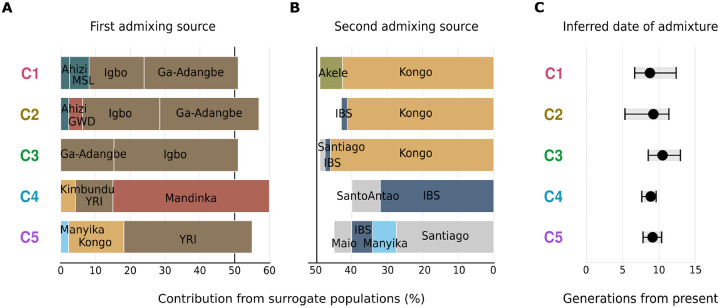
Human admixture history is rarely a simple process in which distinct populations, previously isolated for a long time, come into contact once to form an admixed population. In this study, we aim to reconstruct the complex admixture histories of the population of São Tomé, an island in the Gulf of Guinea that was the site of the first slave-based plantation economy, and experienced successive waves of forced and deliberate migration from Africa. We examined 2.5 million SNPs newly genotyped in 96 São Toméans and found that geography alone cannot explain the observed patterns of genetic differentiation within the island. We defined five genetic groups in São Tomé based on the hypothesis that individuals sharing the most haplotypes are more likely to share similar genetic histories. Using Identical-by-Descent and different local ancestry inference methods, we inferred shared ancestries between 70 African and European populations and each São Toméan genetic group. We identified admixture events between admixed groups that were previously isolated on the island, showing how recently admixed populations can be themselves the sources of other admixture events. This study demonstrates how complex admixture and isolation histories during and after the Transatlantic Slave-Trade shaped extant individual genetic patterns at a local scale in Africa.
人类混合历史很少是一个简单的过程,即长期隔离的不同群体一旦接触就形成一个混合群体。在本研究中,我们旨在重建圣多美岛居民复杂的混合历史。圣多美岛位于几内亚湾,是首个基于奴隶的种植园经济所在地,经历了来自非洲的多轮强迫和蓄意移民潮。我们检测了96名圣多美岛居民新基因分型的250万个单核苷酸多态性(SNP),发现仅地理因素无法解释该岛内部观察到的遗传分化模式。基于共享单倍型最多的个体更可能共享相似遗传历史这一假设,我们在圣多美岛定义了五个遗传群体。使用同源基因和不同的本地祖先推断方法,我们推断了70个非洲和欧洲群体与每个圣多美岛遗传群体之间的共同祖先。我们确定了岛上先前隔离的混合群体之间的混合事件,展示了近期的混合群体如何本身成为其他混合事件的来源。这项研究表明,跨大西洋奴隶贸易期间及之后复杂的混合和隔离历史如何在非洲局部尺度上塑造了现存个体的遗传模式。