Swanson Rachel, Chinigò Elisa, Levenstein Daniel, Vöröslakos Mihály, Mousavi Navid, Wang Xiao-Jing, Basu Jayeeta, Buzsáki György
Neuroscience Institute, Langone Medical Center, New York University, New York, NY, USA.
Center for Neural Science, New York University, New York, NY, USA.
bioRxiv. 2024 Oct 23:2024.10.23.619879. doi: 10.1101/2024.10.23.619879.
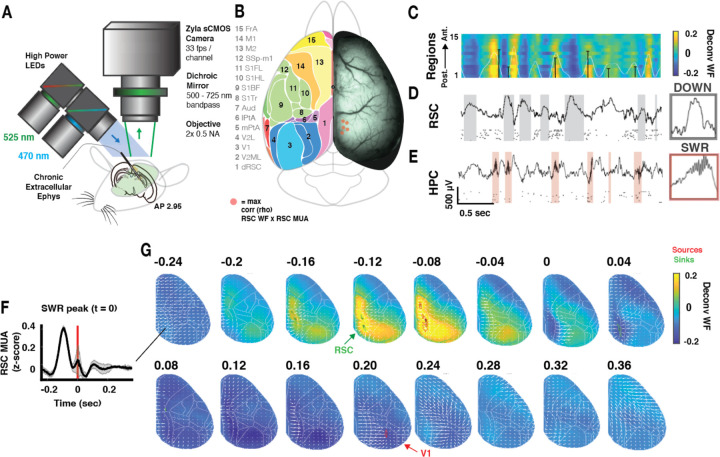
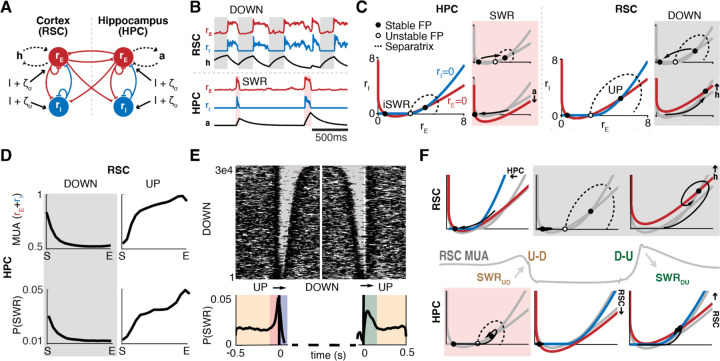
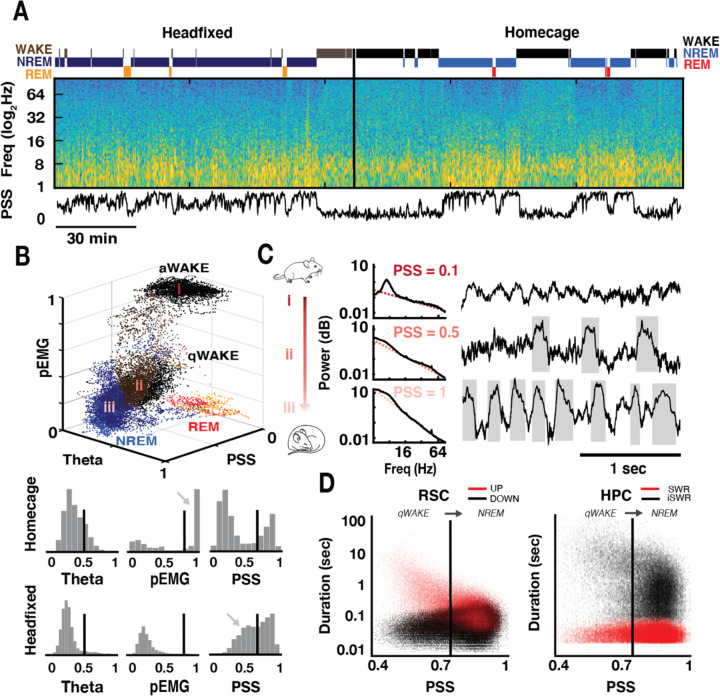
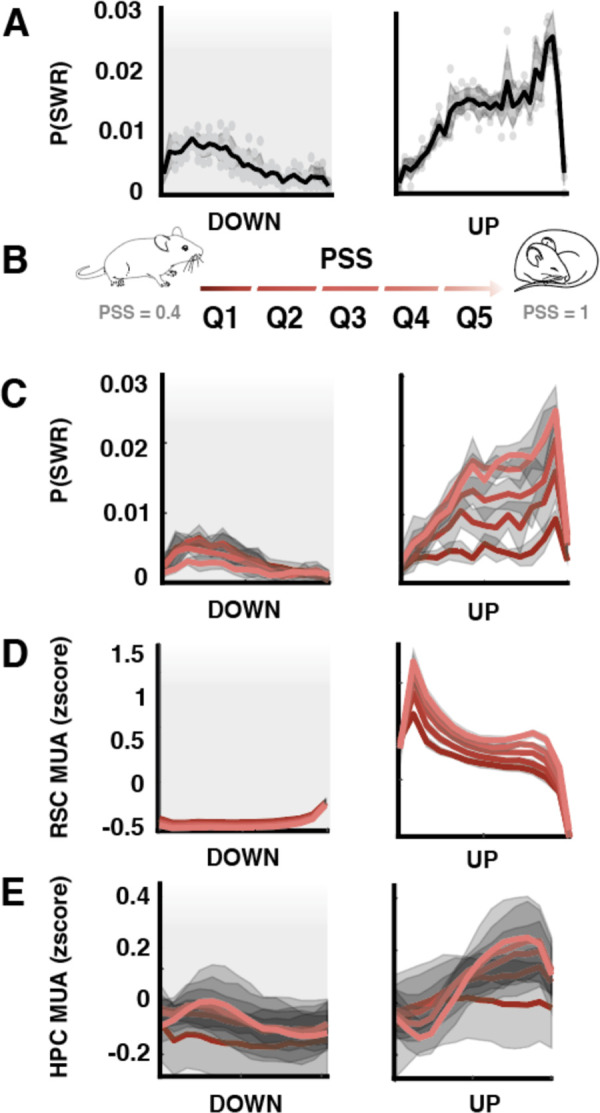
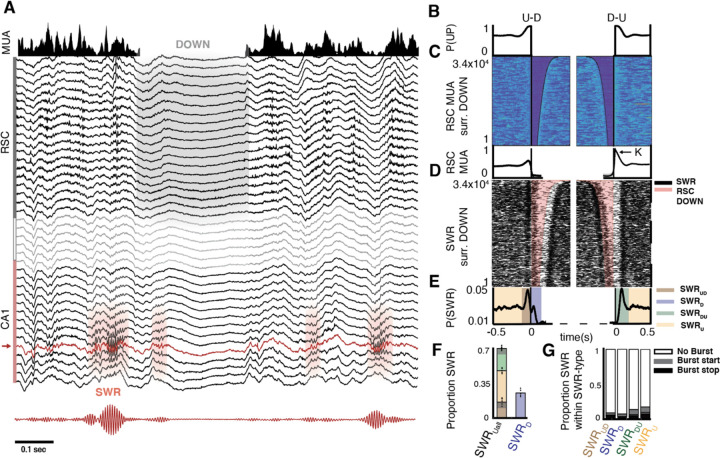
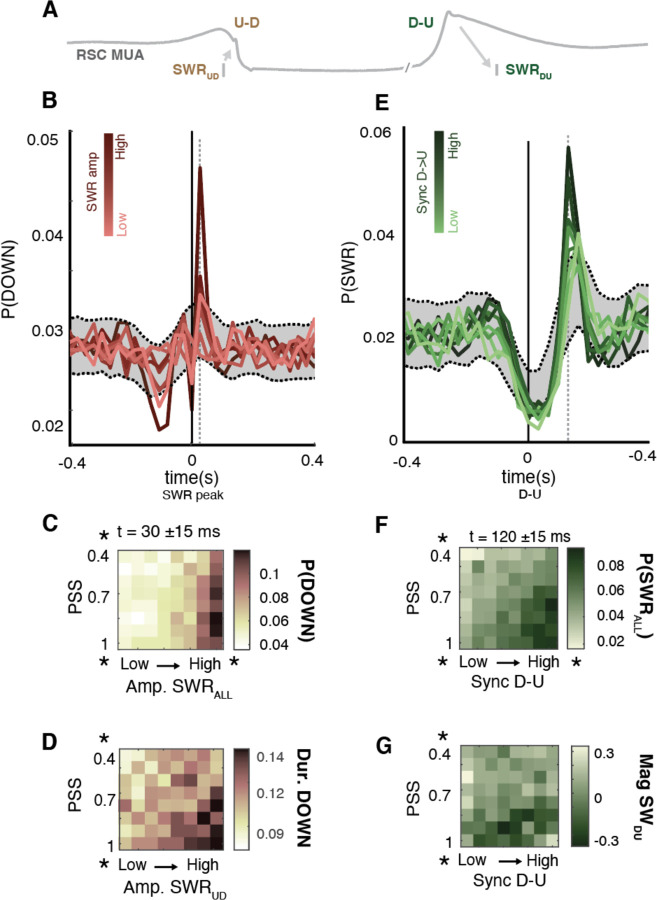
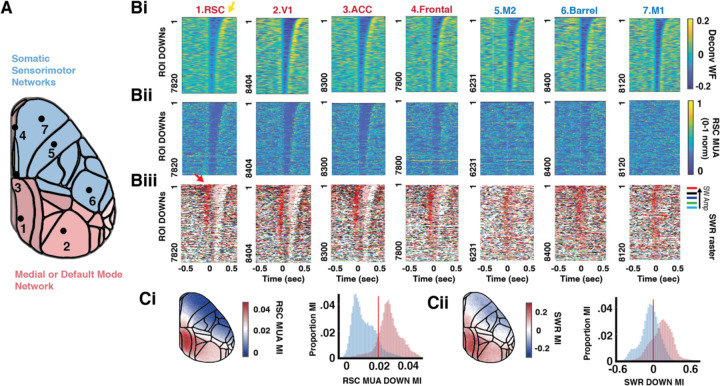
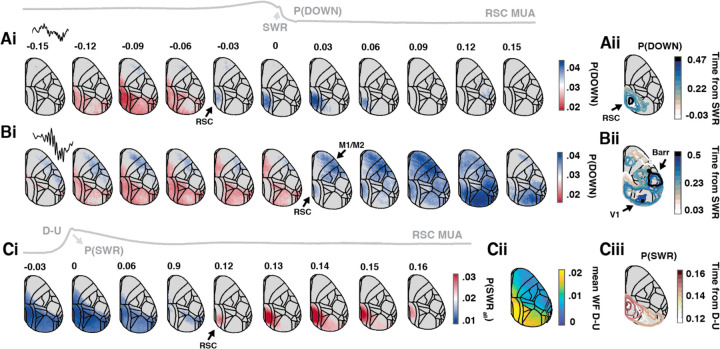
Systems consolidation relies on coordination between hippocampal sharp-wave ripples (SWRs) and neocortical UP/DOWN states during sleep. However, whether this coupling exists across neocortex and the mechanisms enabling it remain unknown. By combining electrophysiology in mouse hippocampus (HPC) and retrosplenial cortex (RSC) with widefield imaging of dorsal neocortex, we found spatially and temporally precise bidirectional hippocampo-neocortical interaction. HPC multi-unit activity and SWR probability was correlated with UP/DOWN states in mouse default mode network, with highest modulation by RSC in deep sleep. Further, some SWRs were preceded by the high rebound excitation accompanying DMN DOWN→UP transitions, while large-amplitude SWRs were often followed by DOWN states originating in RSC. We explain these electrophysiological results with a model in which HPC and RSC are weakly coupled excitable systems capable of bi-directional perturbation and suggest RSC may act as a gateway through which SWRs can perturb downstream cortical regions via cortico-cortical propagation of DOWN states.
系统巩固依赖于睡眠期间海马体尖波涟漪(SWRs)与新皮质上/下状态之间的协调。然而,这种耦合是否存在于整个新皮质以及实现它的机制仍然未知。通过将小鼠海马体(HPC)和 retrosplenial 皮质(RSC)的电生理学与背侧新皮质的宽场成像相结合,我们发现了空间和时间上精确的双向海马体-新皮质相互作用。HPC 多单元活动和 SWR 概率与小鼠默认模式网络中的上/下状态相关,在深度睡眠中 RSC 的调制作用最强。此外,一些 SWRs 之前伴随着默认模式网络从下状态到上状态转变时的高反弹兴奋,而大幅度的 SWRs 之后通常是起源于 RSC 的下状态。我们用一个模型来解释这些电生理结果,其中 HPC 和 RSC 是能够进行双向扰动的弱耦合可兴奋系统,并表明 RSC 可能充当一个通道,通过这个通道 SWRs 可以通过下状态的皮质-皮质传播来扰动下游皮质区域。