van Gaalen Martha A C, van Pieterson Merel, Waaijenberg Petra, Kindermann Angelika, Wolters Victorien M, Dijkstra Alie, van Wering Herbert, Wessels Margreet, de Ridder Lissy, Rizopoulos Dimitris, Derikx C Lauranne A A P, Escher Johanna C
Department of Paediatric Gastroenterology, Erasmus MC-Sophia Children's Hospital, Rotterdam, The Netherlands.
Department of Gastroenterology, Amsterdam UMC, Amsterdam, The Netherlands.
J Crohns Colitis. 2025 Apr 4;19(4). doi: 10.1093/ecco-jcc/jjae166.
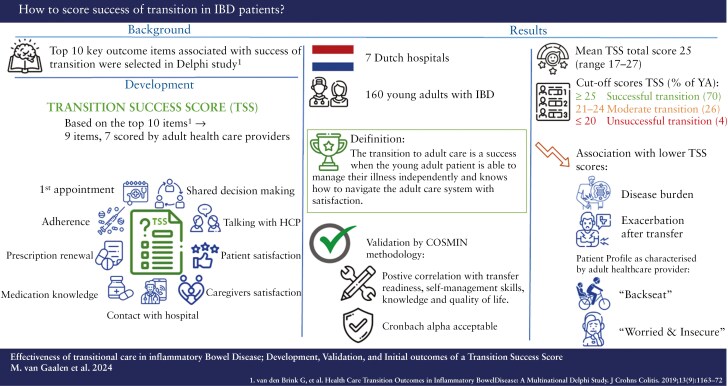
The effectiveness of transition programs from pediatric to adult healthcare in adolescents with inflammatory bowel disease (IBD) is not clear, as prospective studies using validated outcome measures for transition are lacking. This study aimed to develop and validate a quantitative Transition Success Score (TSS), and to apply it in a multicenter setting to assess the effectiveness of transitional care.
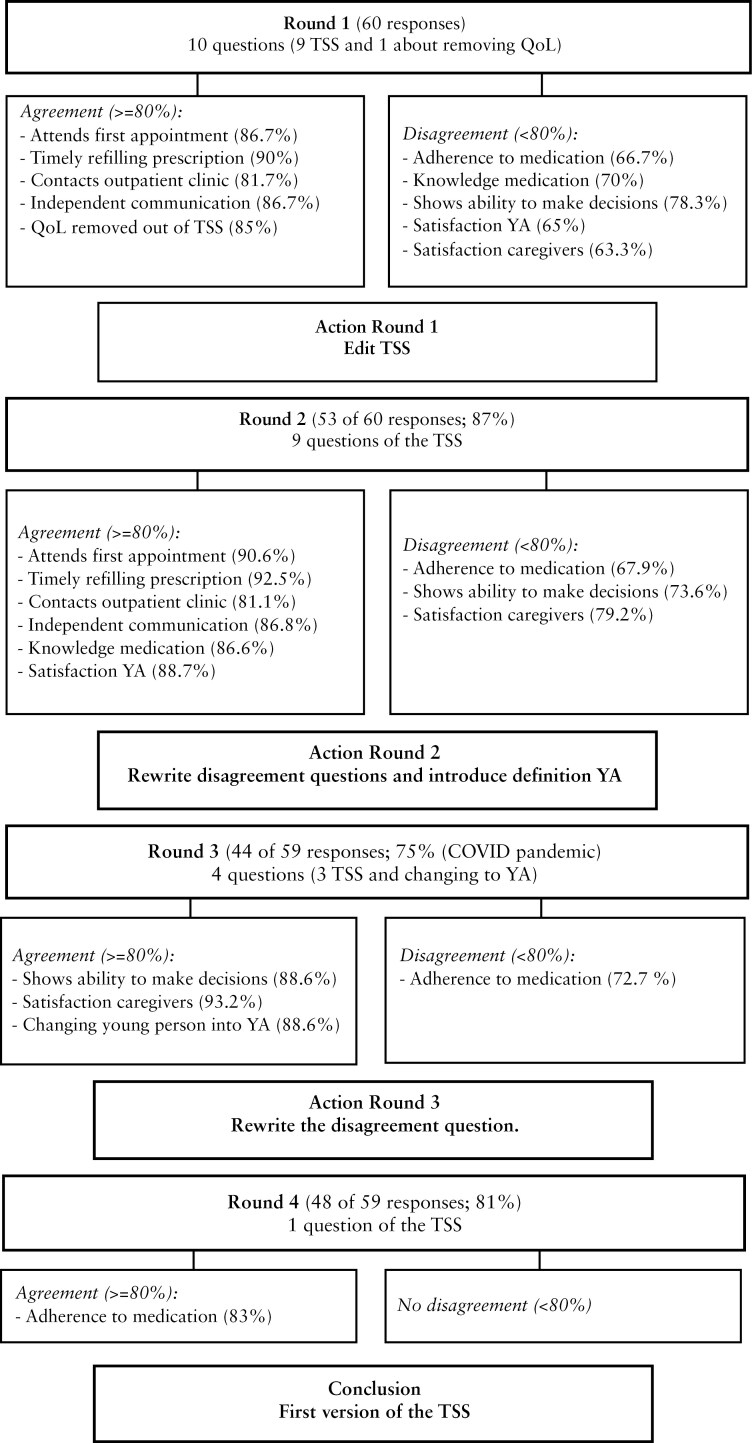
The Top 10 outcome items related to a successful transition, identified through an international Delphi study with IBD stakeholders, were integrated into a generic questionnaire, the TSS. In a prospective, multicenter study, the TSS was scored by adult healthcare providers, young adult patients, and caregivers, 9-15 months after transfer of care.
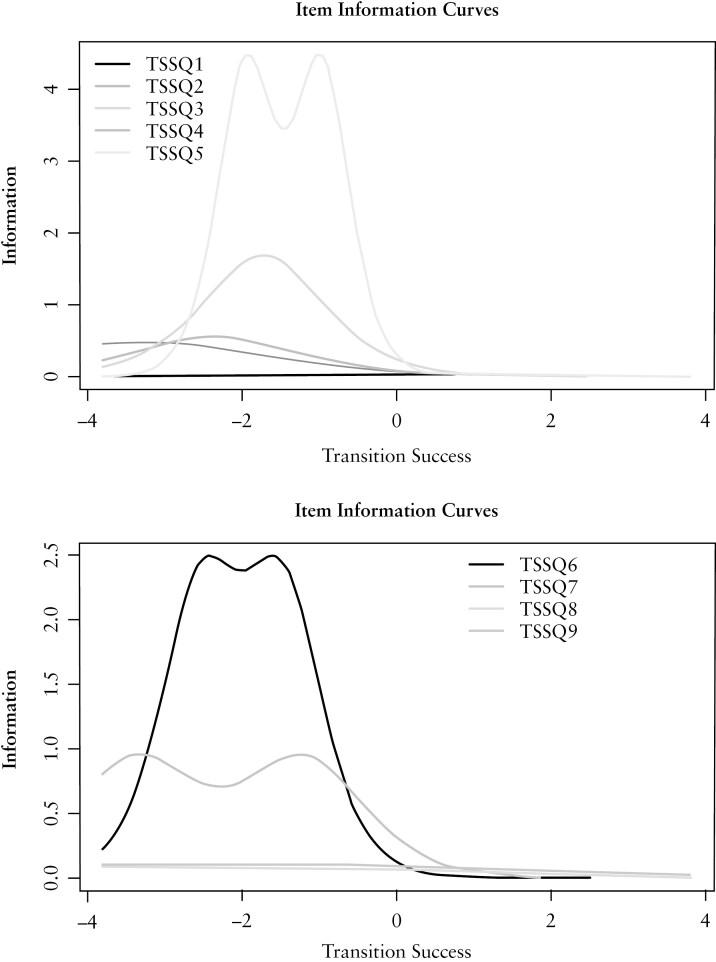
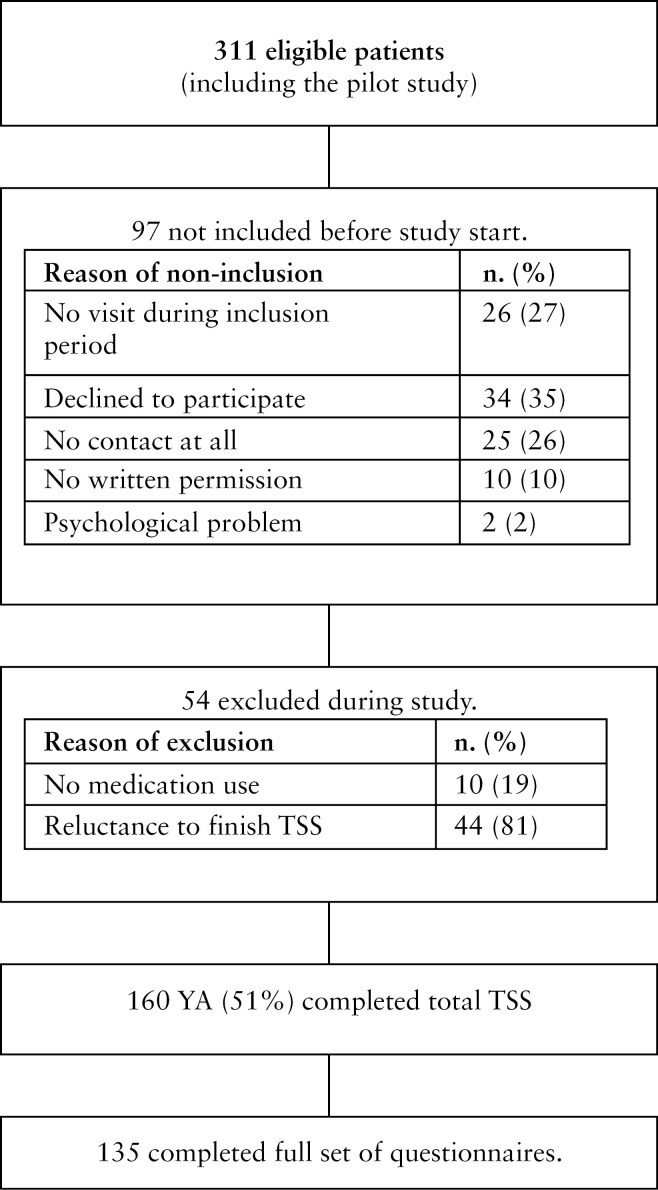
In 7 Dutch hospitals, 160 patients completed the TSS. The mean score was 25 (range 17-27), 25.6% of patients achieving maximum score. Hypothesis testing for construct validity revealed significant associations with characteristics related to transitional care, such as knowledge, independence, and quality of life (p < 0.005). Structural validation indicated the score was most effective at discerning lower levels of transition success. Internal consistency was acceptable (0.64). High disease burden, exacerbation during or after transfer, and certain personality profiles were associated with lower scores.
The TSS serves as a quantitative tool to evaluate the effectiveness of transitional care interventions and to identify IBD patients at risk of encountering challenges during the transition to adult healthcare.
炎症性肠病(IBD)青少年从儿科医疗向成人医疗过渡项目的有效性尚不清楚,因为缺乏使用经过验证的过渡结果指标的前瞻性研究。本研究旨在开发并验证一个定量的过渡成功评分(TSS),并将其应用于多中心环境中以评估过渡性护理的有效性。
通过与IBD利益相关者进行的国际德尔菲研究确定的与成功过渡相关的前10项结果项目,被整合到一份通用问卷即TSS中。在一项前瞻性多中心研究中,在护理转接9至15个月后,由成人医疗服务提供者、年轻成年患者及其照顾者对TSS进行评分。
在荷兰的7家医院中,160名患者完成了TSS评分。平均得分为25分(范围为17 - 27分),25.6%的患者获得最高分。结构效度的假设检验显示,该评分与过渡性护理相关特征(如知识、独立性和生活质量)存在显著关联(p < 0.005)。结构验证表明,该评分在区分较低水平的过渡成功方面最为有效。内部一致性可接受(0.64)。高疾病负担、转接期间或之后病情加重以及某些性格特征与较低得分相关。
TSS可作为一种定量工具,用于评估过渡性护理干预措施的有效性,并识别在向成人医疗过渡期间有遇到挑战风险的IBD患者。