Wang Weibo, Tai Supeng, Tao Junyue, Yang Lexing, Cheng Xi, Zhou Jun
Department of Urology, The First Affiliated Hospital of Anhui Medical University, Hefei, Anhui, China.
Institute of Urology, Anhui Medical University, Hefei, Anhui, China.
Mater Today Bio. 2024 Oct 10;29:101295. doi: 10.1016/j.mtbio.2024.101295. eCollection 2024 Dec.
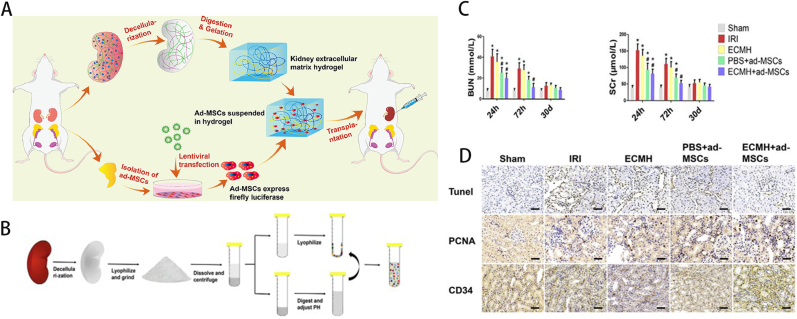
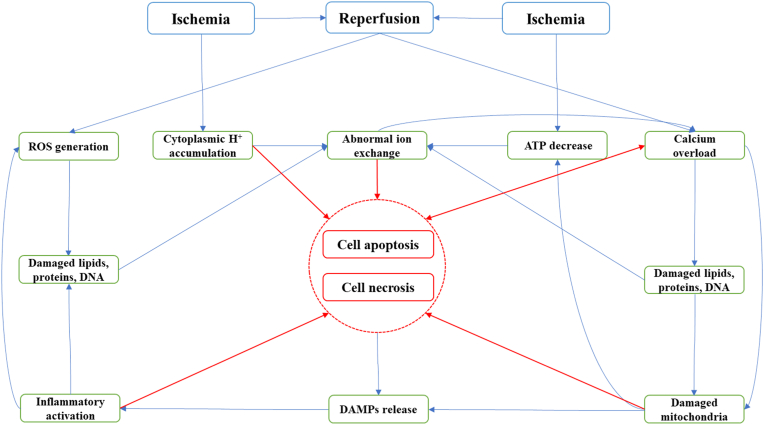
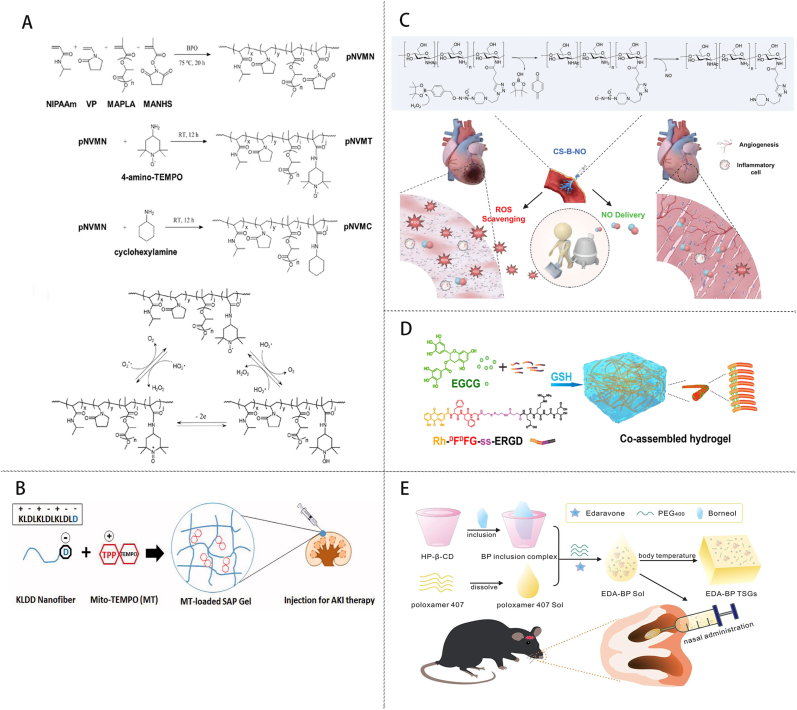
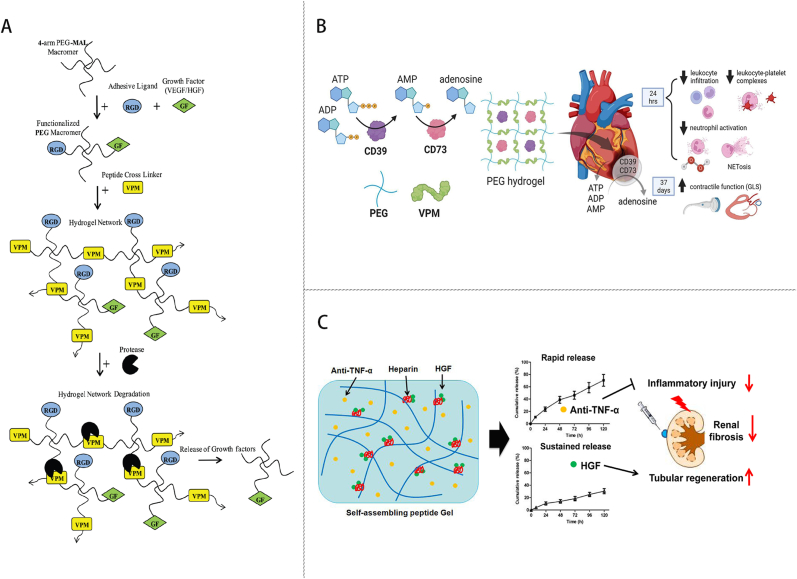
Ischemia-reperfusion injury (IRI) commonly occurs in clinical settings, particularly in medical practices such as organ transplantation, cardiopulmonary resuscitation, and recovery from acute trauma, posing substantial challenges in clinical therapies. Current systemic therapies for IRI are limited by poor drug targeting, short efficacy, and significant side effects. Owing to their exceptional biocompatibility, biodegradability, excellent mechanical properties, targeting capabilities, controlled release potential, and properties mimicking the extracellular matrix (ECM), hydrogels not only serve as superior platforms for therapeutic substance delivery and retention, but also facilitate bioenvironment cultivation and cell recruitment, demonstrating significant potential in IRI treatment. This review explores the pathological processes of IRI and discusses the roles and therapeutic outcomes of various hydrogel systems. By categorizing hydrogel systems into depots delivering therapeutic agents, scaffolds encapsulating mesenchymal stem cells (MSCs), and ECM-mimicking hydrogels, this article emphasizes the selection of polymers and therapeutic substances, and details special crosslinking mechanisms and physicochemical properties, as well as summarizes the application of hydrogel systems for IRI treatment. Furthermore, it evaluates the limitations of current hydrogel treatments and suggests directions for future clinical applications.
缺血再灌注损伤(IRI)在临床环境中普遍存在,尤其是在器官移植、心肺复苏以及急性创伤恢复等医疗实践中,给临床治疗带来了巨大挑战。目前针对IRI的全身治疗受到药物靶向性差、疗效短暂以及副作用显著的限制。由于水凝胶具有出色的生物相容性、可生物降解性、优异的机械性能、靶向能力、控释潜力以及模拟细胞外基质(ECM)的特性,它不仅是治疗物质递送和保留的优质平台,还能促进生物环境培养和细胞募集,在IRI治疗中显示出巨大潜力。本综述探讨了IRI的病理过程,并讨论了各种水凝胶系统的作用和治疗效果。通过将水凝胶系统分为递送治疗剂的贮库、封装间充质干细胞(MSCs)的支架以及模拟ECM的水凝胶,本文强调了聚合物和治疗物质的选择,详细介绍了特殊的交联机制和物理化学性质,并总结了水凝胶系统在IRI治疗中的应用。此外,它评估了当前水凝胶治疗的局限性,并提出了未来临床应用的方向。