Guangdong Provincial Key Laboratory of Cardiac Function and Microcirculation, National Experimental Education Demonstration Center for Basic Medical Sciences, Department of Pathophysiology, School of Basic Medical Sciences, Southern Medical University, Guangzhou, 510515, China.
Department of Medical Critical Care Medicine, General Hospital of Southern Theatre Command of PLA, Guangdong Branch Center, National Clinical Research Center for Geriatric Diseases (Chinese PLA General Hospital), Guangzhou, 510515, China.
Int J Biol Sci. 2024 Oct 14;20(14):5594-5607. doi: 10.7150/ijbs.96089. eCollection 2024.
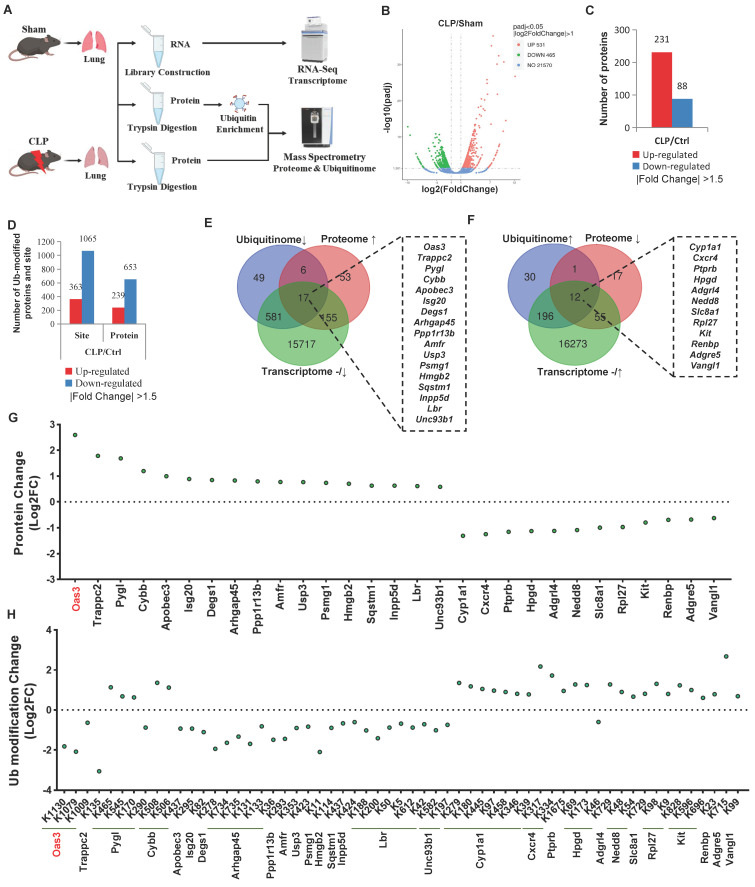
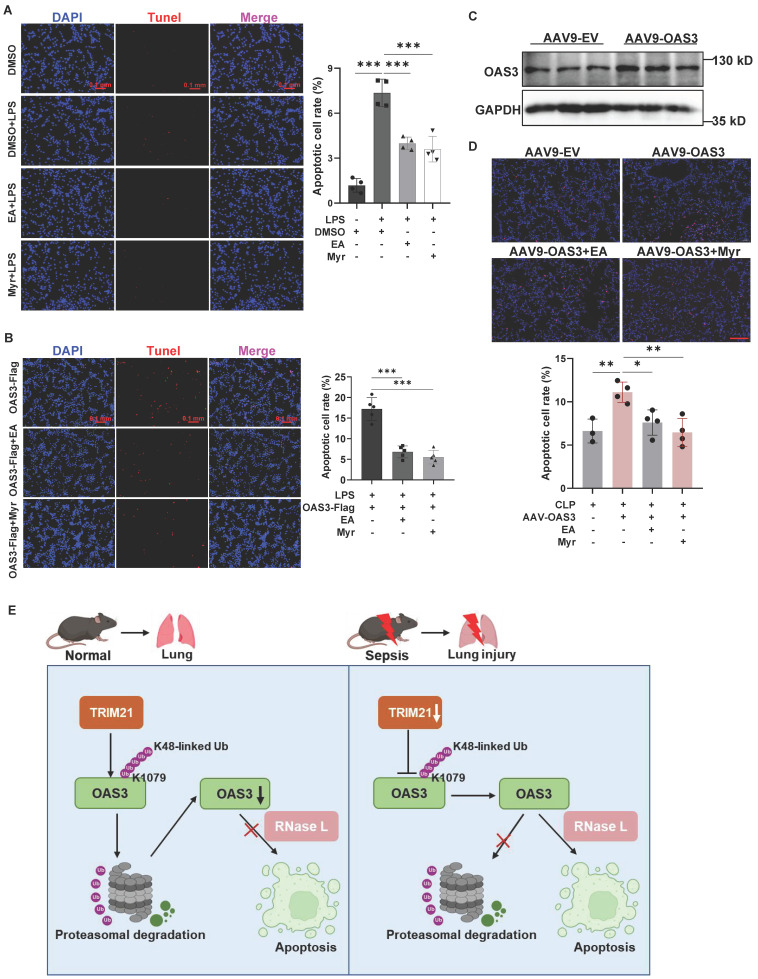
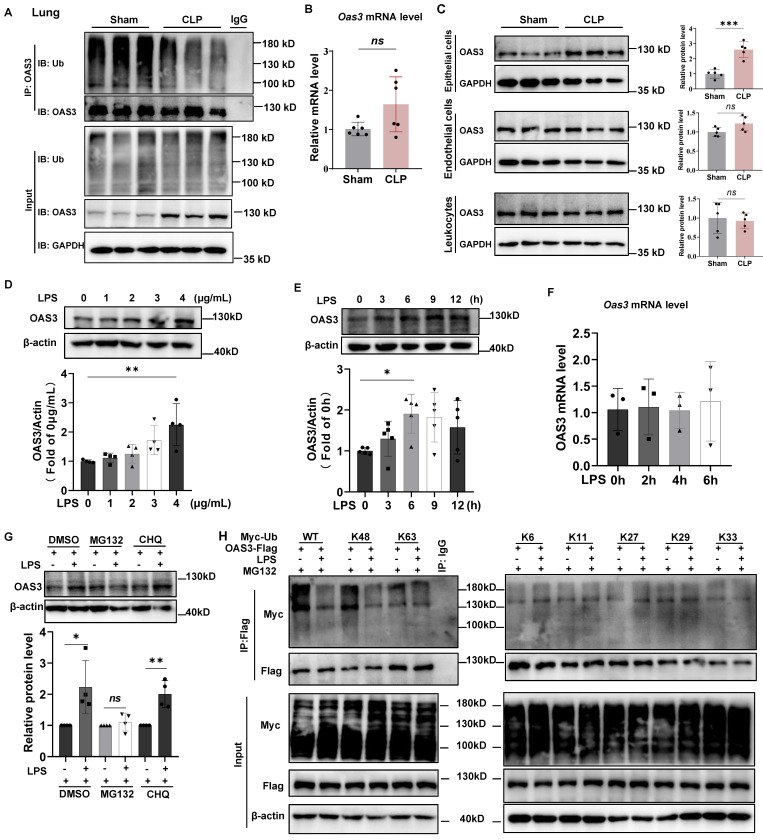
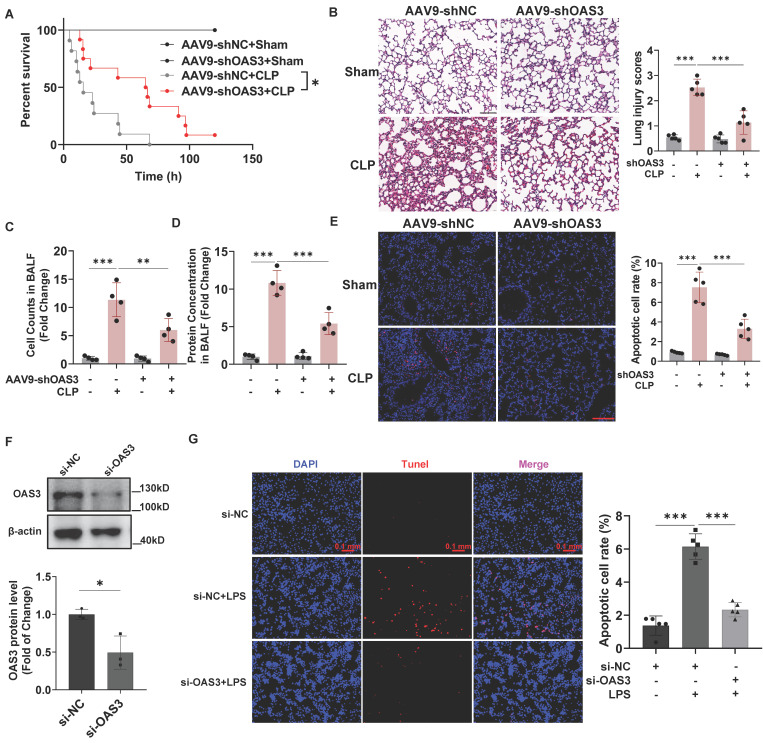
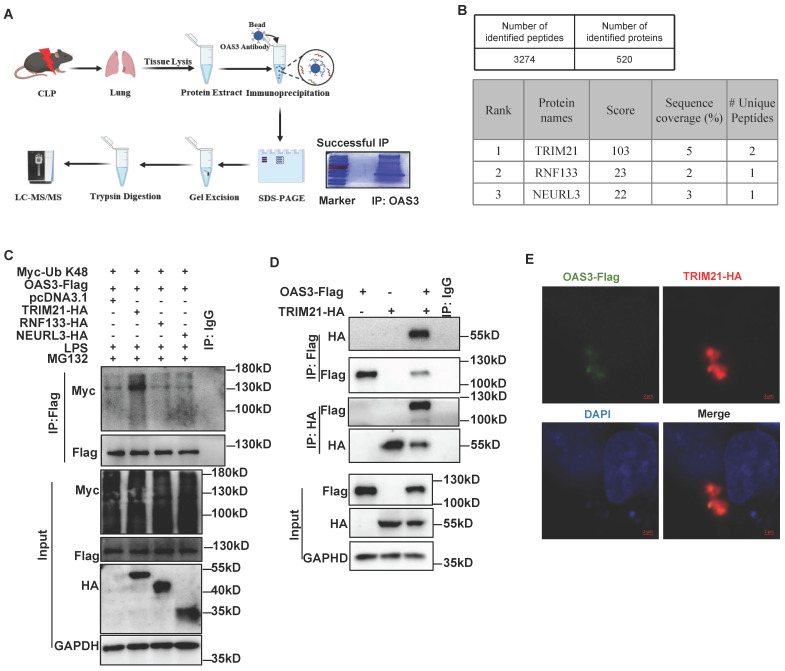
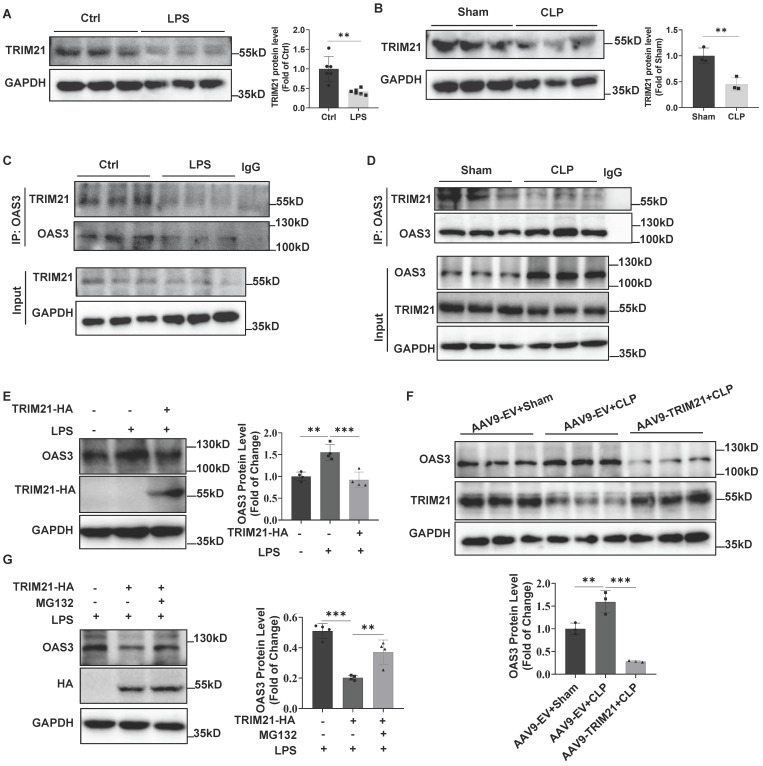
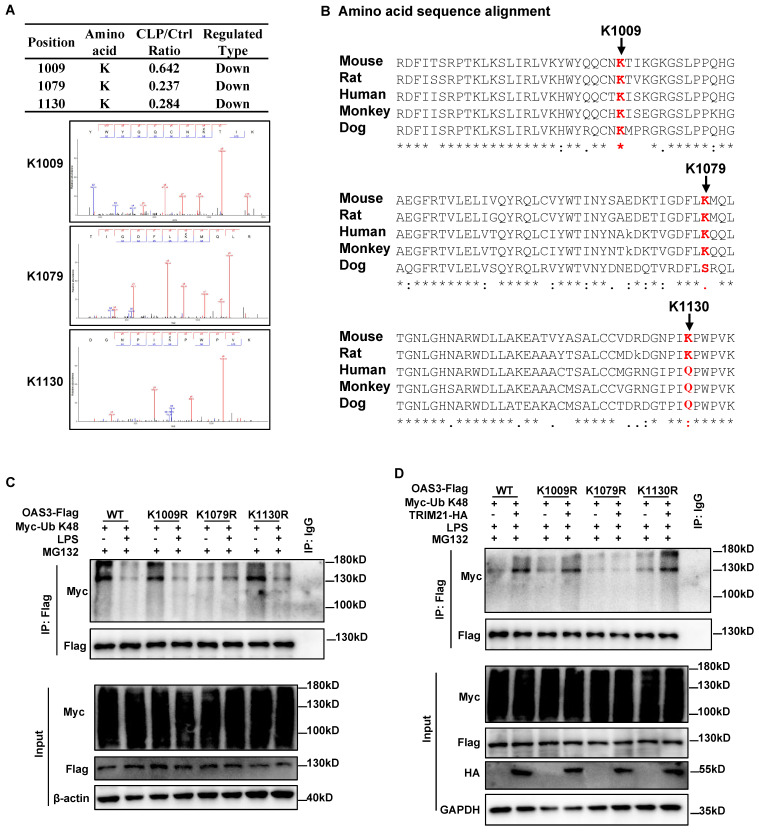
Patients with sepsis-induced acute lung injury (SALI) show a high mortality rate, and there is no effective treatment in the clinic for SALI but only symptomatic treatment as an option. Therefore, searching for effective targets is critical for the management of SALI. Ubiquitination is an essential post-translational protein modification involved in most pathophysiological processes. However, the relationship between ubiquitination and SALI remains largely unclear. In this study, we examined the ubiquitination modification changes in SALI, identified oligoadenylate synthetase 3 (OAS3) as a key candidate accounting for SALI from integrative multi-omics analysis and confirmed its role in promoting SALI and cell apoptosis in an animal model of cecal ligation and puncture-treated mice and a cellular model of LPS-treated MLE12 cells. Mechanistically, downregulation of E3 ligase TRIM21 mediates the reduction of OAS3 K48-linked polyubiquitination at the K1079 site in lung epithelial cells of a septic model, which leads to the increase of OAS3 protein level in a proteasomal-dependent manner. The upregulated OAS3 promotes epithelial cell apoptosis through its downstream effector molecule, RNase L. In summary, these findings unveil a previously unappreciated role of OAS3 ubiquitination in SALI and offer a promising perspective for further understanding the development of sepsis and potential therapeutic target for the treatment of SALI.
患有脓毒症诱导性急性肺损伤(SALI)的患者死亡率很高,临床上除了对症治疗外,没有针对 SALI 的有效治疗方法。因此,寻找有效的靶点对于 SALI 的治疗至关重要。泛素化是一种重要的翻译后蛋白质修饰,参与大多数病理生理过程。然而,泛素化与 SALI 之间的关系在很大程度上尚不清楚。在这项研究中,我们研究了 SALI 中的泛素化修饰变化,通过整合多组学分析鉴定出寡腺苷酸合成酶 3(OAS3)是 SALI 的关键候选物,并在盲肠结扎和穿刺处理的小鼠动物模型和 LPS 处理的 MLE12 细胞的细胞模型中证实了其促进 SALI 和细胞凋亡的作用。在机制上,下调 E3 连接酶 TRIM21 介导了在脓毒症模型中肺上皮细胞中 OAS3 K1079 位点 K48 连接多泛素化的减少,从而以依赖蛋白酶体的方式增加 OAS3 蛋白水平。上调的 OAS3 通过其下游效应分子 RNase L 促进上皮细胞凋亡。总之,这些发现揭示了 OAS3 泛素化在 SALI 中的先前未被认识的作用,并为进一步了解脓毒症的发展和 SALI 的潜在治疗靶点提供了有希望的视角。