Department of Chemical Sciences, University of Padova, via F. Marzolo 1, 35131, Padova, Italy.
Department of Pharmaceutical and Pharmacological Sciences, University of Padova, via F. Marzolo 5, 35131, Padova, Italy.
Commun Biol. 2024 Nov 4;7(1):1435. doi: 10.1038/s42003-024-07138-w.
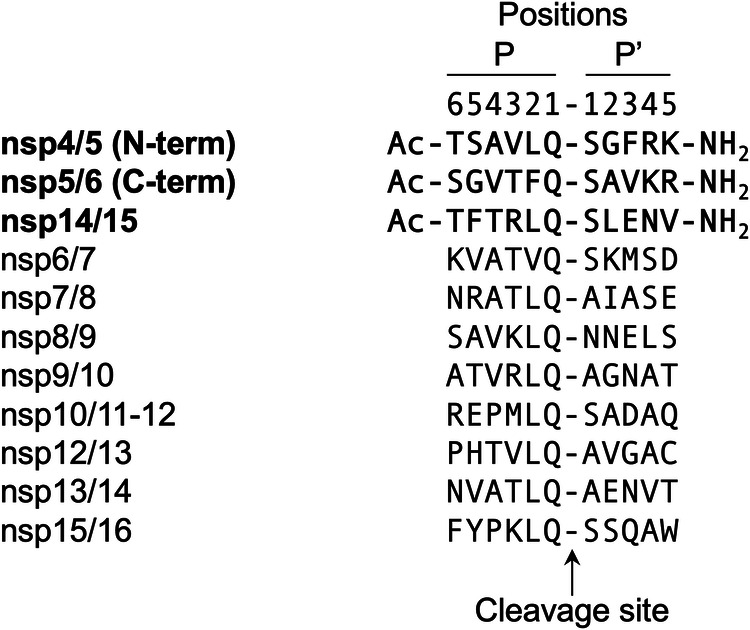
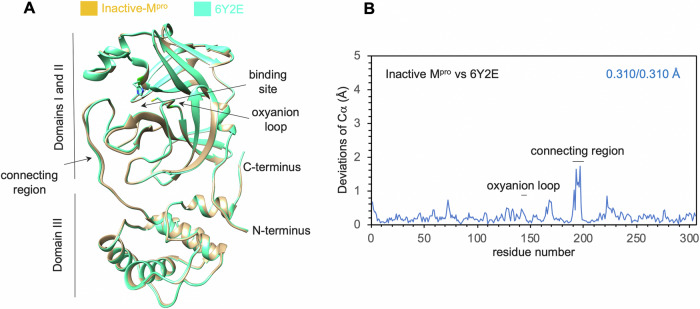
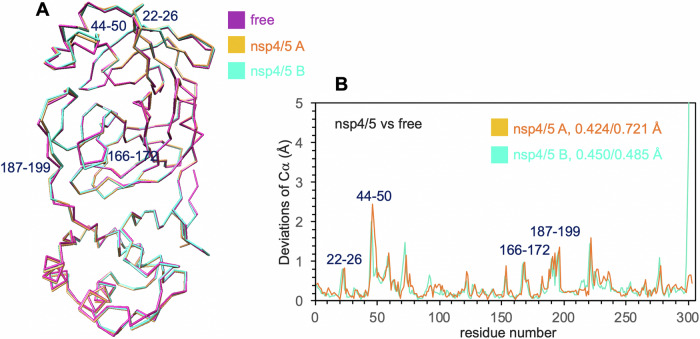
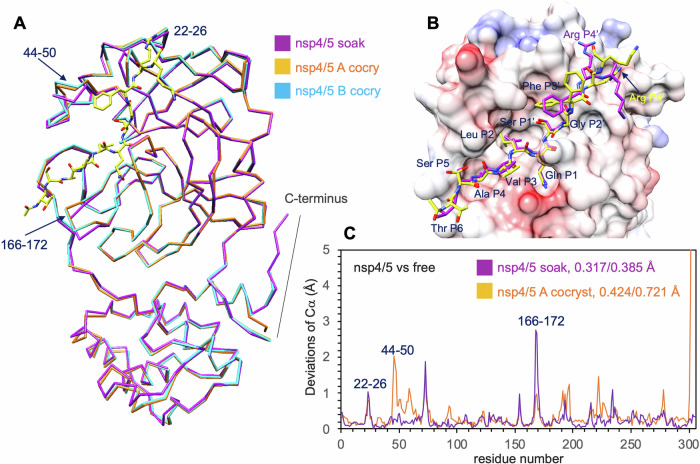
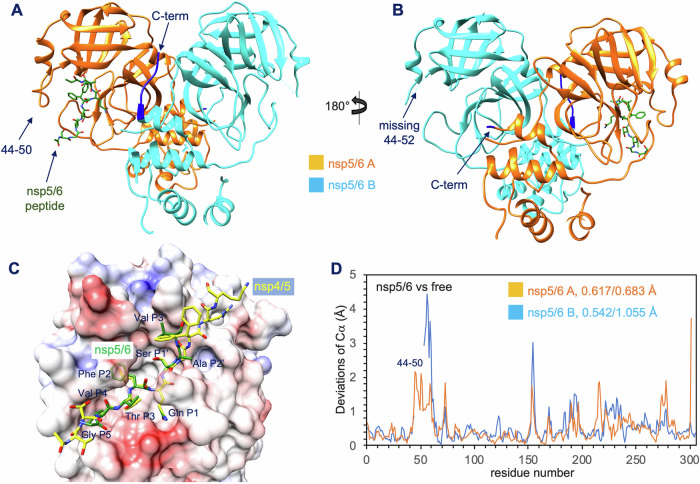
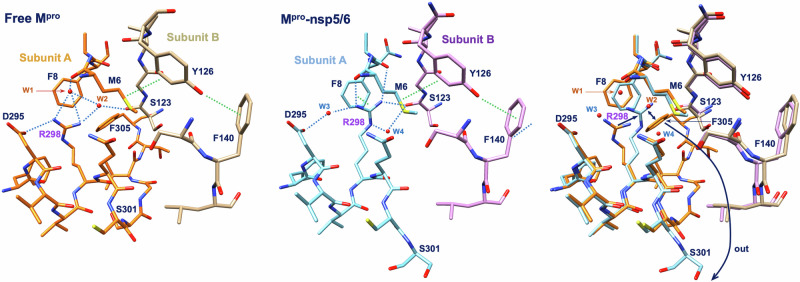
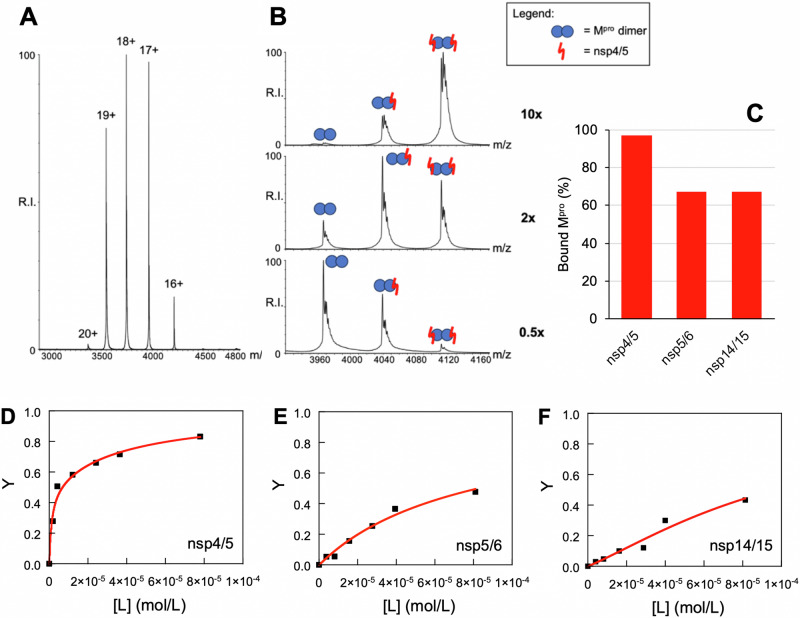
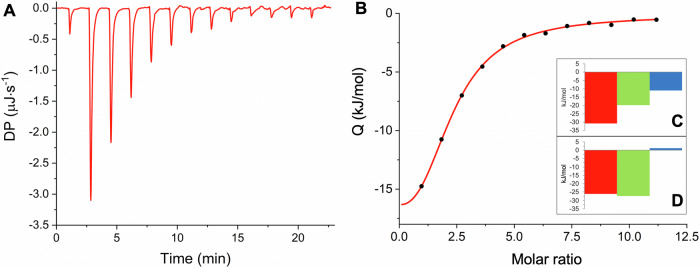
Many enzymes work as homodimers with two distant catalytic sites, but the reason for this choice is often not clear. For the main protease M of SARS-CoV-2, dimerization is essential for function and plays a regulatory role during the coronaviral replication process. Here, to analyze a possible allosteric mechanism, we use X-ray crystallography, native mass spectrometry, isothermal titration calorimetry, and activity assays to study the interaction of M with three peptide substrates. Crystal structures show how the plasticity of M is exploited to face differences in the sequences of the natural substrates. Importantly, unlike in the free form, the M dimer in complex with these peptides is asymmetric and the structures of the substrates nsp5/6 and nsp14/15 bound to a single subunit show allosteric communications between active sites. We identified arginines 4 and 298 as key elements in the transition from symmetric to asymmetric dimers. Kinetic data allowed the identification of positive cooperativity based on the increase in the processing efficiency (kinetic allostery) and not on the better binding of the substrates (thermodynamic allostery). At the physiological level, this allosteric behavior may be justified by the need to regulate the processing of viral polyproteins in time and space.
许多酶以具有两个遥远催化位点的同源二聚体形式发挥作用,但这种选择的原因通常不清楚。对于 SARS-CoV-2 的主要蛋白酶 M,二聚化对于功能至关重要,并在冠状病毒复制过程中发挥调节作用。在这里,为了分析可能的变构机制,我们使用 X 射线晶体学、天然质谱、等温滴定量热法和活性测定来研究 M 与三种肽底物的相互作用。晶体结构显示了 M 的可塑性如何被利用来应对天然底物序列的差异。重要的是,与游离形式不同,与这些肽结合的 M 二聚体是不对称的,并且与单个亚基结合的 nsp5/6 和 nsp14/15 底物的结构显示出活性位点之间的变构通讯。我们确定精氨酸 4 和 298 是从对称二聚体向不对称二聚体转变的关键因素。动力学数据允许基于加工效率的增加(动力学变构)而不是底物更好的结合(热力学变构)来识别正协同作用。在生理水平上,这种变构行为可能是由及时和空间调节病毒多蛋白加工的需要所证明的。