Department of Clinical Laboratory, Shanxi Provincial Academy of Traditional Chinese Medicine, Taiyuan, China.
Department of Oncology, Shanxi Provincial Academy of Traditional Chinese Medicine, Taiyuan, China.
J Transl Med. 2024 Nov 4;22(1):995. doi: 10.1186/s12967-024-05793-5.
Aerobic glycolysis is a tumor cell phenotype and a hallmark in cancer research. The alternative splicing of the pyruvate kinase M (PKM) gene regulates the expressions of PKM1/2 isoforms and the aerobic glycolysis of tumors. Polypyrimidine tract binding protein (PTBP1) is critical in this process; however, its impact and underlying mechanisms in colorectal cancer (CRC) remain unclear. This study aimed to investigate the role of PTBP1 crotonylation in CRC progression.
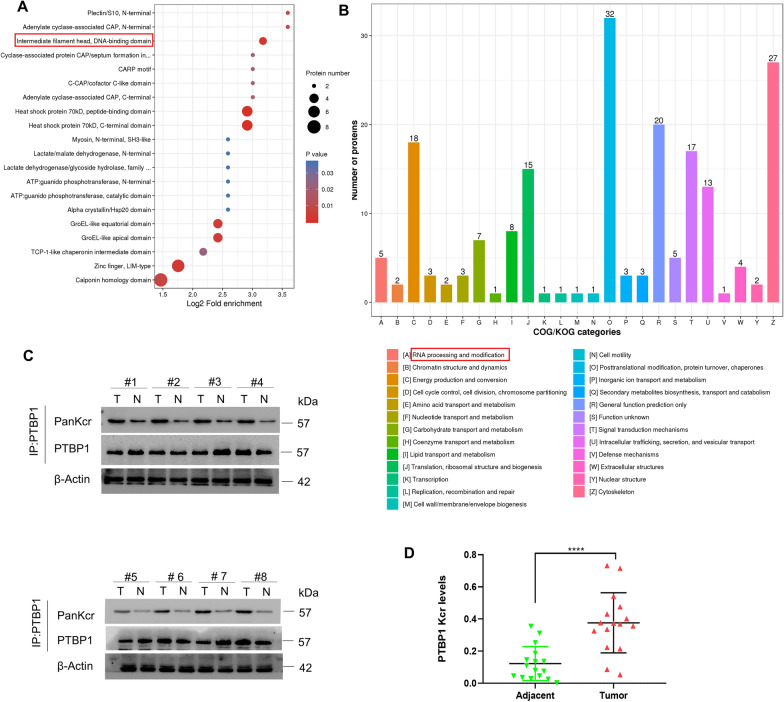
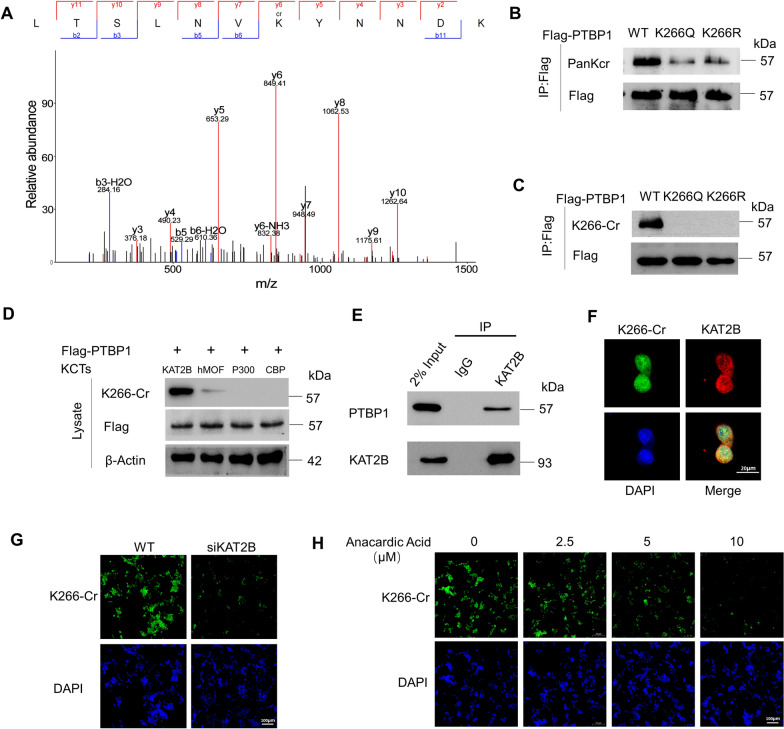
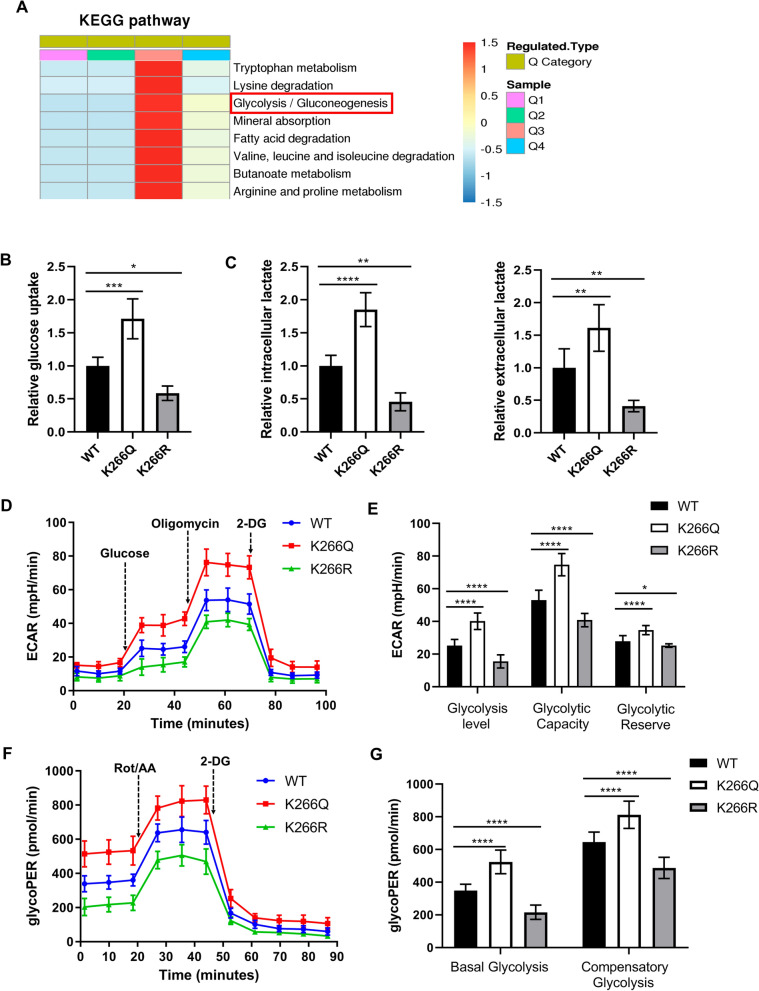
The crotonylation levels of PTBP1 in human CRC tissues and cell lines were analyzed using crotonylation proteomics and immunoprecipitation. The main crotonylation sites were identified by immunoprecipitation and immunofluorescent staining. The glycolytic capacities of CRC cells were evaluated by measuring the glucose uptake, lactate production, extracellular acidification rate, and glycolytic proton efflux rate. The role and mechanism of PTBP1 crotonylation in PKM alternative splicing were determined by Western blot, quantitative real-time PCR (RT-qPCR), RNA immunoprecipitation, and immunoprecipitation. The effects of PTBP1 crotonylation on the behaviors of CRC cells and CRC progression were assessed using CCK-8, colony formation, cell invasion, wound healing assays, xenograft model construction, and immunohistochemistry.
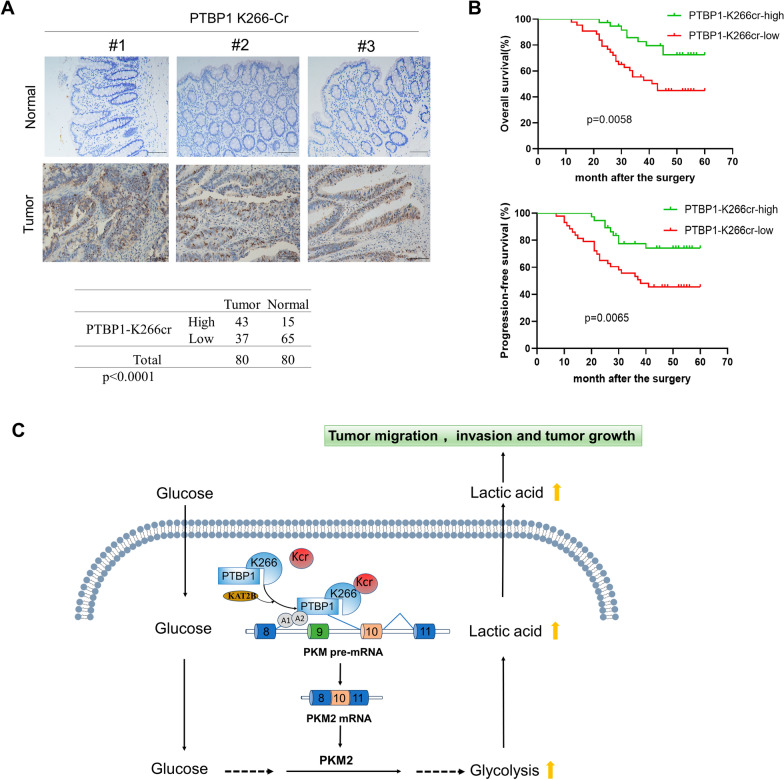
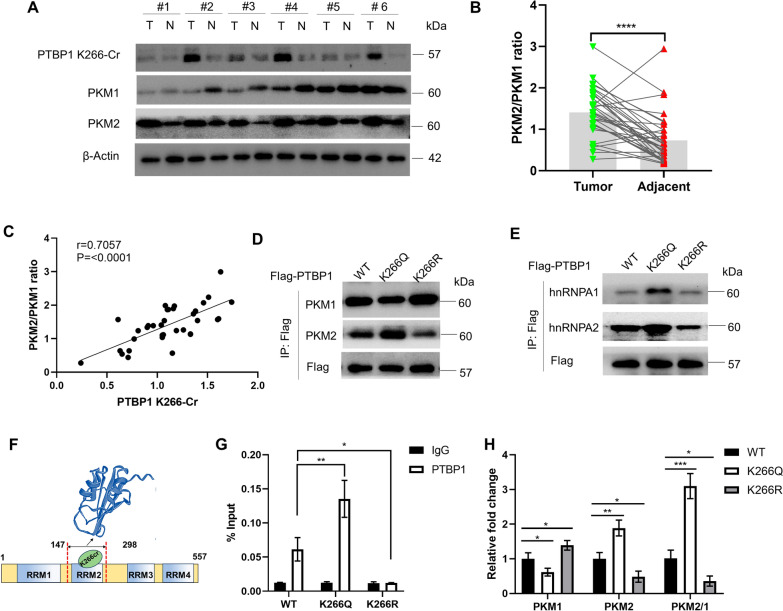
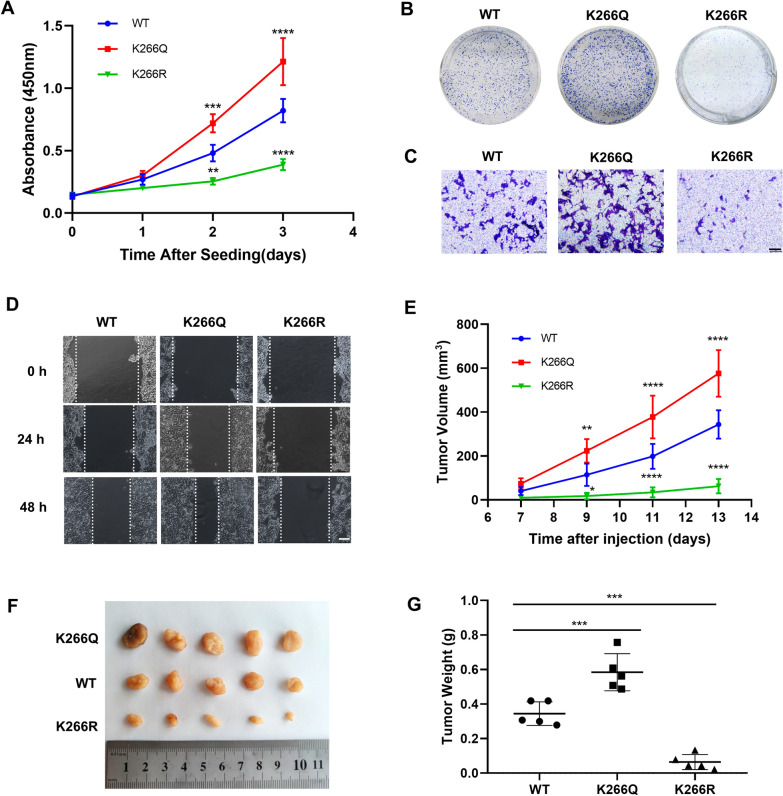
The crotonylation level of PTBP1 was elevated in human CRC tissues compared to peritumor tissues. In CRC tissues and cells, PTBP1 was mainly crotonylated at K266 (PTBP1 K266-Cr), and lysine acetyltransferase 2B (KAT2B) acted as the crotonyltranferase. PTBP1 K266-Cr promoted glycolysis and lactic acid production, increasing the PKM2/PKM1 ratio in CRC tissues and cells. Mechanistically, PTBP1 K266-Cr enhanced the interaction of PTBP1 with heterogeneous nuclear ribonucleoprotein A1 and A2 (hnRNPA1/2), thus affecting the PKM alternative splicing. PTBP1 K266-Cr facilitated CRC cell proliferation, migration, and metastasis in vitro and in vivo. Pathologically, a high level of PTBP1 K266-Cr was associated with poor prognosis in CRC patients.
Crotonylation of PTBP1 coordinates tumor cell glycolysis and promotes CRC progression by regulating PKM alternative splicing and increasing PKM2 expression.
有氧糖酵解是肿瘤细胞的表型,也是癌症研究中的一个标志。丙酮酸激酶 M(PKM)基因的可变剪接调节着 PKM1/2 同工型的表达和肿瘤的有氧糖酵解。多嘧啶 tract 结合蛋白 1(PTBP1)在这个过程中起着关键作用;然而,其在结直肠癌(CRC)中的作用和潜在机制尚不清楚。本研究旨在探讨 PTBP1 巴豆酰化在 CRC 进展中的作用。
采用巴豆酰化蛋白质组学和免疫沉淀法分析人 CRC 组织和细胞系中 PTBP1 的巴豆酰化水平。通过免疫沉淀和免疫荧光染色鉴定主要的巴豆酰化位点。通过测量葡萄糖摄取、乳酸生成、细胞外酸化率和糖酵解质子流出率来评估 CRC 细胞的糖酵解能力。通过 Western blot、定量实时 PCR(RT-qPCR)、RNA 免疫沉淀和免疫沉淀来确定 PTBP1 巴豆酰化在 PKM 可变剪接中的作用和机制。通过 CCK-8、集落形成、细胞侵袭、划痕愈合试验、异种移植模型构建和免疫组化评估 PTBP1 巴豆酰化对 CRC 细胞行为和 CRC 进展的影响。
与癌旁组织相比,人 CRC 组织中 PTBP1 的巴豆酰化水平升高。在 CRC 组织和细胞中,PTBP1 主要在赖氨酸 266 处巴豆酰化(PTBP1 K266-Cr),赖氨酸乙酰转移酶 2B(KAT2B)作为巴豆酰基转移酶。PTBP1 K266-Cr 促进了糖酵解和乳酸生成,增加了 CRC 组织和细胞中 PKM2/PKM1 的比值。在机制上,PTBP1 K266-Cr 增强了 PTBP1 与异质核核糖核蛋白 A1 和 A2(hnRNPA1/2)的相互作用,从而影响了 PKM 的可变剪接。PTBP1 K266-Cr 促进了 CRC 细胞在体外和体内的增殖、迁移和转移。从病理上看,CRC 患者中 PTBP1 K266-Cr 水平较高与预后不良相关。
PTBP1 的巴豆酰化通过调节 PKM 可变剪接和增加 PKM2 的表达来协调肿瘤细胞的糖酵解,促进 CRC 的进展。