Institute for Advancing Health Through Agriculture, Texas A&M University System, Dallas, TX, USA.
Texas A&M Agrilife Research and Extension Center - Dallas, 17360 Coit Rd, Dallas, TX, 75252, USA.
BMC Psychol. 2024 Nov 9;12(1):643. doi: 10.1186/s40359-024-02053-5.
Physical activity has the potential to improve physical and mental health outcomes of persons with depression. However, feasible and acceptable strategies to integrate physical activity interventions into real-world settings are needed.
To assess the feasibility and acceptability of a manualized Behavioral Activation intervention aimed to increase physical activity in persons with depression (defined as a PHQ-9 score ≥ 10).
A single-arm pilot study was conducted. The intervention consisted of 8 tele-therapy sessions delivered over a 10-week period. Measures of feasibility included screening, enrollment, intervention adherence, outcome data availability, and intervention fidelity. Acceptability was assessed with a post-intervention survey and qualitatively through focus groups and interviews. Preliminary efficacy of the intervention was assessed by evaluating pre-to-post changes in physical activity and depressive symptoms.
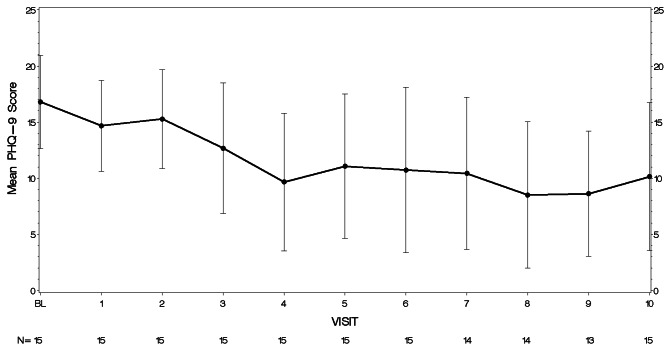
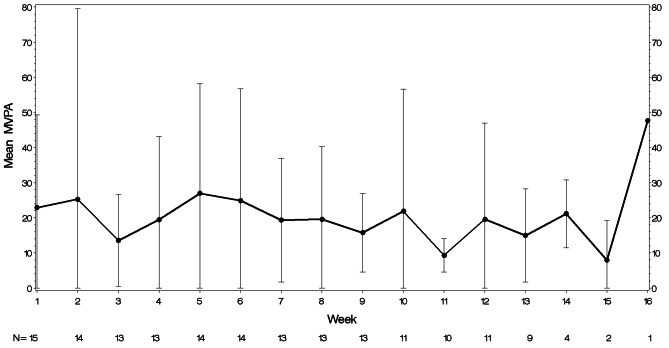
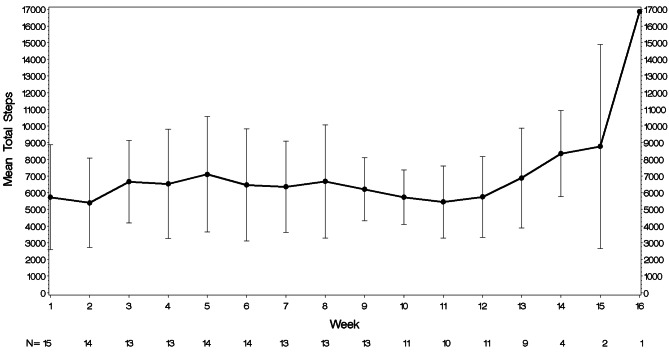
All feasibility metrics exceeded predetermined feasibility goal metrics with the exception of Fitbit wear and screening rate, which was due to a greater than anticipated enrollment rate. Participants (n = 15) reported perceived benefits from the intervention and convenience in attending tele-therapy sessions. Depressive symptoms, as measured by the PHQ-9 improved (16.8 at enrollment to 10.1 post intervention, Cohen's d = 1.13). Self-reported moderate-to-vigorous physical activity (MVPA) increased from 22.0 min/week at baseline to 36.67 min/week post-intervention (d = 0.58). Physical activity as measured by the Fitbit showed little change (daily step 5543.29 during Week 1 to 6177.48 during Week 10, (d = 0.14); MVPA 21.23 min/week during Week 1 to 19.22 at Week 10 (d = 0.0.06).
Results of the pilot study suggest the intervention is feasible to deliver and acceptable to participants. Preliminary results suggest the intervention may be effective in improving depressive symptoms and increasing self-reported physical activity.
ClinicalTrials.gov NCT04990401, Registered July 21, 2021.
身体活动有可能改善抑郁患者的身心健康结果。然而,需要找到可行且可接受的策略,将身体活动干预措施融入现实环境中。
评估针对抑郁患者(PHQ-9 得分≥10)增加身体活动的行为激活干预措施的可行性和可接受性,该干预措施是一个手册化的干预方案。
开展了一项单臂试验研究。该干预措施包括在 10 周期间提供 8 次远程治疗。可行性评估的指标包括筛查、入组、干预依从性、结果数据的可用性以及干预的忠实度。通过干预后调查和焦点小组访谈进行定性评估,了解干预的可接受性。评估干预措施的初步疗效,方法是评估身体活动和抑郁症状的干预前后变化。
除了 Fitbit 佩戴率和筛查率外,所有可行性指标均超过了预定的可行性目标,而 Fitbit 佩戴率和筛查率较低是由于预期的入组率较高。参与者(n=15)报告称,他们从干预中受益,并认为远程治疗很方便。抑郁症状(PHQ-9 得分)改善(入组时为 16.8,干预后为 10.1,Cohen's d=1.13)。自我报告的中等到剧烈的身体活动(MVPA)从基线时的 22.0 分钟/周增加到干预后时的 36.67 分钟/周(d=0.58)。Fitbit 测量的身体活动变化不大(第 1 周的日常步数为 5543.29,第 10 周为 6177.48,d=0.14;第 1 周的 MVPA 为 21.23 分钟/周,第 10 周为 19.22 分钟/周,d=0.0.06)。
试验研究结果表明,该干预措施易于实施,且参与者容易接受。初步结果表明,该干预措施可能有效改善抑郁症状并增加自我报告的身体活动。
ClinicalTrials.gov NCT04990401,注册于 2021 年 7 月 21 日。