Cole Lisa, Goodall Tim, Jehmlich Nico, Griffiths Robert I, Gleixner Gerd, Gubry-Rangin Cecile, Malik Ashish A
School of Biological Sciences, University of Aberdeen, St Machar Drive, Aberdeen AB24 3UU, United Kingdom.
UK Centre for Ecology and Hydrology, Benson Lane, Crowmarsh Gifford, Wallingford OX10 8BB, United Kingdom.
ISME Commun. 2024 Oct 7;4(1):ycae116. doi: 10.1093/ismeco/ycae116. eCollection 2024 Jan.
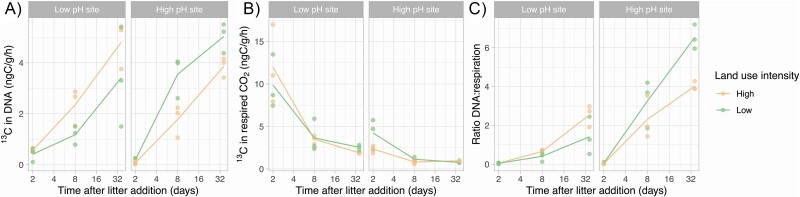
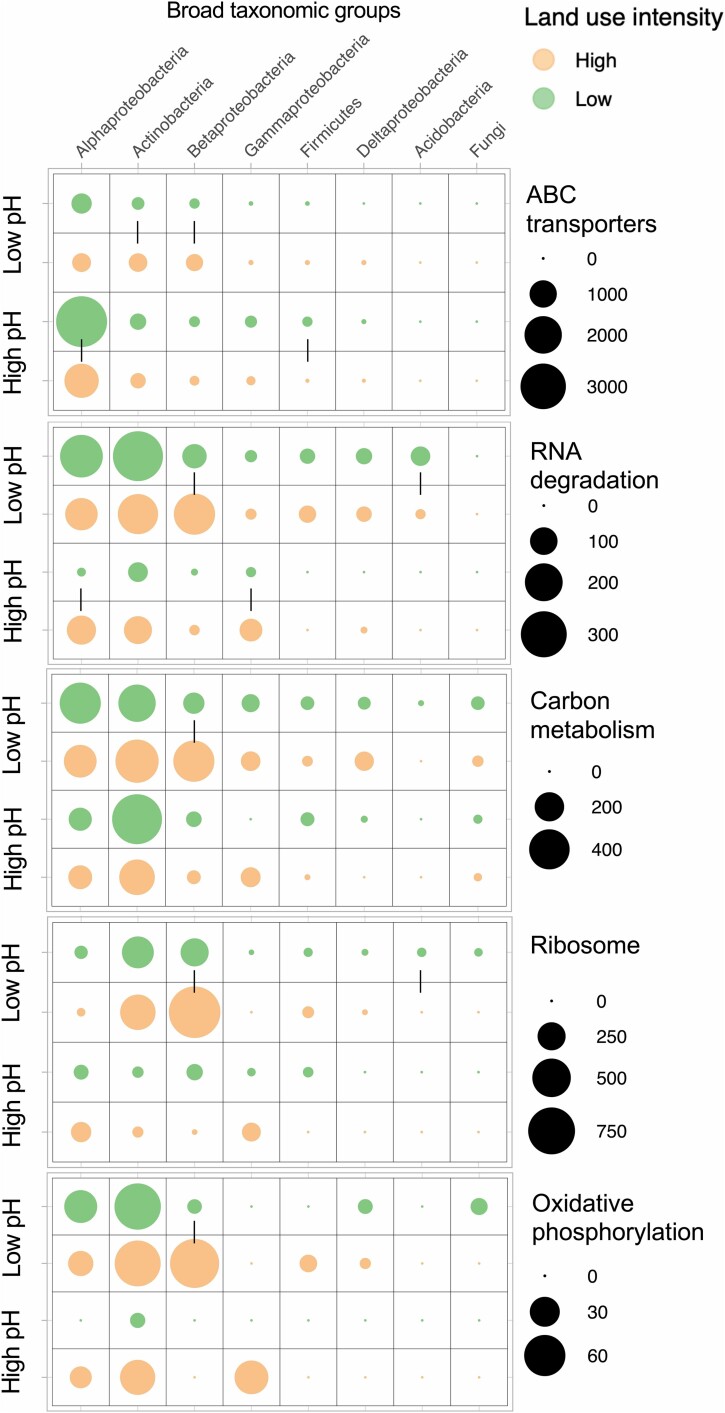
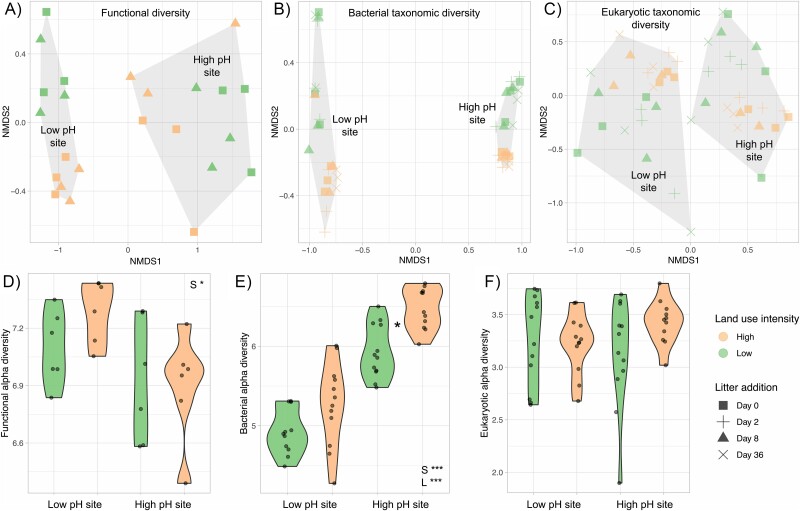
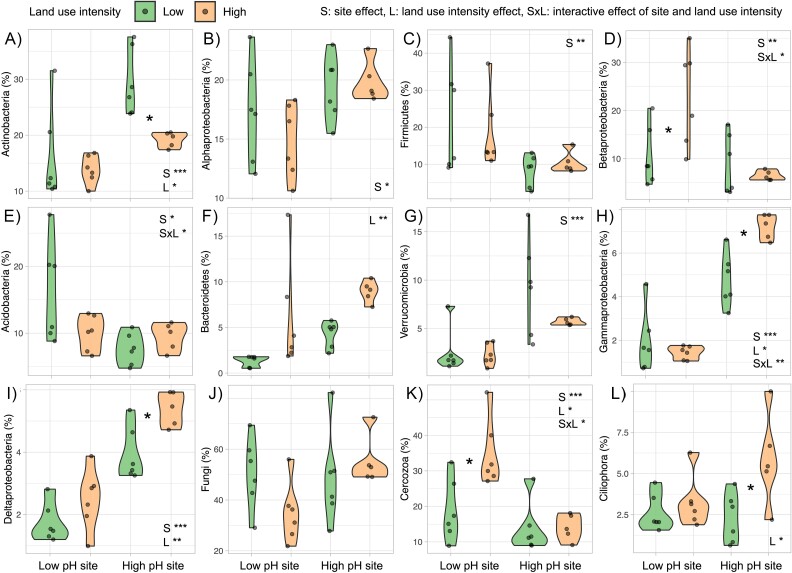
The soil microbiome determines the fate of plant-fixed carbon. The shifts in soil properties caused by land use change leads to modifications in microbiome function, resulting in either loss or gain of soil organic carbon (SOC). Soil pH is the primary factor regulating microbiome characteristics leading to distinct pathways of microbial carbon cycling, but the underlying mechanisms remain understudied. Here, the taxa-trait relationships behind the variable fate of SOC were investigated using metaproteomics, metabarcoding, and a C-labeled litter decomposition experiment across two temperate sites with differing soil pH each with a paired land use intensity contrast. C incorporation into microbial biomass increased with land use intensification in low-pH soil but decreased in high-pH soil, with potential impact on carbon use efficiency in opposing directions. Reduction in biosynthesis traits was due to increased abundance of proteins linked to resource acquisition and stress tolerance. These trait trade-offs were underpinned by land use intensification-induced changes in dominant taxa with distinct traits. We observed divergent pH-controlled pathways of SOC cycling. In low-pH soil, land use intensification alleviates microbial abiotic stress resulting in increased biomass production but promotes decomposition and SOC loss. In contrast, in high-pH soil, land use intensification increases microbial physiological constraints and decreases biomass production, leading to reduced necromass build-up and SOC stabilization. We demonstrate how microbial biomass production and respiration dynamics and therefore carbon use efficiency can be decoupled from SOC highlighting the need for its careful consideration in managing SOC storage for soil health and climate change mitigation.
土壤微生物群落决定了植物固定碳的归宿。土地利用变化引起的土壤性质变化会导致微生物群落功能的改变,从而导致土壤有机碳(SOC)的损失或增加。土壤pH是调节微生物群落特征的主要因素,导致微生物碳循环的不同途径,但其潜在机制仍未得到充分研究。在这里,我们使用宏蛋白质组学、代谢条形码技术以及在两个土壤pH不同且土地利用强度形成配对对比的温带地点进行的碳标记凋落物分解实验,研究了SOC不同归宿背后的分类群-性状关系。在低pH土壤中,碳向微生物生物量中的掺入随着土地利用强度的增加而增加,但在高pH土壤中则减少,这对碳利用效率产生了相反方向的潜在影响。生物合成性状的减少是由于与资源获取和胁迫耐受性相关的蛋白质丰度增加。这些性状权衡的基础是土地利用强度增加导致具有不同性状的优势分类群发生变化。我们观察到SOC循环存在不同的pH控制途径。在低pH土壤中,土地利用强度的增加减轻了微生物的非生物胁迫,导致生物量生产增加,但促进了分解和SOC损失。相反,在高pH土壤中,土地利用强度的增加增加了微生物的生理限制并降低了生物量生产,导致坏死物质积累减少和SOC稳定。我们证明了微生物生物量生产和呼吸动态以及因此的碳利用效率如何与SOC脱钩,强调了在管理SOC储存以促进土壤健康和缓解气候变化时需要仔细考虑这一点。