Solina Centre for International Development and Research, 8 Libreville Cres, Wuse, Abuja, Federal Capital Territory, 904101, Nigeria.
Bill and Melinda Gates Foundation, 45 Aguiyi Ironsi St, Wuse, Abuja, Federal Capital Territory, 904101, Nigeria.
BMC Health Serv Res. 2024 Nov 14;24(1):1404. doi: 10.1186/s12913-024-11867-3.
This evaluation research utilized both qualitative and quantitative methods to assess the implementation of the National Primary Health Care Development Agency (NPHCDA) gateway of the Basic Health Care Provision Fund (BHCPF) across six states in Northern Nigeria: Bauchi, Borno, Kaduna, Kano, Sokoto, and Yobe.
This was a mixed-method research that utilized longitudinal surveys and Key informant interviews to gather information about the implementation status of the BHCPF-NPHCDA gateway. Checklists were developed based on the BHCPF's national guidelines to gather quantitative data, while simple open-ended questionnaires were used to collect qualitative data from the state BHCPF Program Implementation Unit (PIU) focal persons as key informants.
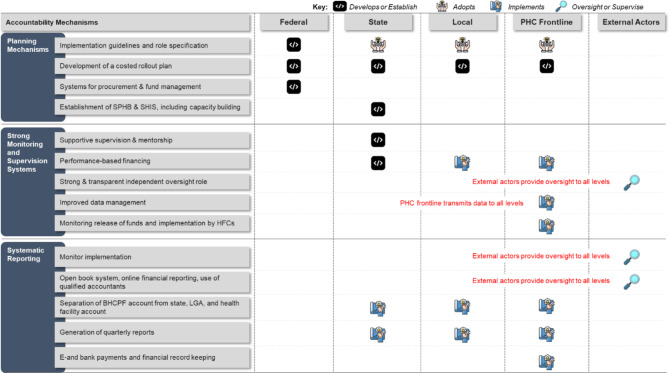
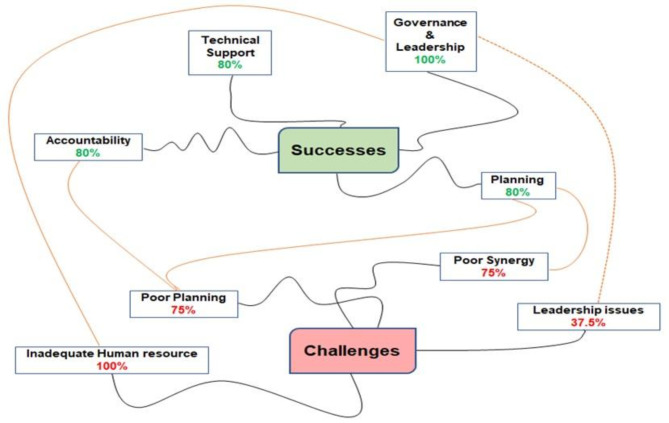
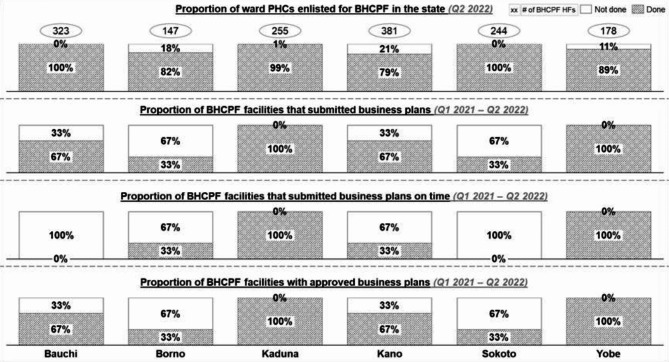
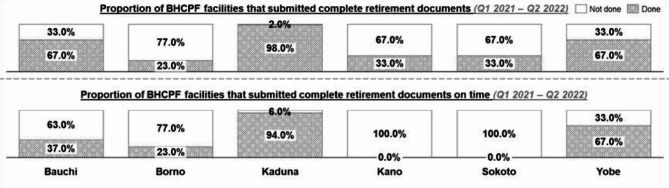
The result revealed that the NPHCDA had accredited these six states to use one Primary Health Care (PHC) facility in each political ward to implement the BHCPF. Factors that contributed to the success achieved in some states included the early completion of contingent start-up activities, well-established coordination structures, strong support from partners, and the availability of established financial management systems. However, the delays in the submission of quarterly business plans by the BHCPF facilities affected timely approval and fund disbursement. Other challenges included staff capacity gaps, inadequate human resources, and poor management and supervision from the state health agency teams.
There was suboptimal implementation of the BHCPF in at least one thematic area across all states. Therefore, actions such as government commitment for improved coordination, continuous capacity building, effective monitoring and evaluation, and targeted supportive supervision using innovative approaches should be undertaken to improve the program's implementation. In a broader setting, the insights from BHCPF implementation are valuable for LMICs, offering guidance on overcoming implementation challenges associated with PHC financing. This research provides a resource for enhancing healthcare financing strategies in similar contexts.
本评估研究采用定性和定量方法,评估了尼日利亚北部六个州(包奇、博尔诺、卡杜纳、卡诺、索科托和约贝)基本保健提供基金(BHCPF)国家初级卫生保健发展机构(NPHCDA)网关的实施情况。
这是一项混合方法研究,利用纵向调查和关键知情人访谈来收集有关 BHCPF-NPHCDA 网关实施情况的信息。根据 BHCPF 的国家准则制定了检查表,以收集定量数据,而从州 BHCPF 方案实施单位(PIU)焦点人物作为关键知情人收集定性数据则使用了简单的开放式问卷。
结果表明,NPHCDA 已授权这六个州使用每个行政区的一个初级保健(PHC)设施来实施 BHCPF。一些州取得成功的因素包括:迅速完成应急启动活动、建立健全的协调结构、合作伙伴的大力支持以及建立健全的财务管理系统。然而,BHCPF 设施提交季度业务计划的延迟影响了及时批准和资金拨付。其他挑战包括工作人员能力差距、人力资源不足以及州卫生机构团队的管理和监督不善。
至少在所有州的一个专题领域,BHCPF 的实施情况并不理想。因此,应采取政府承诺改善协调、持续能力建设、有效监测和评估以及使用创新方法进行有针对性的支持性监督等行动,以改善该方案的实施。在更广泛的范围内,BHCPF 实施的见解对 LMIC 具有价值,为克服与初级保健融资相关的实施挑战提供了指导。这项研究为在类似情况下加强医疗保健融资战略提供了资源。