Pedrinaci Ignacio, Ben Dor Betty, Rousson Dominique, Lanis Alejandro, Sanz-Esporrin Javier, Pala Kevser, Gallucci German O, Hamilton Adam
Department of Restorative Dentistry and Biomaterials Science, Harvard School of Dental Medicine, Harvard University, Boston, Massachusetts, USA.
Section of Graduate Periodontology, School of Dentistry, University Complutense, Madrid, Spain.
Clin Implant Dent Relat Res. 2025 Feb;27(1):e13396. doi: 10.1111/cid.13396. Epub 2024 Nov 17.
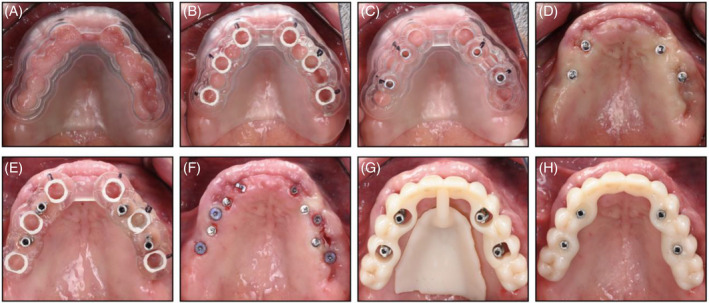
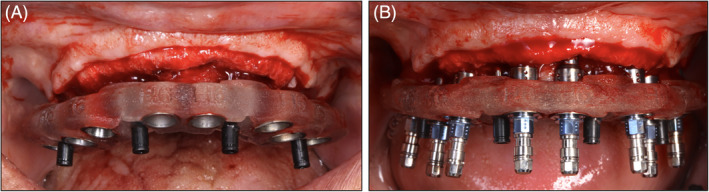
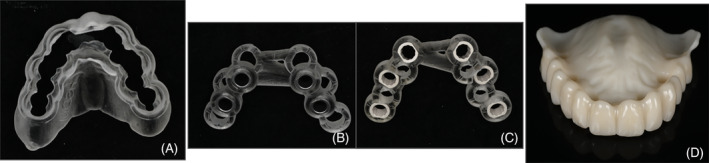
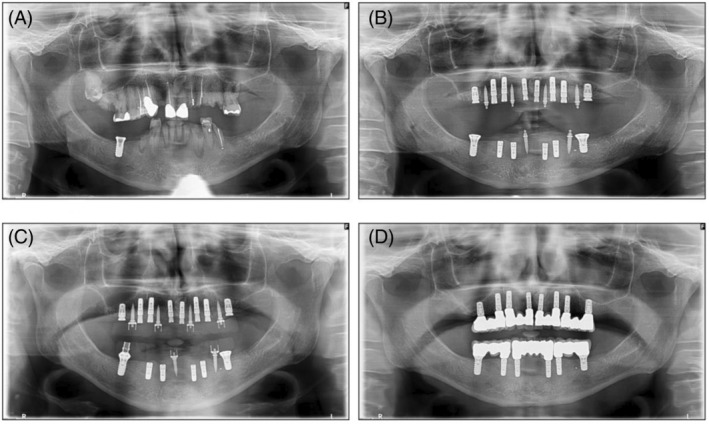
Using mini implants as transitional implants (TIs) for complete arch implant-supported rehabilitations may overcome limitations associated with mucosa-supported surgical guides and facilitate immediate fixed provisionalization. This study aimed to assess the success of TIs in supporting surgical guides for implant placement and fixed provisional prostheses.
Patients who received TIs between 2012 and 2023 for a complete arch implant-supported prosthesis were evaluated retrospectively. Patient demographic data, TI functionality in supporting a surgical guide and supporting a complete arch provisional prosthesis, and dates of TI placement and regular implant placement were collected. Descriptive statistics were used to determine the survival rate and success rate for TIs.
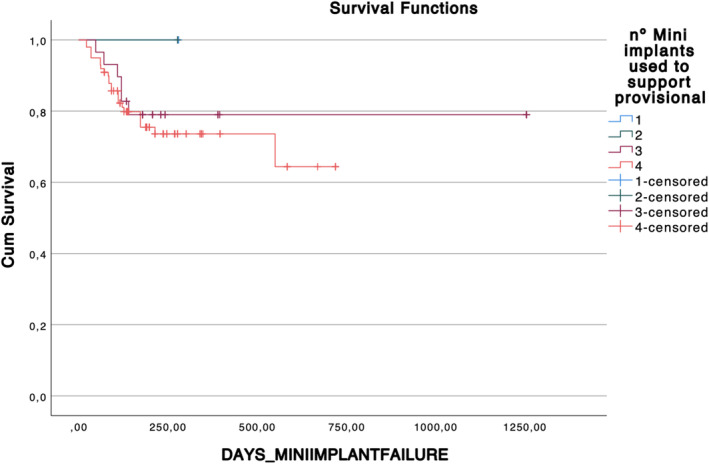
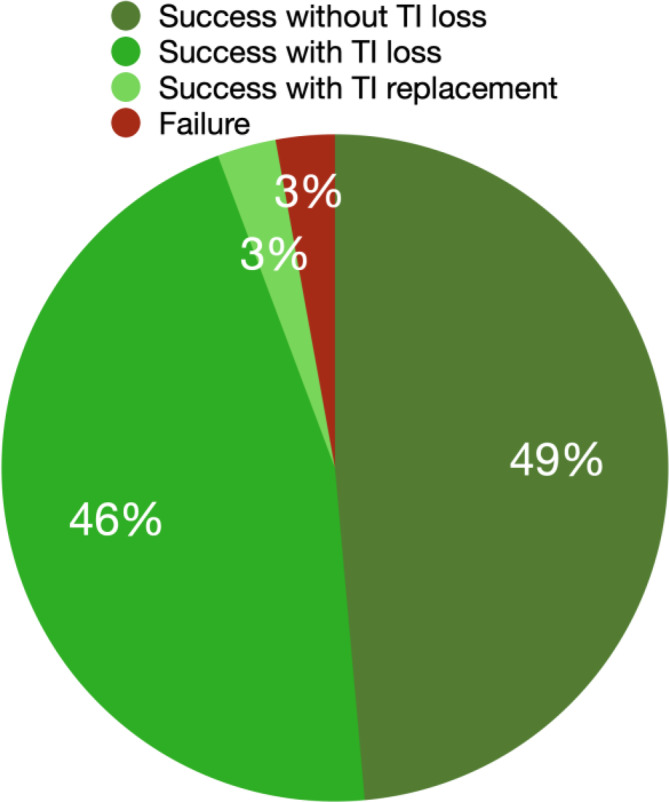
Twenty-six patients, 35 jaws, 136 TIs, and 216 regular implants were included. The survival rate of TIs was 74.26%; however, the use of TIs yielded success in 97% of jaws for supporting a surgical guide and a fixed complete-arch provisional prosthesis throughout the complete provisional phase. An average of 4 TIs per maxilla and 3 TIs per mandible supported surgical guides. Thirty-five provisional prostheses were placed on an average of 4 TIs in the maxilla and 3 TIs in the mandible. Thirty-four provisional prostheses were successfully supported by TIs and regular implants until final restoration delivery. The survival of regular implants placed in conjunction with the use of TIs was 98%.
Using TIs to support a surgical guide and provisional prosthesis may be a predictable approach with a high success rate. All surgical guides planned to be supported on TIs were successful. Despite premature loss or replacement of TIs, this approach was able to support most provisional prostheses until the regular implants could be loaded.
使用微型种植体作为过渡种植体(TIs)进行全牙弓种植体支持的修复,可能会克服与黏膜支持式手术导板相关的局限性,并便于立即进行固定临时修复。本研究旨在评估过渡种植体在支持种植体植入手术导板和固定临时修复体方面的成功率。
对2012年至2023年间接受过渡种植体用于全牙弓种植体支持式修复的患者进行回顾性评估。收集患者的人口统计学数据、过渡种植体在支持手术导板和全牙弓临时修复体方面的功能,以及过渡种植体植入日期和常规种植体植入日期。采用描述性统计方法确定过渡种植体的生存率和成功率。
纳入26例患者、35个颌骨、136枚过渡种植体和216枚常规种植体。过渡种植体的生存率为74.26%;然而,在整个临时修复阶段,97%的颌骨使用过渡种植体成功支持了手术导板和固定全牙弓临时修复体。上颌平均每侧使用4枚过渡种植体、下颌平均每侧使用3枚过渡种植体来支持手术导板。35个临时修复体平均在上颌由4枚过渡种植体、在下颌由3枚过渡种植体支持。34个临时修复体在最终修复体交付前由过渡种植体和常规种植体成功支持。与过渡种植体联合植入的常规种植体的生存率为98%。
使用过渡种植体支持手术导板和临时修复体可能是一种成功率高且可预测的方法。所有计划由过渡种植体支持的手术导板均获成功。尽管过渡种植体有过早丢失或更换的情况,但这种方法能够在常规种植体能够加载之前支持大多数临时修复体。