Department of Cardiovascular Surgery of the First Affiliated Hospital & Institute for Cardiovascular Science, State Key Laboratory of Radiation Medicine and Protection, Suzhou Medical College, Collaborative Innovation Center of Hematology, Soochow University, Suzhou, Jiangsu, 215123, P. R. China.
Department of Orthopedics, The Second Hospital of Jilin University, Changchun, Jilin, 130041, P. R. China.
Signal Transduct Target Ther. 2024 Nov 18;9(1):305. doi: 10.1038/s41392-024-02013-w.
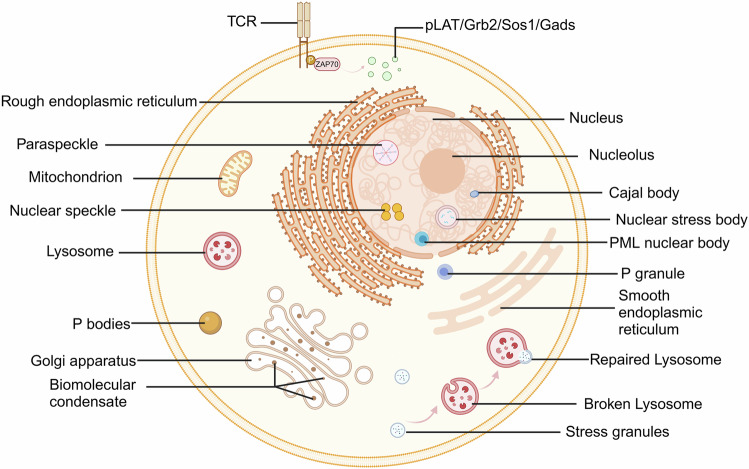
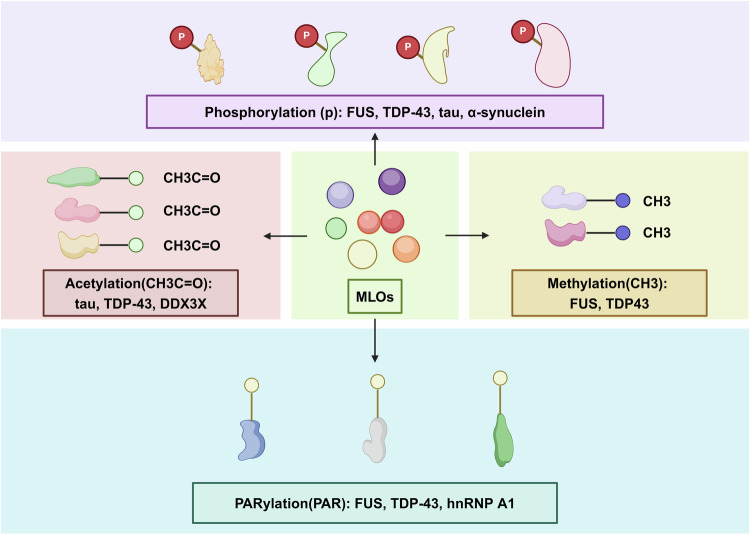
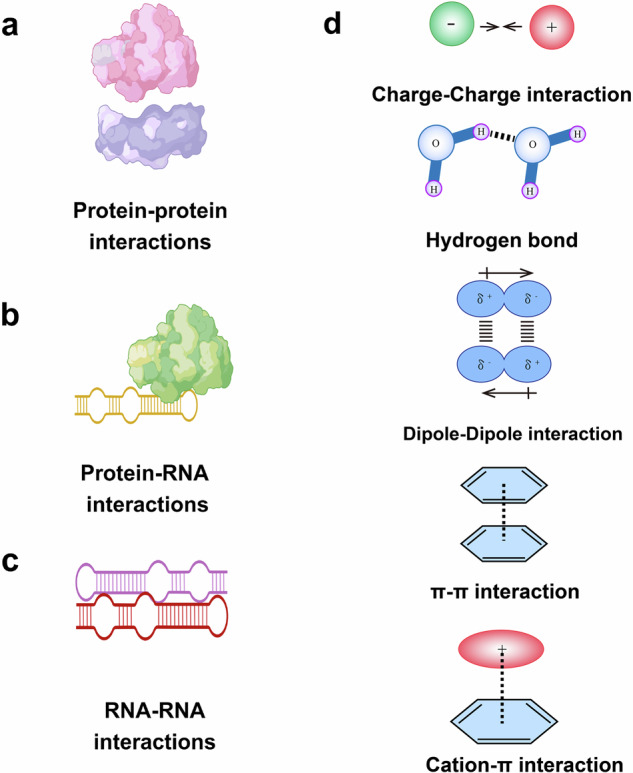
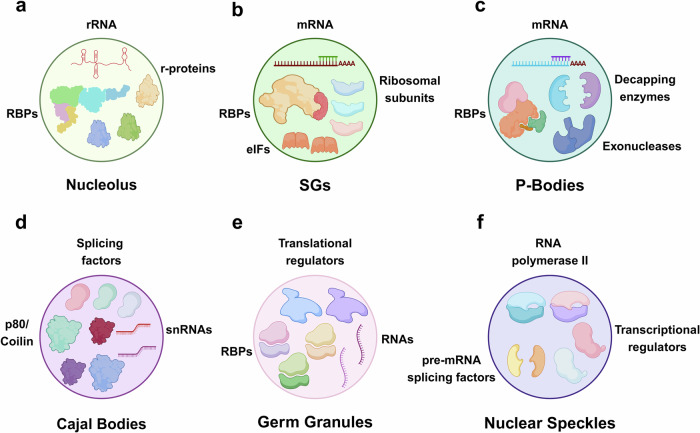
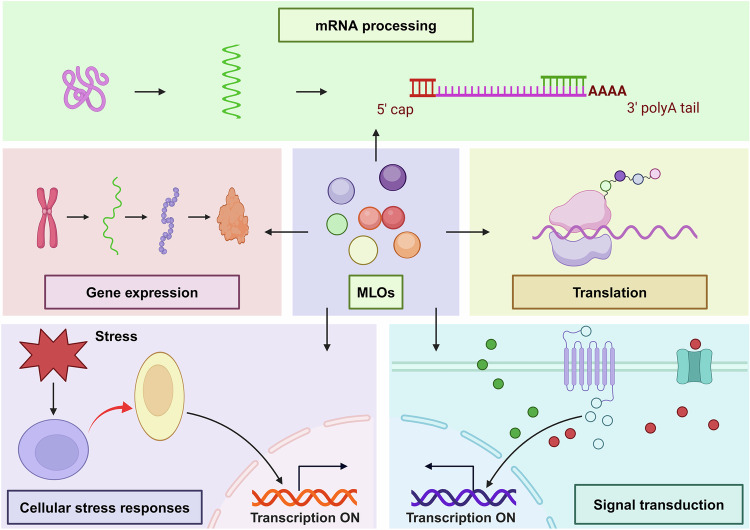
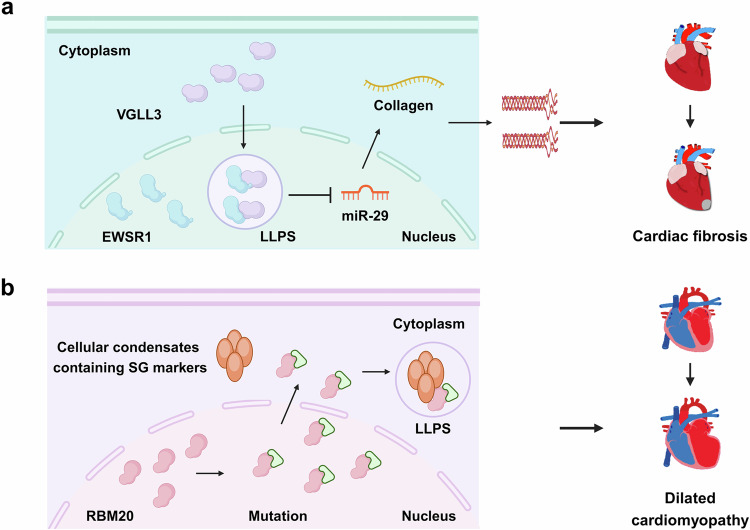
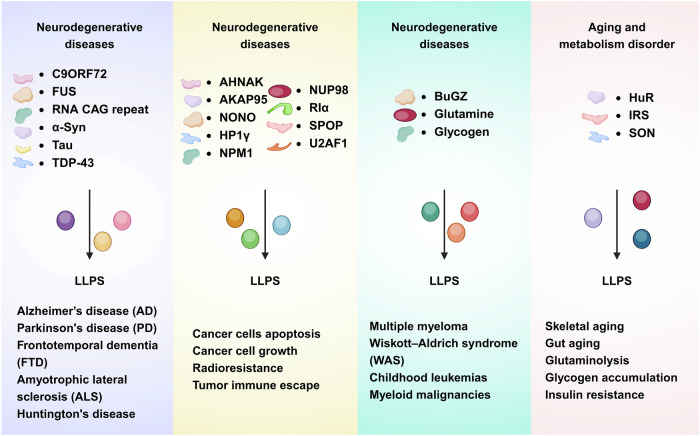
Once considered unconventional cellular structures, membraneless organelles (MLOs), cellular substructures involved in biological processes or pathways under physiological conditions, have emerged as central players in cellular dynamics and function. MLOs can be formed through liquid-liquid phase separation (LLPS), resulting in the creation of condensates. From neurodegenerative disorders, cardiovascular diseases, aging, and metabolism to cancer, the influence of MLOs on human health and disease extends widely. This review discusses the underlying mechanisms of LLPS, the biophysical properties that drive MLO formation, and their implications for cellular function. We highlight recent advances in understanding how the physicochemical environment, molecular interactions, and post-translational modifications regulate LLPS and MLO dynamics. This review offers an overview of the discovery and current understanding of MLOs and biomolecular condensate in physiological conditions and diseases. This article aims to deliver the latest insights on MLOs and LLPS by analyzing current research, highlighting their critical role in cellular organization. The discussion also covers the role of membrane-associated condensates in cell signaling, including those involving T-cell receptors, stress granules linked to lysosomes, and biomolecular condensates within the Golgi apparatus. Additionally, the potential of targeting LLPS in clinical settings is explored, highlighting promising avenues for future research and therapeutic interventions.
曾经被认为是非传统的细胞结构,无膜细胞器(MLOs),即参与生理条件下生物过程或途径的细胞亚结构,已经成为细胞动态和功能的核心参与者。MLOs 可以通过液-液相分离(LLPS)形成,从而产生凝聚物。从神经退行性疾病、心血管疾病、衰老和代谢到癌症,MLOs 对人类健康和疾病的影响广泛存在。这篇综述讨论了 LLPS 的潜在机制、驱动 MLO 形成的生物物理特性,以及它们对细胞功能的影响。我们强调了最近在理解物理化学环境、分子相互作用和翻译后修饰如何调节 LLPS 和 MLO 动力学方面的进展。这篇综述概述了 MLOs 和生物分子凝聚物在生理条件和疾病中的发现和当前理解。本文旨在通过分析当前的研究,提供关于 MLOs 和 LLPS 的最新见解,强调它们在细胞组织中的关键作用。讨论还涵盖了膜相关凝聚物在细胞信号转导中的作用,包括涉及 T 细胞受体、与溶酶体相关的应激颗粒,以及高尔基体中的生物分子凝聚物。此外,还探讨了在临床环境中靶向 LLPS 的潜力,强调了未来研究和治疗干预的有前途的途径。