Almabruk Bandar A, Alharbi Saleh H, Alsaqer Fawaz S, Al Essa Ashwaq, Eid Husain, Alqahtani Omar, Badawood Muaath A, Alzahrani Emad M, Alzahrani Eyad M, Alshaikh Fatimah K, Alfaraj Rayan M, Alarqan Hadeel H, Aljuaid Rakan, Al Sharari Afit, Alghamdi Majed A
Internal Medicine, King Salman Hospital, Riyadh, SAU.
Medicine, Ibn Sina National College for Medical Studies, Jeddah, SAU.
Cureus. 2024 Oct 16;16(10):e71623. doi: 10.7759/cureus.71623. eCollection 2024 Oct.
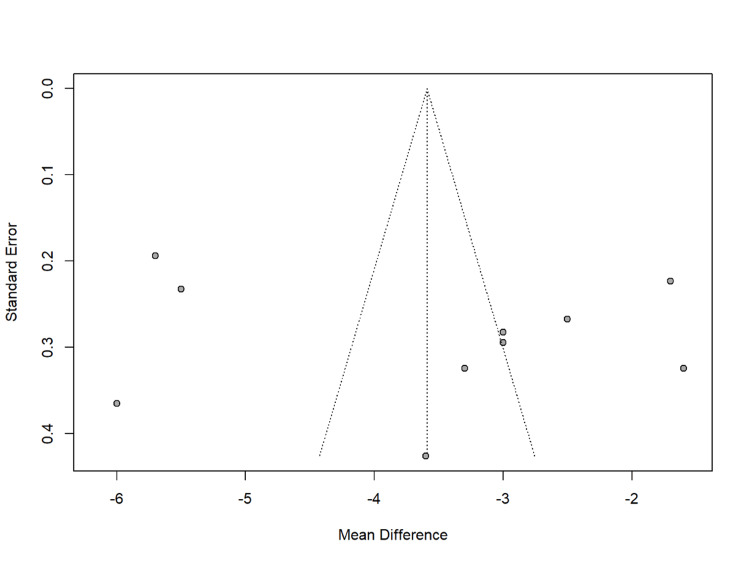
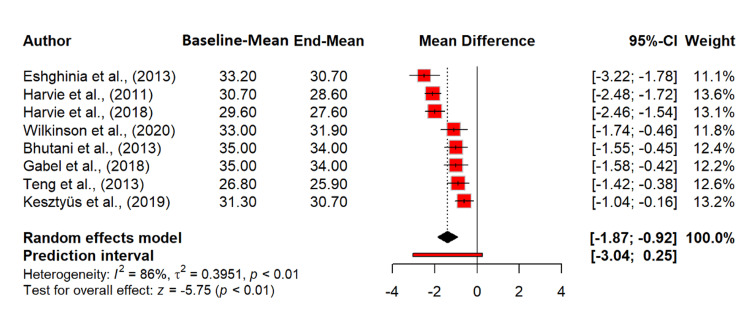
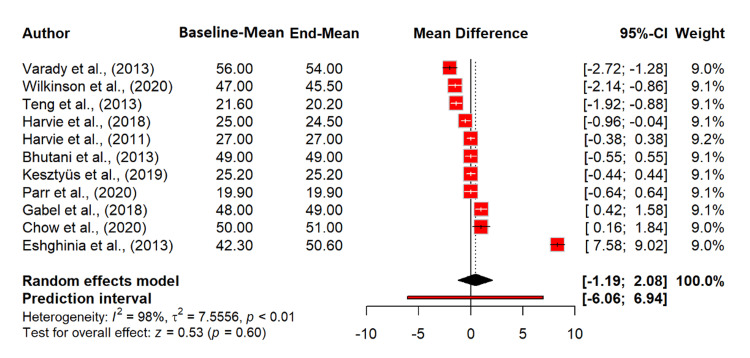
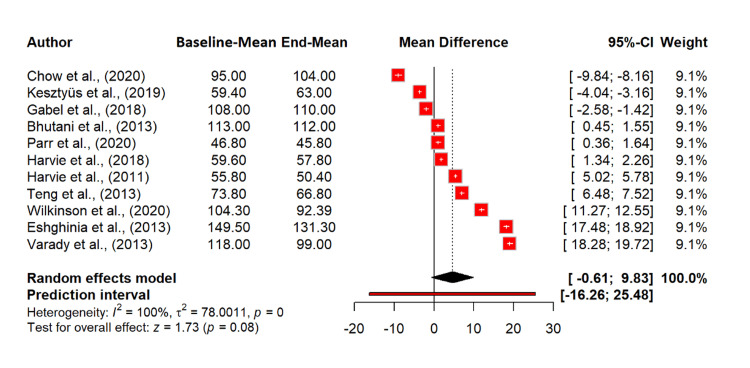
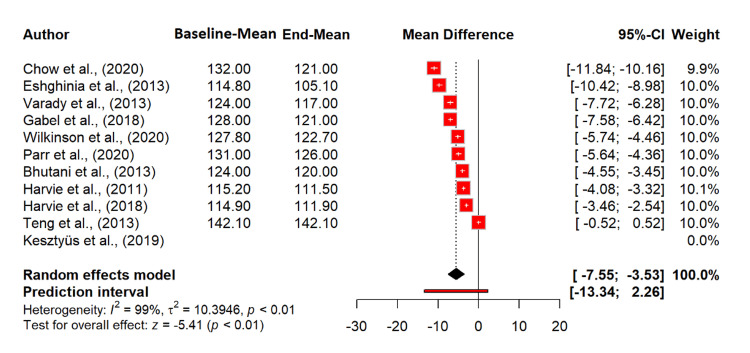
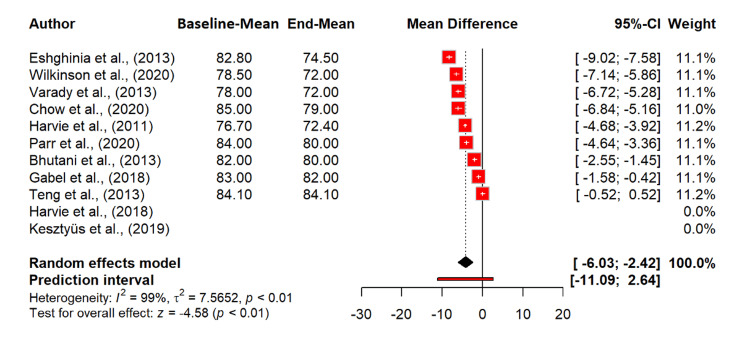
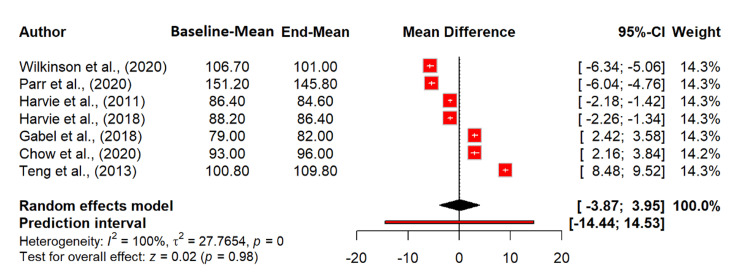
Intermittent fasting has gained popularity as a dietary intervention to improve metabolic health. Metabolic syndrome may benefit from intermittent fasting by improving weight, cholesterol levels, blood pressure (BP), and glucose control. This study aims to assess the effects of intermittent fasting on weight, BMI, cholesterol levels, BP, and glucose in individuals with metabolic syndrome. This systematic review and meta-analysis followed Preferred Reporting Items for Systematic Reviews and Meta-Analysis (PRISMA) guidelines and included 11 studies examining the effects of intermittent fasting on metabolic syndrome. A comprehensive search of PubMed and Google Scholar identified 6,451 studies, of which 11 met the inclusion criteria. Data on weight, BMI, cholesterol, BP, and glucose levels were extracted, and a random effects meta-analysis was conducted to assess outcomes. Analysis showed significant improvements in weight, with a mean reduction of 3.59 kg (95% CI: -4.59 to -2.59, p < 0.0001) and a decrease in BMI of 1.39 kg/m (95% CI: -1.87 to -0.92, p < 0.0001). Low-density lipoprotein (LDL) cholesterol levels dropped by 56.22 mg/dL (95% CI: -80.14 to -32.29, p < 0.0001), and systolic BP decreased by 5.54 mmHg (95% CI: -7.55 to -3.53, p < 0.0001). However, high-density lipoprotein (HDL) cholesterol showed minimal changes, and glucose levels remained stable. Intermittent fasting led to significant reductions in weight, BMI, LDL cholesterol, and BP, making it a promising non-pharmacological strategy for managing metabolic syndrome. Further research is needed to explore long-term effects and optimal fasting protocols for different populations.
间歇性禁食作为一种改善代谢健康的饮食干预方式已越来越受欢迎。代谢综合征可能通过改善体重、胆固醇水平、血压(BP)和血糖控制而从间歇性禁食中获益。本研究旨在评估间歇性禁食对代谢综合征患者体重、体重指数(BMI)、胆固醇水平、血压和血糖的影响。本系统评价和荟萃分析遵循系统评价和荟萃分析的首选报告项目(PRISMA)指南,纳入了11项研究间歇性禁食对代谢综合征影响的研究。对PubMed和谷歌学术进行全面检索,共识别出6451项研究,其中11项符合纳入标准。提取了体重、BMI、胆固醇、血压和血糖水平的数据,并进行随机效应荟萃分析以评估结果。分析显示体重有显著改善,平均减轻3.59千克(95%置信区间:-4.59至-2.59,p<0.0001),BMI降低1.39千克/米²(95%置信区间:-1.87至-0.92,p<0.0001)。低密度脂蛋白(LDL)胆固醇水平下降了56.22毫克/分升(95%置信区间:-80.14至-32.29,p<0.0001),收缩压下降了5.54毫米汞柱(95%置信区间:-7.55至-3.53,p<0.0001)。然而,高密度脂蛋白(HDL)胆固醇变化极小,血糖水平保持稳定。间歇性禁食导致体重、BMI、LDL胆固醇和血压显著降低,使其成为管理代谢综合征的一种有前景的非药物策略。需要进一步研究以探索其对不同人群的长期影响和最佳禁食方案。