Shalabi Hani, Hassan Abdulrahman S, Al-Zahrani Faris A, Alarbeidi Abdullah H, Mesawa Mohammed, Rizk Hisham, Aljubayri Abrar A
Internal Medicine, University of Jeddah, Jeddah, SAU.
Medicine and Surgery, University of Jeddah, Jeddah, SAU.
Cureus. 2023 Feb 7;15(2):e34722. doi: 10.7759/cureus.34722. eCollection 2023 Feb.
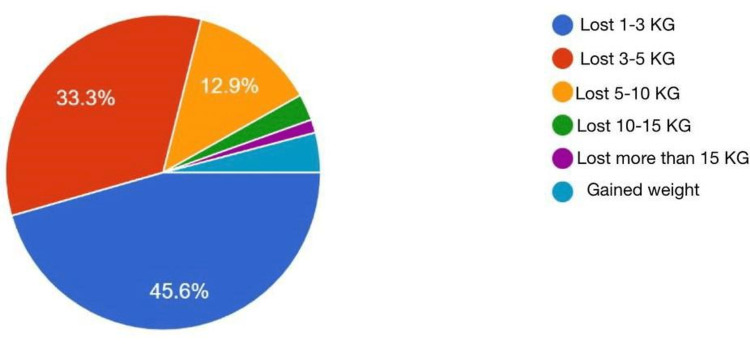
Introduction Intermittent fasting (IF) is an eating pattern that alternates between periods of fasting and eating. IF has shown many benefits for people who are obese and are trying to lose weight and attain a healthy lifestyle. The aim of our study was to evaluate the efficacy of IF and how it can be used as a daily lifestyle as well as to measure the knowledge of the IF diet among the Saudi population about its benefits, side effects, and life quality. Method For this retrospective cross-sectional study, data about the common side effects, benefits, and the measurement of the quality of life were collected by a survey distributed using Google Forms. Microsoft Excel was used for the data analysis, with the data and results being mainly expressed as numbers and percentages. Results Among the 147 individuals practicing the IF plan who were surveyed, male participants were more than females (53.7% vs 46.3%). The highest percentage of respondents were in the age group 18-35 years old, and 88 individuals (59.9%) had a high body mass index (BMI). Duration of fasting varied from less than a month to three months in 70.8%, and 71.4% of participants had undertaken IF several times. Side effects were headache (61.3%), lethargy (68%), mood swings (57.8%), and lastly dizziness and polyuria (55.8% and 46.2%, respectively). Slightly more females expressed happiness than males (86.8% vs 83.6%). Conclusion The IF diet is an efficient dietary plan for those aiming at a weight loss journey over a short duration, ranging from less than a month up to three months. Minimal side effects were found during fasting, being of different intensities, which did not need surgical or medical treatment. All in all, most of our respondents were pleased with their experience and saw excellent weight loss results using the IF diet.
引言 间歇性禁食(IF)是一种在禁食期和进食期之间交替的饮食模式。对于肥胖且试图减肥并获得健康生活方式的人来说,间歇性禁食已显示出诸多益处。我们研究的目的是评估间歇性禁食的功效以及它如何作为一种日常生活方式来使用,同时衡量沙特人群对间歇性禁食饮食的益处、副作用和生活质量的了解程度。
方法 对于这项回顾性横断面研究,通过使用谷歌表单分发的调查问卷收集有关常见副作用、益处和生活质量测量的数据。使用微软Excel进行数据分析,数据和结果主要以数字和百分比表示。
结果 在接受调查的147名实施间歇性禁食计划的个体中,男性参与者多于女性(53.7%对46.3%)。最高比例的受访者年龄在18 - 35岁之间,88人(59.9%)身体质量指数(BMI)较高。70.8%的人禁食持续时间从不到一个月到三个月不等,71.4%的参与者曾多次进行间歇性禁食。副作用包括头痛(61.3%)、嗜睡(68%)、情绪波动(57.8%),最后是头晕和多尿(分别为55.8%和46.2%)。表示开心的女性略多于男性(86.8%对83.6%)。
结论 对于那些旨在进行为期不到一个月至三个月的短期减肥之旅的人来说,间歇性禁食饮食是一种有效的饮食计划。在禁食期间发现的副作用最小,强度各异,无需手术或药物治疗。总而言之,我们的大多数受访者对他们的经历感到满意,并通过间歇性禁食饮食看到了出色的减肥效果。