Department of Molecular Diagnostics and Experimental Therapeutics, Beckman Research Institute at City of Hope, Monrovia, CA, USA.
Gastroenterology and Gastrointestinal Endoscopy Unit, Vita-Salute San Raffaele University, IRCCS San Raffaele Hospital, Milan, Italy.
Mol Cancer. 2024 Nov 19;23(1):259. doi: 10.1186/s12943-024-02174-w.
Biomarkers have revolutionized the management of colorectal cancer (CRC), facilitating early detection, prevention, personalized treatment, and minimal residual disease (MRD) monitoring. This review explores current CRC screening strategies and emerging biomarker applications.
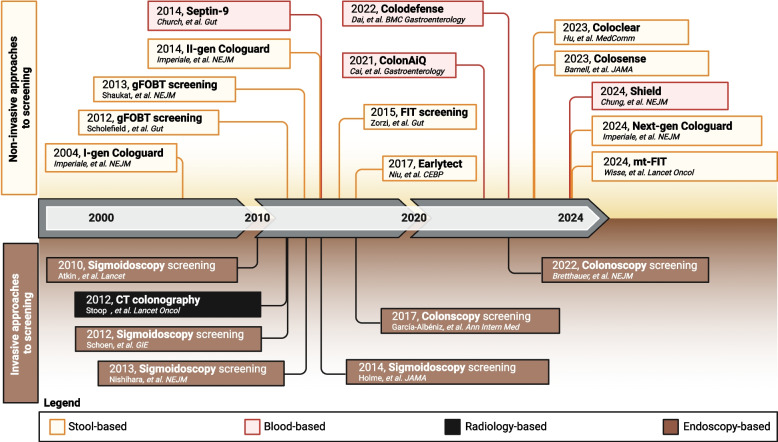
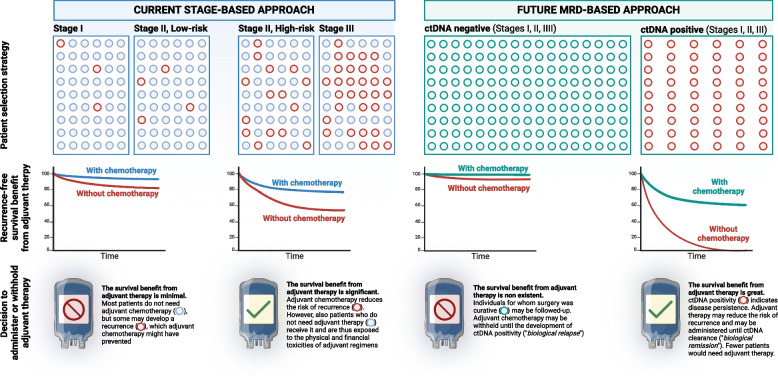
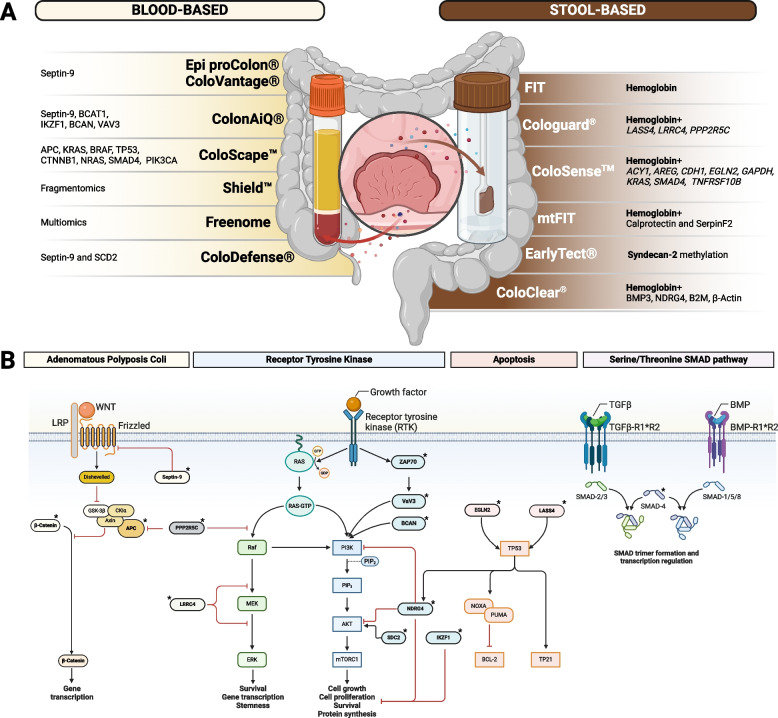
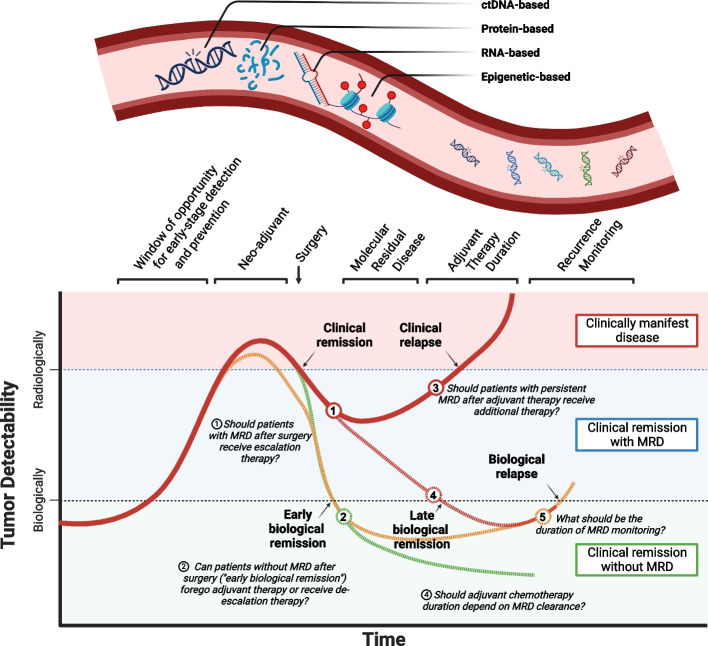
We summarize the landscape of non-invasive CRC screening and MRD detection strategies, discuss the limitations of the current approaches, and highlight the promising potential of novel biomarker solutions. The fecal immunochemical test remained the cornerstone of CRC screening, but its sensitivity has been improved by assays that combined its performance with other stool analytes. However, their sensitivity for advanced adenomas and the patient compliance both remain suboptimal. Blood-based tests promise to increase compliance but require further refinement to compete with stool-based biomarker tests. The ideal scenario involves leveraging blood tests to increase screening participation, and simultaneously promote stool- and endoscopy-based screening among those who are compliant. Once solely reliant on upfront surgery followed by stage and pathology-driven adjuvant chemotherapy, the treatment of stage II and III colon cancer has undergone a revolutionary transformation with the advent of MRD testing after surgery. A decade ago, the concept of using a post-surgical test instead of stage and pathology to determine the need for adjuvant chemotherapy was disruptive. Today, a blood test may be more informative of the need for chemotherapy than the stage at diagnosis.
Biomarker research is not just improving, but bringing a transformative change to CRC clinical management. Early detection is not just getting better, but improving thanks to a multi-modality approach, and personalized treatment plans are not just becoming a reality, but a promising future with MRD testing.
生物标志物彻底改变了结直肠癌(CRC)的管理,促进了早期发现、预防、个性化治疗和微小残留病(MRD)监测。本综述探讨了当前 CRC 的筛查策略和新兴生物标志物应用。
我们总结了非侵入性 CRC 筛查和 MRD 检测策略的现状,讨论了当前方法的局限性,并强调了新型生物标志物解决方案的有前途的潜力。粪便免疫化学试验仍然是 CRC 筛查的基石,但通过将其性能与其他粪便分析物相结合的检测方法,提高了其敏感性。然而,它们对高级腺瘤的敏感性和患者的依从性都不理想。基于血液的检测有望提高依从性,但需要进一步改进,以与基于粪便的生物标志物检测竞争。理想情况下,涉及利用血液检测来提高筛查参与度,同时促进那些依从性高的人群进行粪便和内镜筛查。曾经仅仅依赖于初始手术,然后根据分期和病理结果进行辅助化疗,随着术后 MRD 检测的出现,II 期和 III 期结肠癌的治疗发生了革命性的转变。十年前,使用术后检测而不是分期和病理来确定是否需要辅助化疗的概念是具有颠覆性的。如今,血液检测可能比诊断时的分期更能反映化疗的需求。
生物标志物研究不仅在改善,而且正在给 CRC 临床管理带来变革性的变化。早期检测不仅越来越好,而且由于多模态方法,改善了早期检测的效果,个性化治疗方案不仅正在成为现实,而且随着 MRD 检测,未来的前景更加光明。