Başbulut Eşe, Bilgin Melek, Işler Hacer, Şen Ahmet, Kılıç Süleyman Sırrı, Çubukçu Mahcube
Department of Medical Microbiology, Samsun Training and Research Hospital, Samsun, Turkey.
Department of Anesthesia and Reanimation, Trabzon Faculty of Medicine, Trabzon, Turkey.
Risk Manag Healthc Policy. 2024 Nov 14;17:2789-2801. doi: 10.2147/RMHP.S472872. eCollection 2024.
The objective of this study is to compare the measles immunoglobulin G (IgG) and rubella IgG levels in patient groups with mild and severe COVID-19 disease and reveal the possible relationship.
This study was conducted among COVID-19-confirmed patients over 18, under 65 years of age. This study involved 75 participants- divided into two groups. The first group usually comprised asymptomatic patients who did not require hospitalization (n=43), and the second group consisted of patients who had diffuse pneumonia on thoracic CT and required hospitalization (n=32).
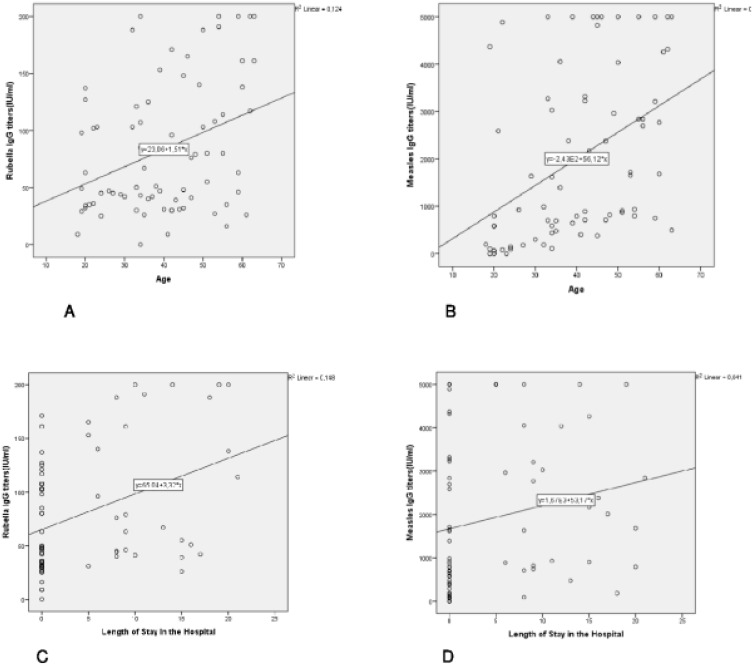
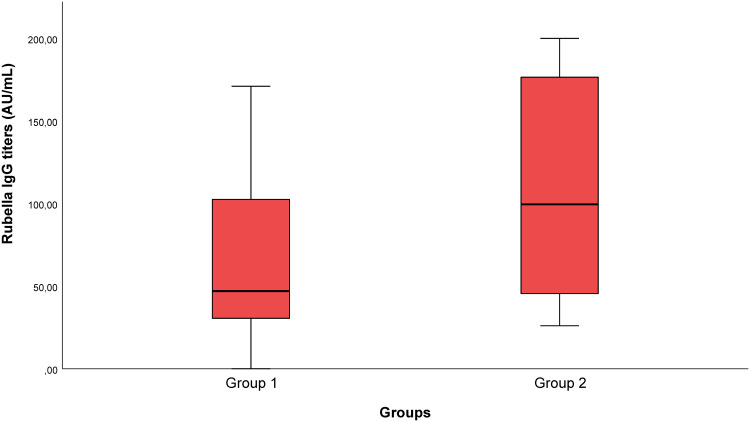
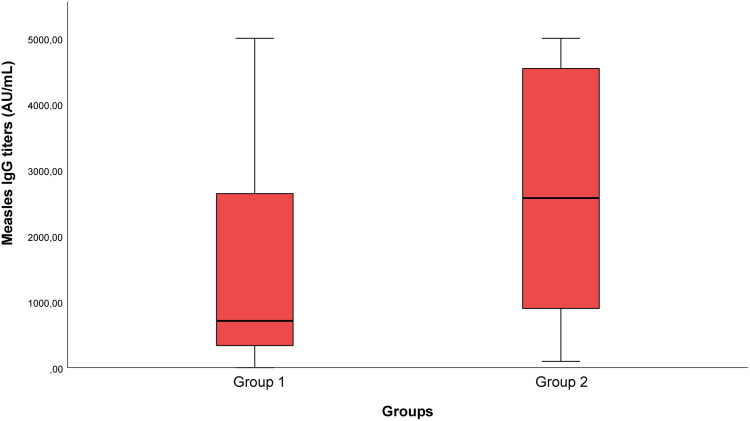
Anti-measles and anti-rubella IgG titers were detected to be higher in the group with severe disease compared to the group with mild disease (p=0.001 and p=0.001, respectively). The analyses were repeated by taking n=27 in Group 1 and n=27 in Group 2, which were similar in terms of age, gender and number. In the analysis performed without any age difference between the groups, no significant difference was found between the two groups in terms of Anti Measles IgG antibody titers (p=0.068). However, Anti Rubella antibody titers were found to be higher in the group with severe COVID-19 disease than in those with mild disease (p=0.03). Regardless of the severity of the disease, there was a positive correlation between Anti Rubella and Anti Measles IgG antibody titers and age (p=<0.001 Spearman's rho 0.517; p=0.008 Spearman's rho 0.304, respectively).
We believe that the pre-existing Anti-Rubella IgG antibodies in the patient may increase in parallel with the patient's viral load by recognizing the common macrodomain of SARS-CoV-2 and Rubella viruses. The common macrodomain of SARS-CoV-2 and Rubella viruses is also present in the attenuated rubella virus used in the MMR vaccine4. In this case, we predict that previously administered MMR vaccine may be protective for COVID-19 patients. disease compared to those with mild disease.
本研究的目的是比较轻症和重症 COVID-19 患者组中麻疹免疫球蛋白 G(IgG)和风疹 IgG 水平,并揭示可能的关系。
本研究在 18 岁以上、65 岁以下确诊为 COVID-19 的患者中进行。本研究涉及 75 名参与者,分为两组。第一组通常包括无症状且无需住院的患者(n = 43),第二组由胸部 CT 显示有弥漫性肺炎且需要住院的患者组成(n = 32)。
与轻症组相比,重症组中抗麻疹和抗风疹 IgG 滴度更高(分别为 p = 0.001 和 p = 0.001)。在第 1 组取 n = 27 和第 2 组取 n = 27 进行重复分析,两组在年龄、性别和数量方面相似。在两组无年龄差异的分析中,两组之间的抗麻疹 IgG 抗体滴度无显著差异(p = 0.068)。然而,重症 COVID-19 组的抗风疹抗体滴度高于轻症组(p = 0.03)。无论疾病严重程度如何,抗风疹和抗麻疹 IgG 抗体滴度与年龄之间均呈正相关(分别为 p < 0.001,Spearman 秩相关系数 rho 为 0.517;p = 0.008,Spearman 秩相关系数 rho 为 0.304)。
我们认为患者体内预先存在的抗风疹 IgG 抗体可能通过识别 SARS-CoV-2 和风疹病毒的共同大结构域,与患者的病毒载量平行增加。SARS-CoV-2 和风疹病毒的共同大结构域也存在于 MMR 疫苗中使用的减毒风疹病毒中。在这种情况下,我们预测先前接种的 MMR 疫苗可能对 COVID-19 患者具有保护作用。与轻症患者相比。