Bali Manya, Nadora Denise, Wu Olivia, Polizzi Kaila, Frezza Eldo
Medicine, College of Medicine, California Northstate University, Elk Grove, USA.
Surgery, College of Medicine, California Northstate University, Elk Grove, USA.
Cureus. 2024 Oct 18;16(10):e71808. doi: 10.7759/cureus.71808. eCollection 2024 Oct.
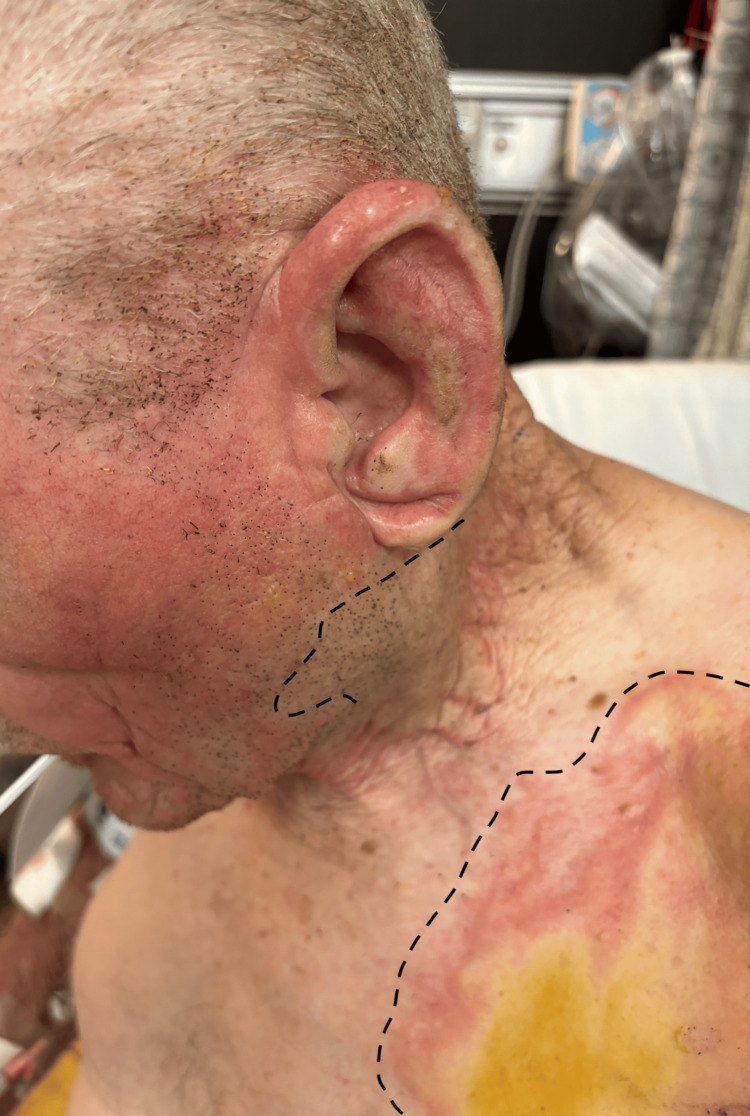
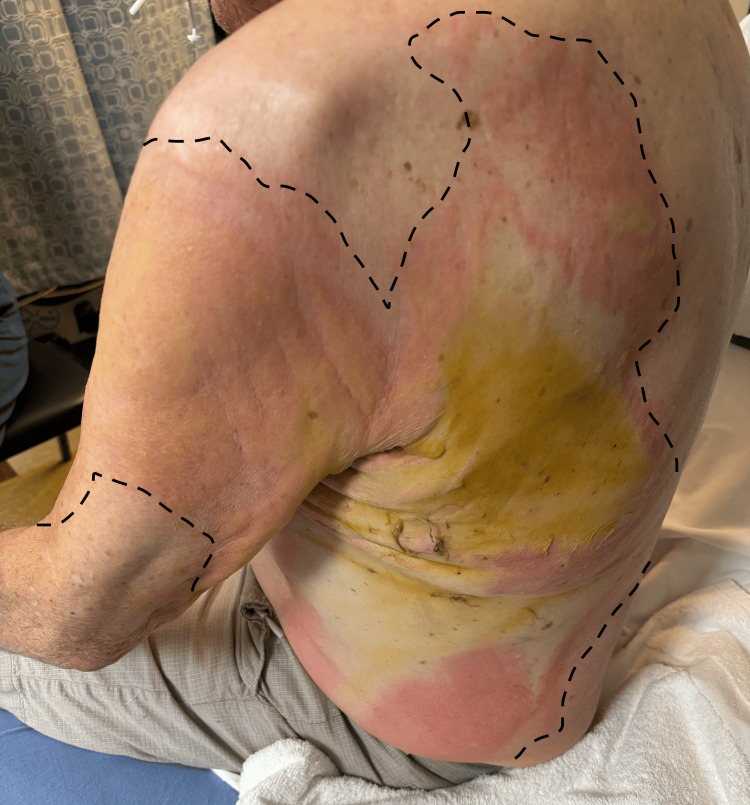
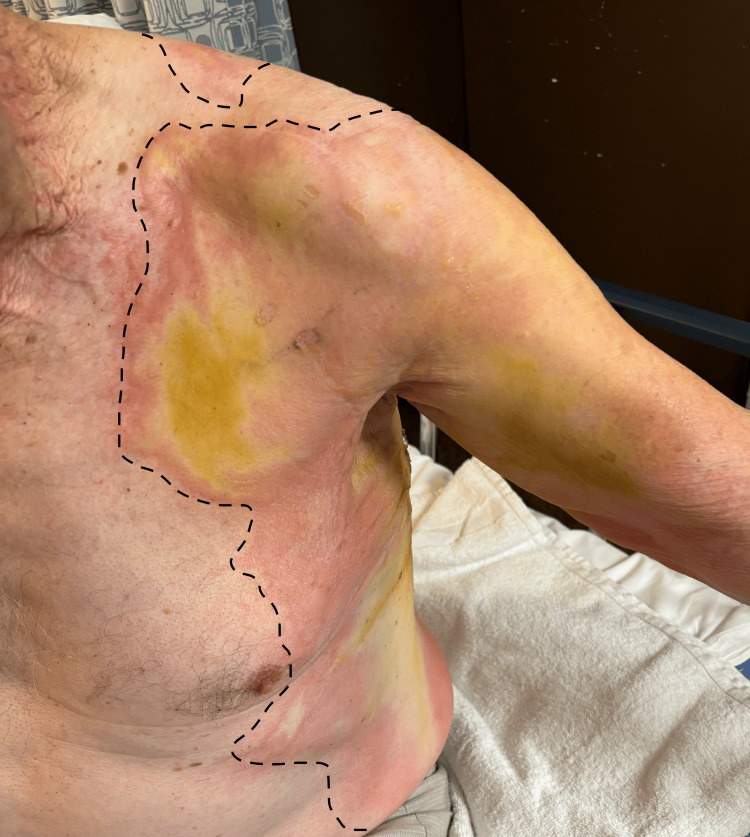
While advancements in critical care and burn treatment have improved over the decades, elderly burn victims continue to face high mortality rates. Measurements of frailty among patients have become popular tools for predicting burn outcomes over chronological age. In this report, we provide a case of a non-frail octogenarian burn victim who deteriorated rapidly during treatment, suggesting that frailty alone is not sufficient in predicting outcomes in older burn patients. An active 86-year-old male with hypertension presented to the emergency department with 35% total body surface area (TBSA) burns following a welding accident. He experienced second and third degree burns to his face, thorax, chest, back, and arms and had possible inhalation injury. Despite wound cleaning and fluid resuscitation, the patient's vitals and pain worsened while waiting for transfer to the burn unit, requiring an oxygen mask and intravenous hydromorphone to be administered multiple times. In the emergency department (ED), the patient also experienced myoglobinuria, decreased urine output, and progressive confusion. Frailty involves understanding how patient comorbidities and functional status influence the body's ability to respond to stressors. Unlike their younger counterparts, octogenarian patients appear to be vulnerable to worse burn outcomes even when non-frail. Thus, physicians should consider injury severity and systemic responses to injury on admission in addition to an elderly patient's pre-burn physiology to guide prognosis and treatment.
尽管几十年来重症监护和烧伤治疗取得了进展,但老年烧伤患者的死亡率仍然很高。对患者虚弱程度的测量已成为预测烧伤预后的常用工具,其作用超过了按时间顺序计算的年龄。在本报告中,我们提供了一个案例,一名身体状况并非虚弱的八旬烧伤患者在治疗过程中迅速恶化,这表明仅靠虚弱程度不足以预测老年烧伤患者的预后。一名86岁患有高血压的活跃男性在一次焊接事故后,全身35%体表面积(TBSA)烧伤,被送往急诊科。他的面部、胸部、背部和手臂遭受了二度和三度烧伤,并有可能吸入性损伤。尽管进行了伤口清理和液体复苏,但在等待转往烧伤科的过程中,患者的生命体征和疼痛状况恶化,需要多次使用氧气面罩和静脉注射氢吗啡酮。在急诊科(ED),患者还出现了肌红蛋白尿、尿量减少和进行性意识模糊。虚弱程度涉及了解患者的合并症和功能状态如何影响身体对压力源的反应能力。与年轻患者不同,即使身体状况并非虚弱,八旬患者似乎也更容易出现更差的烧伤预后。因此,除了考虑老年患者烧伤前的生理状况外,医生在入院时还应考虑损伤严重程度和身体对损伤的全身反应,以指导预后和治疗。